
The Chinese Ministry of Commerce on Nov. 10 announced export restrictions on 13 fentanyl precursor chemicals to the United States, Mexico, and Canada.
The announcement comes after U.S. President Donald Trump and Chinese Communist Party leader Xi Jinping’s meeting in South Korea on Oct. 30, during which Beijing agreed to curb drug exports and Washington agreed to halve fentanyl-related tariffs to 10 percent.
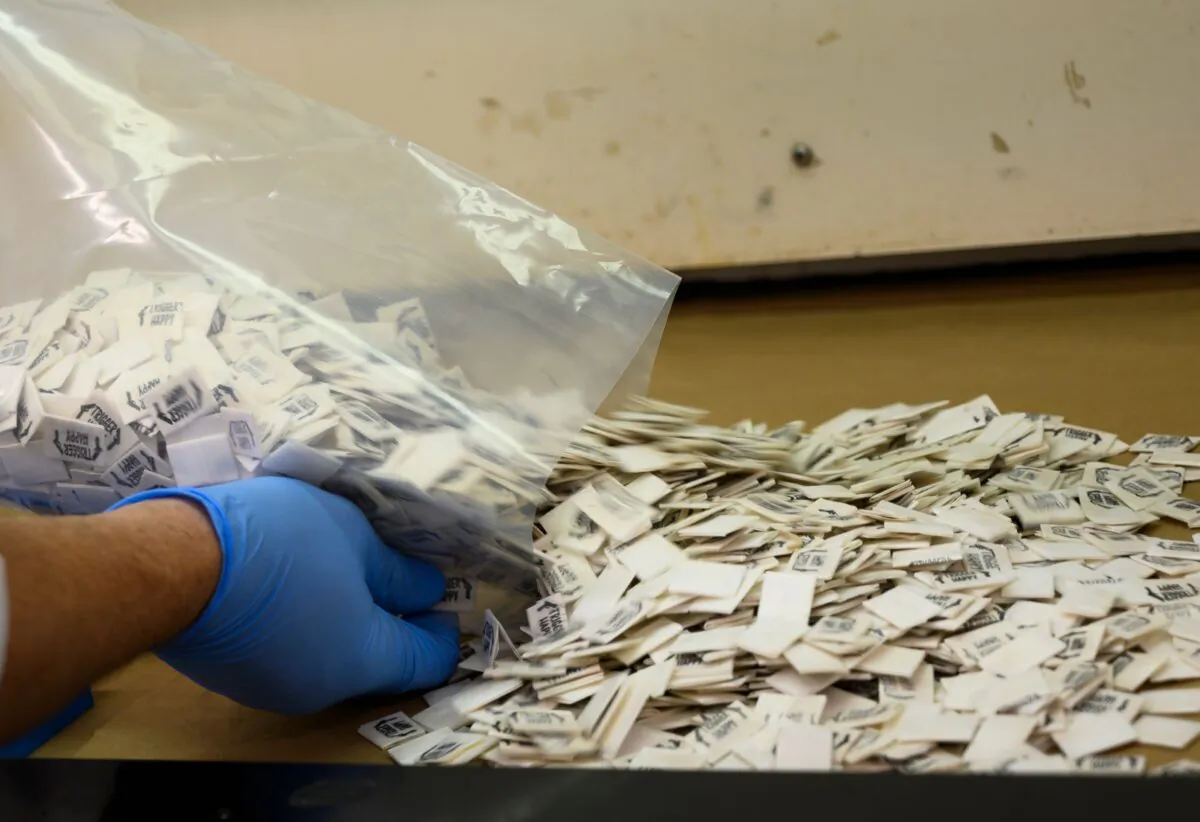
The Chinese regime is the primary source of illicit fentanyl entering the United States. It supplies cartels with precursor chemicals to assemble fentanyl and deadlier analogues that largely get trafficked across the Mexican and Canadian borders. Early in his second term, Trump announced tariffs on China, Mexico, and Canada for failing to stem the flow of these drugs into the United States.
Tune in to China Watch, a podcast on Chinese politics, technology, and business.
FBI Director Kash Patel testified before Congress earlier this year that he had called counternarcotics officials in China to work together on curbing drug exports, and in August, Beijing announced export restrictions on four fentanyl precursor chemicals.
China emerged as the primary supplier of illicit fentanyl as deaths rose steeply around 2016. Then deaths skyrocketed from 2021 to 2023 along with a record surge of border crossings, and at its peak, the fentanyl crisis was linked to 76,226 deaths in 2022, more than quadruple the figure from 2016. The United States started seeing a reversal in 2024, coinciding with changed border policies, and fentanyl-linked deaths in 2024 were estimated to be 48,422.
The United States has been engaging Chinese officials to counter the fentanyl crisis since the mid-2010s, resulting in the restriction of several chemicals over the years.
Notably, Beijing broke off all major engagement with the United States in 2022, citing a visit to Taiwan by then-House Speaker Nancy Pelosi (D-Calif.), including ceasing cooperation on curbing fentanyl-related exports. It resumed engagement in November 2023 after the United States removed sanctions on the Chinese Ministry of Public Security’s Institute of Forensic Science for human rights abuses in Xinjiang.
Trump has declared the opioid crisis a national health emergency and mobilized several agencies.
In addition to engagement with China, the U.S. Treasury Department continues to sanction entities tied to major drug cartels and has designated them as terrorist organizations. Mexico has also extradited cartel leaders.
The U.S. State Department has implemented a new visa policy that will block entry for drug traffickers, their families, and their associates.
The military has also carried out several strikes on vessels allegedly transporting illegal drugs to the United States.
Reuters contributed to this report.
 Friends Read Free
Copy
Facebook
Tweet
Friends Read Free
Copy
Facebook
Tweet