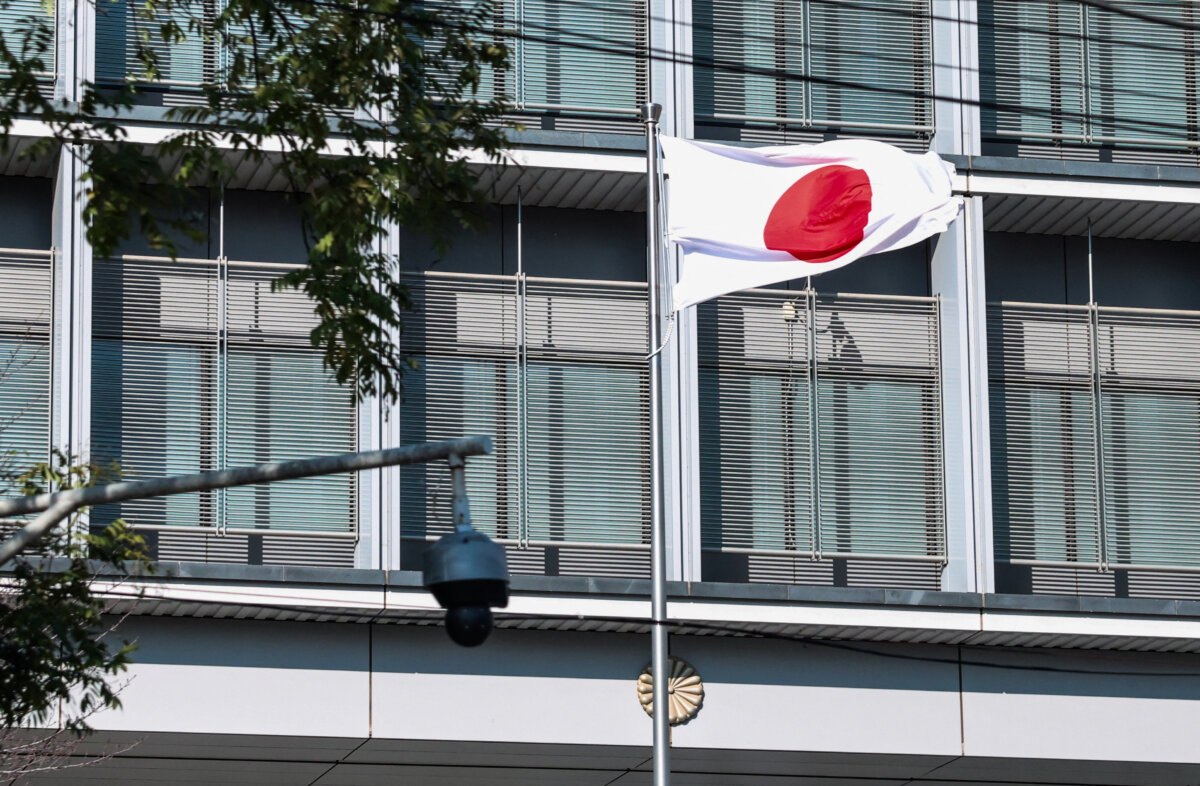

Beijing’s manipulation of uncertainty over rare-earth exports serves as a potent coercive tool against Tokyo, with experts warning of further economic retaliation despite ongoing efforts to reduce dependence.
A spokesperson for China’s commerce ministry said at a press conference on May 28 that placing 20 Japanese entities on China’s export control list and another 20 on a watch list was a response to what it alleged was Japan’s “remilitarization.”
The spokesperson was referring to a measure issued on Feb. 24 that tightens restrictions on the export of rare earths and other critical materials to Japan.
China’s rare-earth permanent magnet exports to Japan grew 2.5 percent in April from March, Chinese customs figures published on May 20 show. That uptick followed March’s steep 17.3 percent decline.
The data also indicated that China’s exports of critical rare-earth materials—including dysprosium, terbium, and yttrium oxide—to Japan have virtually halted since December.
While China accounts for roughly 70 percent of global rare-earth mining production, it controls close to 90 percent of the world’s refining and processing capacity.
Rare earths are critical components in electric vehicle batteries, semiconductor chips, and fighter jets.
Japan had relied on China for more than 90 percent of its rare-earth imports before Beijing cut off supplies in 2010 during a diplomatic dispute over the Senkaku Islands, a disputed territory in the East China Sea currently administered by Tokyo.
Since the retaliation, Japan has reduced its import reliance on China to about 60 percent, according to public data.
The Chinese regime’s rare-earth curbs are widely seen as a retaliatory response to remarks by Japanese Prime Minister Sanae Takaichi, who stated that a Chinese attack on Taiwan could trigger Japan’s right to collective self-defense.
This marks the first time a sitting Japanese prime minister has explicitly linked Taiwan’s security to Japan’s own survival.
Taiwan is a self-ruling democracy that the Chinese Communist Party (CCP) claims as its territory and has not ruled out seizing it by force.
‘Disproportionate Pressure’
Gerry Nagtzaam, a professor at the Faculty of Law at Australia’s Monash University, said Japan’s deep dependence on Chinese heavy rare earths for magnet production, aerospace, and defense has taken a heavy toll on its high-end manufacturing.
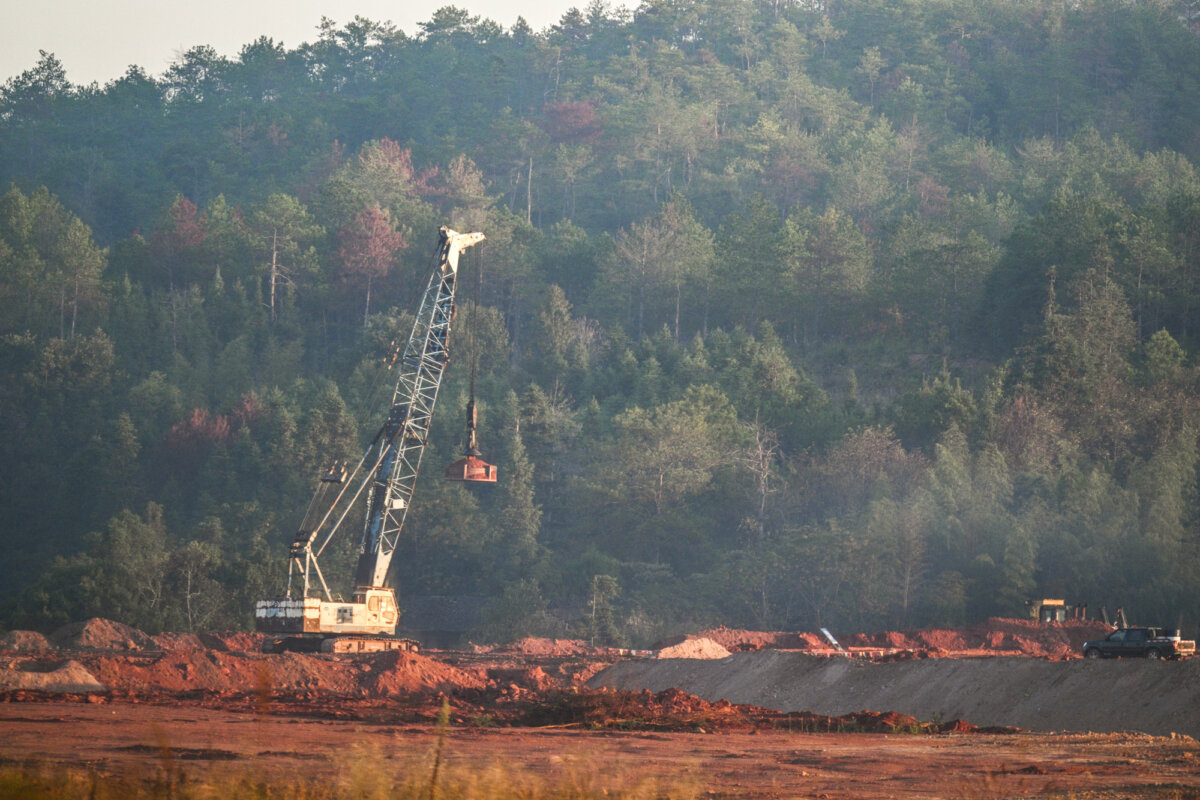
“The problem Japan has is its current vulnerability, like many Western countries,” Nagtzaam, who is also a long-time observer of China–Japan relations, told The Epoch Times.
“It reflects decades of global concentration in rare earth processing capacity.”
Bonnie Yushih Liao, a senior research fellow at the Japan Forum for Strategic Studies in Tokyo, said Beijing does not need to impose a full embargo to pressure Japan, as the unpredictability of its export policy has already become “part of the coercive effect.”
“The impact is beginning to emerge, although not yet in the form of dramatic industrial disruption,” Liao told The Epoch Times.
“Those effects are visible in long-term strategic planning across sectors linked to advanced manufacturing and national security [in Japan].”
Liao said even modest export restrictions on rare-earth materials such as dysprosium and terbium can generate “disproportionate pressure” on Japan, given how deeply embedded they are across industries, including electric vehicles and precision manufacturing.
“Since 2010, Japanese firms have expanded strategic stockpiles and pursued partial diversification of supply sources,” Liao said.
“Nevertheless, stockpiling functions primarily as a buffer mechanism rather than a structural solution to dependency.”
Reduction of Vulnerability
Liao said that despite ongoing Chinese pressure, Japan’s response is unlikely to translate into open confrontation, as it has traditionally favored a gradual, long-term approach over immediate escalation.
“Complete decoupling from China in the field of rare earths remains unrealistic in the near future,” Liao said.
“The more plausible objective is the reduction of vulnerability to politically motivated disruption.”
Liao said Tokyo’s current policies point to continued diversification through partnerships with countries such as Australia and India, alongside increased investment in recycling technologies and rare-earth recovery systems.
“Simultaneously, supply-chain resilience is being reframed within Japan as a matter of national security rather than purely industrial policy,” Liao said.
Takaichi and Australian Prime Minister Anthony Albanese released five joint documents in Canberra on May 4, including a statement on enhanced critical minerals cooperation.
Nagtzaam concurred, saying Tokyo needs to work with other middle-ranked powers to counter Beijing’s coercive measures.
“Japan’s long-term response will likely depend on deeper cooperation with [its] partners, while also seeking to balance supply-chain security with robust environmental governance and sustainability standards,” Nagtzaam said.
However, Liao said that with both Takaichi and Kimi Onoda, Japan’s economic security minister, holding firm positions on China-related security and economic issues, the CCP’s pressure on rare earths is unlikely to lead to political softening in Tokyo.
“If anything, it is more likely to reinforce Japanese perceptions that excessive dependence on China constitutes a long-term strategic vulnerability,” she said.
Broader Toolkit
Rare earths are among Beijing’s most visible instruments of pressure because they leverage economic dependence to exert political and psychological pressure, but they are only one part of a broader toolkit targeting Japan, according to Liao.
“[Other measures include] intensified maritime activity around the Senkaku Islands, pressure on Japanese firms operating in China, and targeted economic signaling,” Liao said.
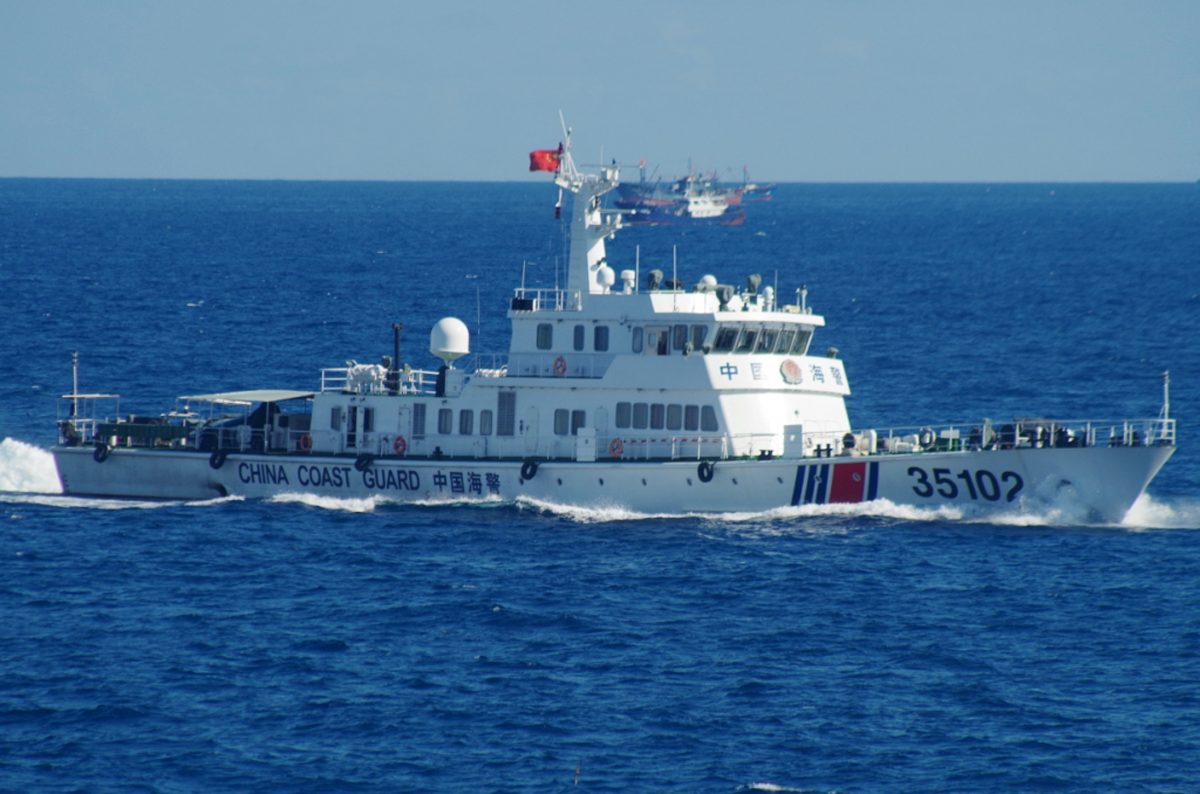
“They all provide mechanisms through which costs and uncertainty may be imposed without crossing into direct confrontation.”
Liao said Tokyo’s central concern extends beyond immediate financial damage, with the gradual normalization of susceptibility to Beijing’s intimidation being the more consequential threat.
“Repeated economic and political pressure becomes embedded within the bilateral relationship itself,” Liao said.
“The earlier assumption that economics and security could remain compartmentalized has weakened considerably.”
Nagtzaam said Japan’s experience serves as a stark warning, amplifying concerns among global democracies over how Beijing weaponizes economic ties.
“This strategy, along with concerns over unreliable global supply chains, is leading many democratic states to seek more reliable, politically trusted and environmentally sustainable resource networks to meet their citizens’ needs,” Nagtzaam said.
 Friends Read Free
Copy
Facebook
Tweet
Friends Read Free
Copy
Facebook
Tweet