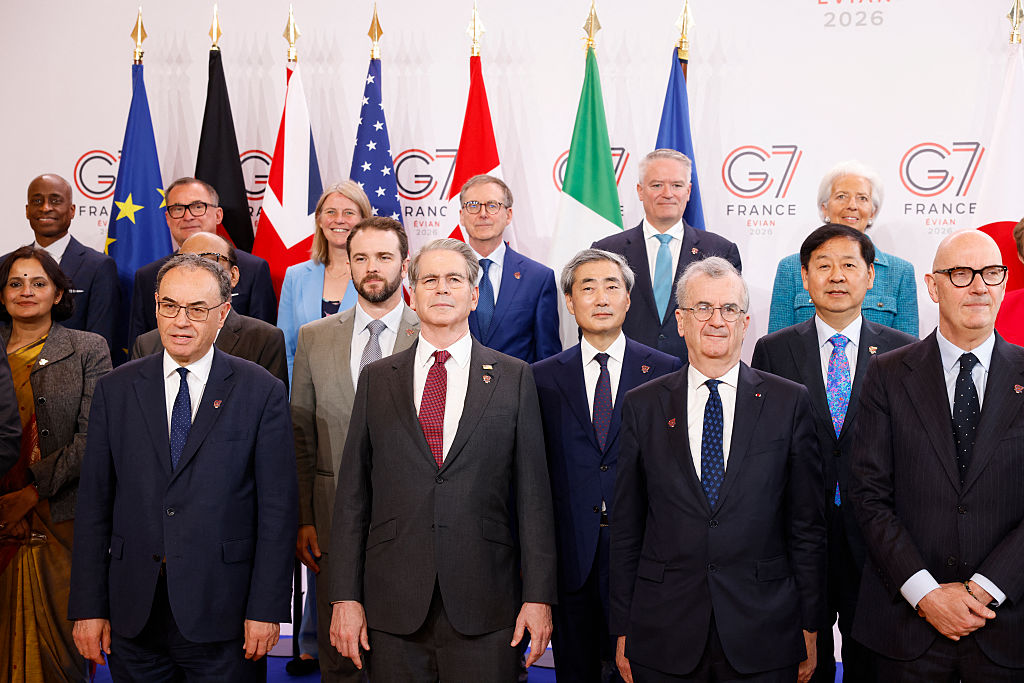

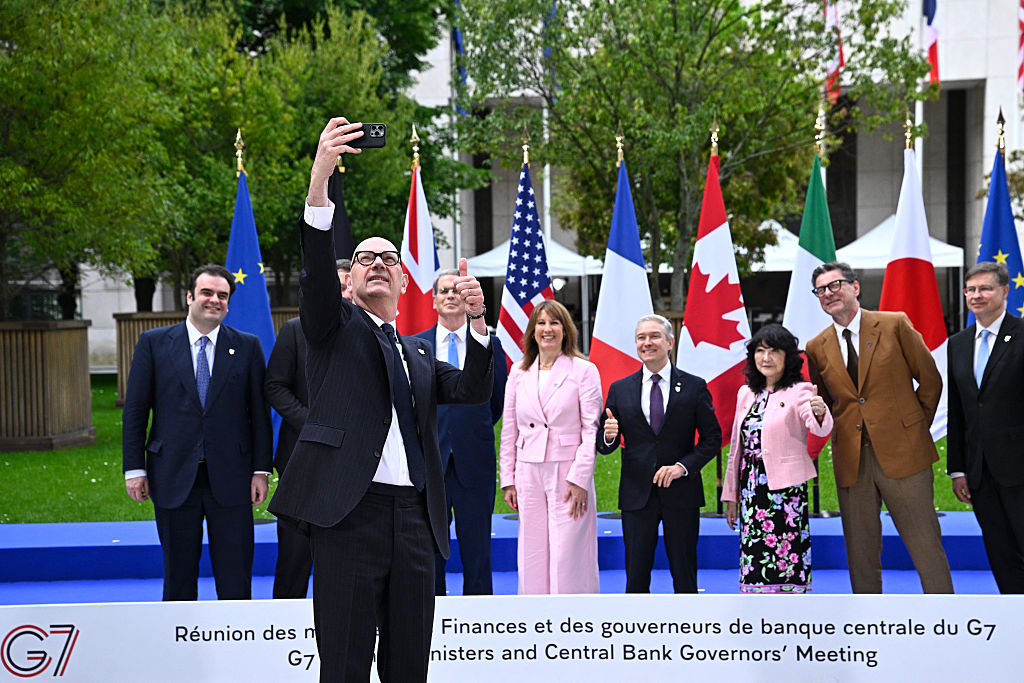
G7 finance ministers met in Paris from May 18 to 19 to address global economic issues with a focus on trade imbalances, which some ministers have attributed to China’s weak consumption, production overcapacity, and excessive exports.
Analysts told The Epoch Times that the problems are structural and hard to resolve in the short term, while global trade is veering toward bloc formation–the G7 vs. China and Russia.
The G7 is an annual forum of advanced economies and leading industrialized democracies to coordinate global economic, security, and climate policies.
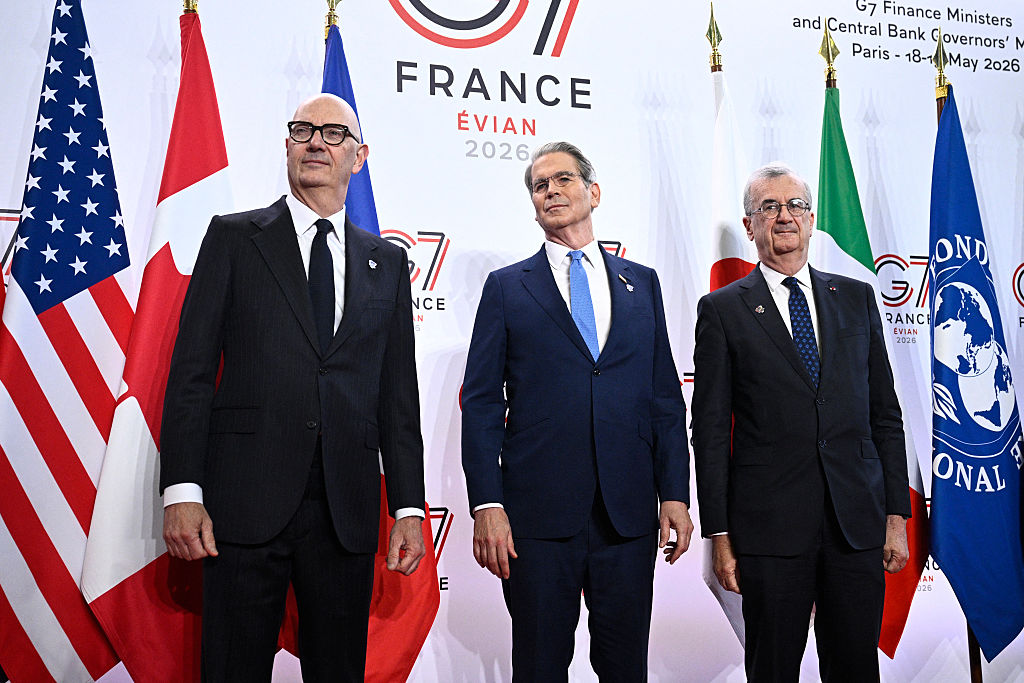
French Finance Minister Roland Lescure, who chaired the forum, said that “the way the global economy has developed over the past decade or so is clearly unsustainable.”
U.S. Secretary of the Treasury Scott Bessent warned European counterparts that they needed protection against a flood of Chinese exports that would damage their economies as China continues to build excess industrial capacity in the face of chronically weak domestic demand.
China’s growth lost momentum in April, with industrial output cooling and retail sales hitting over three-year lows, according to the latest data.
With poor domestic consumption slowing growth in China, “now more gets exported,” Bessent said.
Japanese Finance Minister Satsuki Katayama said at the forum, “There is broad agreement among all countries that China, with various issues such as industrial policy problems and distortive, nonmarket behavior, does not appear willing to correct these imbalances itself.”
Lescure suggested that overconsumption in the United States and underinvestment in Europe were also contributing to imbalances.
The true significance of this G7 meeting lies no longer in “negotiating a balance” with China, but rather in formally designating China’s export of production capacity and its economic model as a systemic challenge to Western industrial security and the global order, Davy J. Wong, U.S.-based independent political economist, told The Epoch Times.
In the past, the G7 had a major illusion regarding China, Wong said.
“They believed that as China integrated into the global market and achieved economic development, it would gradually align itself with market-oriented principles and international norms, even becoming more moderate in its politics and diplomacy, thereby mitigating its disruptive impact on the global order,” he said.
However, the G7 has now largely concluded that this assessment has failed, he said.
“Far from being transformed by globalization, Beijing has instead begun to leverage its own industrial capacity, subsidies, supply chains, and market scale in an attempt to reshape global trade and economic rules, the structure of industrial supply chains, and the geopolitical landscape,” he said.
The issues of China’s overcapacity and excessive exports were raised at the G20 summit by Lescure. The G20 (Group of Twenty) is a global forum for international economic and financial cooperation that consists of 19 of the world’s largest economies, plus the European Union and the African Union.
However, because China is a member of the G20, the discussion so far hasn’t yielded much progress, Lescure said.
The G7 matters because it can coordinate pressure outside the G20, where China can block consensus, Sun Kuo-hsiang, a professor of international affairs and business at Nanhua University in Taiwan, told The Epoch Times.
The next step that the G7 is likely to take, Sun said, “is not one grand agreement, but a package of the International Monetary Fund monitoring, coordinated tariffs or trade defense cases, investment screening, subsidy rules, and supply chain diversification aimed at Chinese overcapacity in electric vehicles, batteries, steel, solar panels, and other sectors.”
Wong shares a similar anticipation, pointing out that the follow-up steps for G7 could include “simultaneous imposition of heightened restrictions and tariffs by the United States, the European Union, and Japan on Chinese products, such as electric vehicles, lithium-ion batteries, photovoltaic equipment, and mature-node semiconductors among others.”
The G7 can also coordinate to crack down on China’s “origin laundering,” Wong said, “restricting China’s use of transshipment routes via Vietnam, Mexico, and Southeast Asia.”
In addition, the G7 may establish localized supply chains, “leveraging subsidies and industrial policies to build new supply chains within the Western bloc that are independent of China’s low-cost production capacity,” he said.
This G7 meeting signifies that global trade is shifting from “efficiency first” to “security first,” Wong said.
Russian and Chinese Cooperation
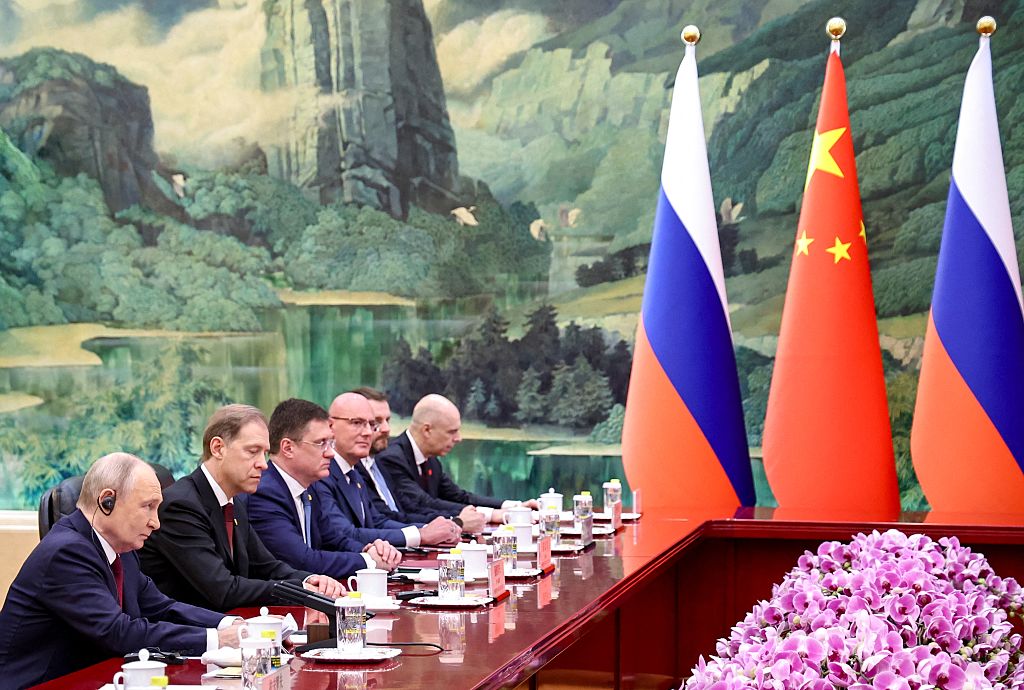
Russian President Vladimir Putin visited Beijing from May 19 to 20 with a high-level delegation of 39 members from sectors such as energy, transportation, industry, and nuclear energy, only four days after U.S. President Donald Trump’s visit to China. China and Russia signed about 20 cooperation agreements during the Putin–Xi summit, but didn’t reach a deal on natural gas pipeline pricing, while the talks continue as claimed by the Russian side.
Putin’s visit to China is, in essence, a convergence of “a wartime economy” and “an economy of excess capacity,” Wong said.
“China requires export markets and energy, while Russia needs industrial goods and financial support; thus, the two sides form a complementary relationship,” he said.
Putin’s Beijing visit strengthens the China–Russia “sanctions-resilience” bloc, Sun said.
“More energy, local-currency trade, and pipeline cooperation may help China reduce exposure to maritime chokepoints and Western pressure, but it also deepens the perception among G7 states that China is not merely an economic competitor but part of a geopolitical counter-coalition,” he said.
This will also further intensify the financial and sanctions-related pressure exerted by the G7, Wong said.
“In the future, the West may accelerate the imposition of restrictions on Chinese banks that facilitate settlements between China and Russia—and could even go so far as to target the RMB cross-border payment system itself,” Wong said.
Consequently, global trade is beginning to undergo a process of “bloc formation,” he sid.
“On one side stands a market sphere dominated by the G7—characterized by high standards, high tariffs, and a prioritization of security; on the other lies a market sphere led by China, Russia, and parts of the Global South (developing countries)—defined by de-dollarization and a focus on internal economic circulation,” Wong said.
Rare Earths Reliance on China
China accounts for approximately 70 percent of global rare earth mining and controls up to 90 percent of the processing and refining capacity worldwide, according to public data.
Rare earth elements are key ingredients for magnets, batteries, catalytic converters, and more, and are widely used in products from electronics to automobiles.
The G7 meeting also addressed reducing its reliance on China for critical minerals and rare earths. Lescure stated that the G7 aims to improve coordination to monitor markets, anticipate supply disruptions, and develop alternative supply solutions. The primary objective is to ensure that “no country can ever again have a monopoly” on such materials.
Bessent said the G7 was working on critical minerals inventory reserves, pricing, and price-floor mechanisms to keep China from undercutting alternative supply efforts.
The G7 has already begun pushing for the “de-Sinicization” of rare earth supply chains, with Australia and the United States starting to rebuild rare earth processing capabilities, promoting the recycling of electronic waste, and developing rare-earth-free alternative technologies.
However, the hardest part is not mining but refining and separation, because these are costly, polluting, and dominated by China, Sun pointed out.
Wong said that reducing dependence on Chinese rare earths is feasible but slow, as China controls not merely the mineral resources themselves, but also the entire, low-cost refining and chemical industry supply chain.
“Even if Vietnam, Brazil, India, and Australia possess reserves, it would be extremely difficult for them to replace China in the short term,” he said.
China’s Weak Consumption
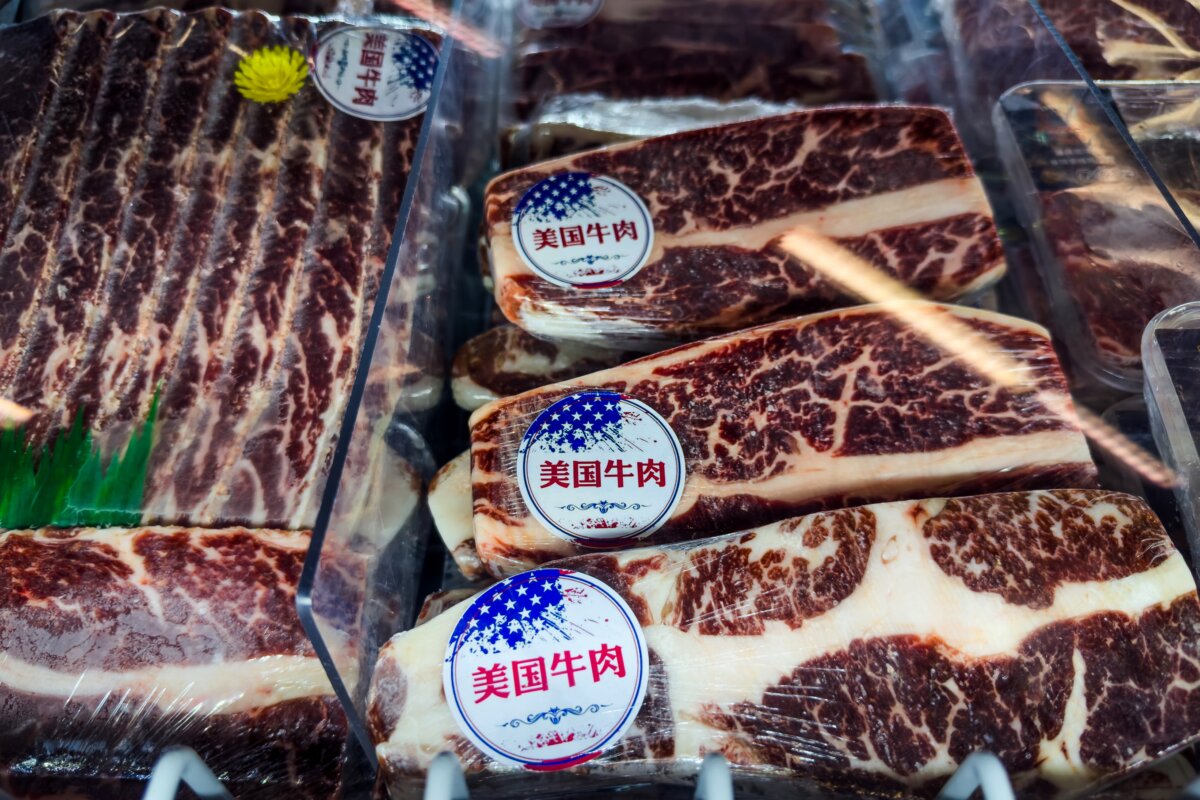
Trump’s visit to China and his meeting with Xi yielded no substantive progress, aside from China’s announcement that it would purchase more Boeing aircraft and beef from the United States.
Trump’s Beijing visit produced stability, not structural change, Sun said.
“A Boeing purchase helps U.S. exports symbolically, but it does not solve China’s weak household consumption, industrial subsidies, or export-led overcapacity. Without reforms to wages, welfare, local-government finance, and private-sector confidence, China’s domestic demand problem will remain difficult to reverse,” he said.
The root causes of China’s excess capacity lie in household consumption accounting for a very low share of GDP, high savings coupled with low consumption, and fiscal policies and subsidies that have long been skewed toward the production side, according to Wong.
“Consequently, even increasing purchases of aircraft and soybeans will not be enough to absorb China’s continuous export of its massive industrial capacity to the world,” he said.
The G7’s true concern regarding China is its entire systemic model of exporting industrial capacity, Wong said.
The real reasons behind China’s weak consumption are wealth erosion caused by a downturn in the real estate market; excessive financial burdens related to health care, retirement, and education; and a pervasive lack of a sense of security among the public, according to Wong.
“Unless the structures of wealth distribution and social security are reformed, relying solely on short-term stimulus measures will make it extremely difficult to genuinely resolve the issue of insufficient domestic demand,” he said.
The core shift in the global economy in 2026 is that the world is transitioning from a “logic of efficiency-driven globalization” to a “logic of geopolitical security and bloc-based confrontation,” Wong said.
“The G7’s containment of China’s excess capacity is no longer merely an economic issue; rather, it has become a contest for global order and strategic dominance,” he said.
Luo Ya and Reuters contributed to this report.
 Friends Read Free
Copy
Facebook
Tweet
Friends Read Free
Copy
Facebook
Tweet