
China’s economy slowed sharply in April, according to official data, adding to pressure on Beijing to introduce stimulus measures to support growth as robust exports failed to offset sluggish domestic consumption.
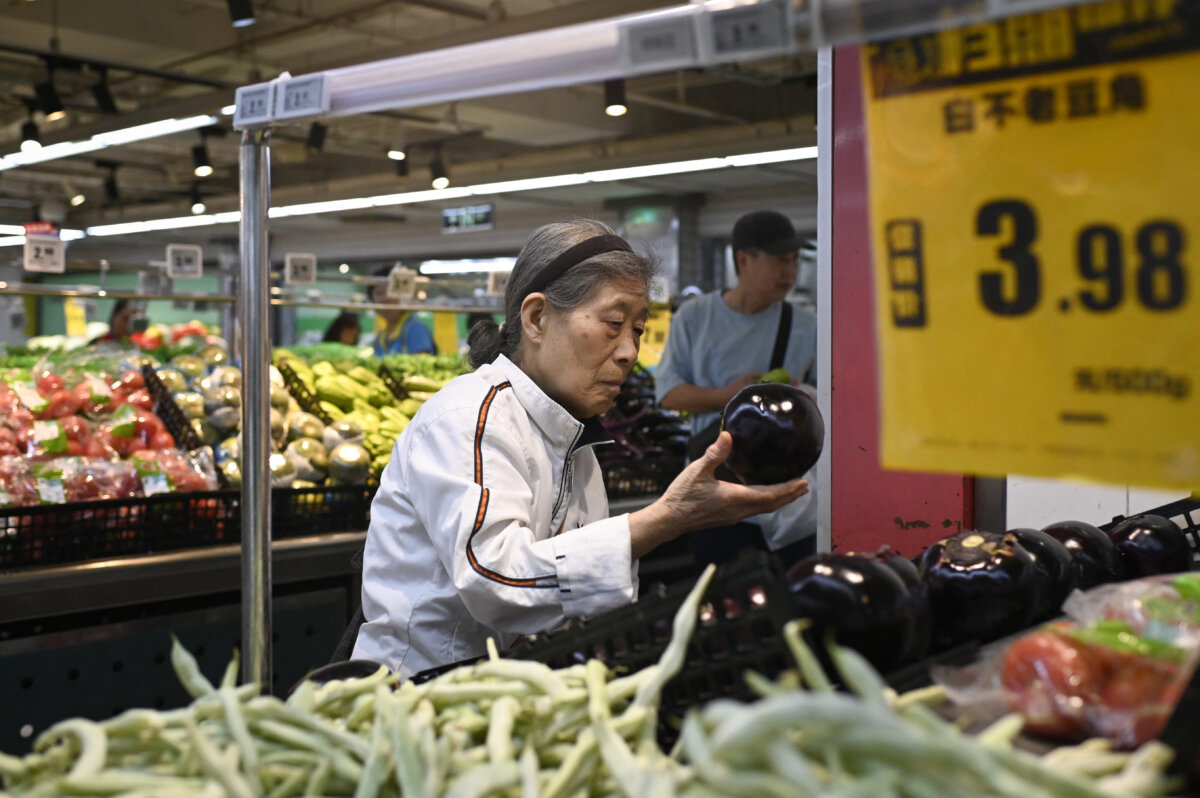
Retail sales, a measure of consumer spending, rose by just 0.2 percent in April, according to data released by the National Bureau of Statistics on May 18.
It slowed sharply from the 1.7 percent growth reported in March and represented the worst performance since December 2022, when the world’s second-largest economy ended draconian COVID-19 pandemic restrictions. Economists polled by Reuters had expected a 2 percent increase.
China said industrial production grew by 4.1 percent in April, cooling from March’s 5.7 percent increase and missing a 5.9 percent growth forecast by economists.
The Chinese regime is notorious for artificially beefing up its economic data to make it appear more robust than reality.
China’s strong exports helped mitigate the weakness in domestic demand, but not enough to fully offset it, according to Zhang Zhiwei, president and chief economist at Hong Kong-based Pinpoint Asset Management.
Customs data released earlier this month showed that China’s exports remained resilient in April despite high energy costs from the war in Iran. Shipments from China to the rest of the world climbed by 14.1 percent from a year earlier, accelerating from the 2.5 percent year-on-year expansion reported in March.
But Zhang said he does not expect the April data to prompt the Chinese authorities to change their policy stance. He said that Beijing will likely reassess its policy stance in July when the second-quarter gross domestic product data are available.
Speaking at a news conference on May 18, Fu Linghui, a spokesperson for China’s National Bureau of Statistics, downplayed concerns about April’s economic performance, saying that the decline in certain indicators is “a normal month-to-month fluctuation.”
“Of course, we must also be clearly aware that there are still many new challenges and long-standing issues in current economic operations,” Fu said.
“For example, the impact of external environment changes is deepening, the imbalance between strong supply and weak demand is prominent, and some companies continue to face difficulties in production and operations.”
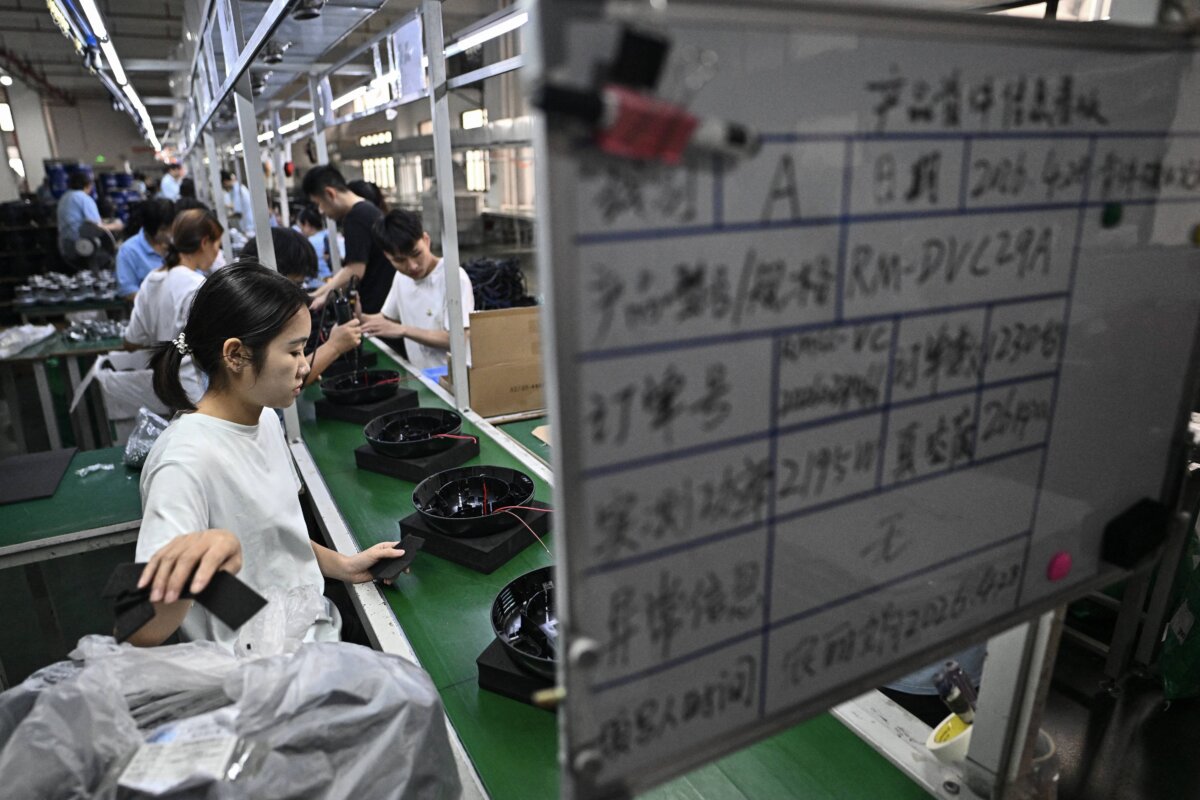
In the first four months of this year, investment in equipment, buildings, and other fixed assets outside China’s rural households contracted by 1.6 percent from the same period a year ago, compared with 1.7 percent growth over the period from January through March.
The contraction in fixed asset investments was largely due to the continued slump in the housing market. Separate data showed that property investment in the January to April period fell by 13.7 percent compared with the same period last year, widening from an 11.2 percent decline in the first three months of the year.
Lynn Song, chief economist for greater China at ING, said it is likely that the property sector will “remain a major drag” on China’s economic growth this year.
“Disappointing April economic activity suggests growth will decelerate in the second quarter,” Song said in a May 18 note. “Weaker growth and rising inflation could complicate policymaking in the coming months.”
The Chinese authorities have set this year’s economic growth target at the lowest level since 1991.
The official data came days after President Donald Trump wrapped up his state visit to Beijing on May 15.
The Chinese Ministry of Commerce announced in an update on May 16 that both countries had agreed on a series of measures, including the establishment of bilateral trade and investment boards to discuss each side’s concerns and tariff reductions on unspecified products.
A fact sheet issued by the White House on May 17 does not mention tariffs. It states that China gave an initial green light to purchase 200 Boeing aircraft made in the United States and agreed to restore market access for U.S. beef.
In addition to committing to purchasing at least $17 billion in American agricultural products, China also agreed to address U.S. concerns about the supply of critical minerals, according to the White House.
Reuters contributed to this report.
 Friends Read Free
Copy
Facebook
Tweet
Friends Read Free
Copy
Facebook
Tweet