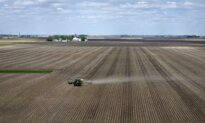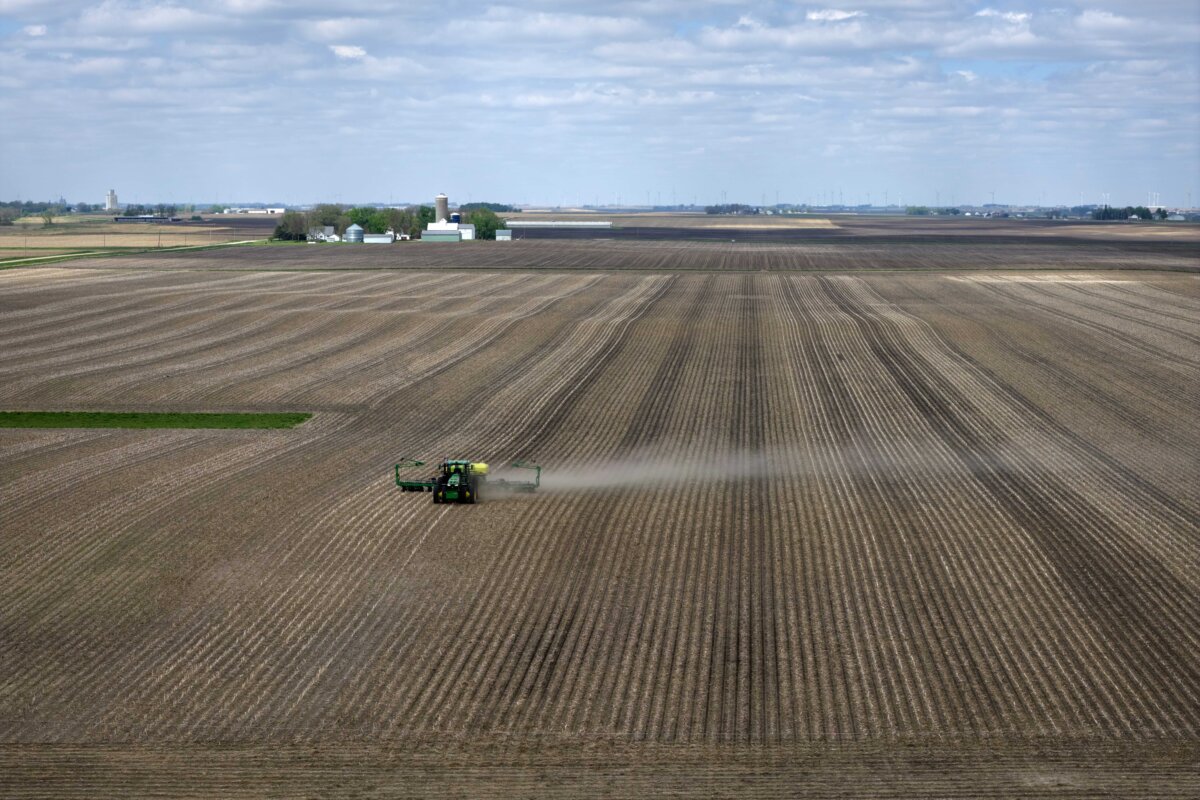

China will purchase at least $17 billion per year of U.S. agricultural products over the next three years, the White House said on May 17.
According to the agreement, China will make those purchases on top of the soybean purchase commitments that it made in October 2025.
China agreed to purchase at least 12 million metric tons of U.S. soybeans during the last two months of 2025 and at least 25 million metric tons of U.S. soybeans each year for three years: 2026, 2027, and 2028.
U.S. agricultural exports to China declined sharply in 2025, according to the U.S. Department of Agriculture’s Economic Research Service.
China fell out of the top five destinations for U.S. agricultural exports as shipments dropped to $8.4 billion. Mexico was the largest market for U.S. agricultural exports in 2025, followed by Canada, the European Union, and Japan. U.S. Department of Agriculture data also showed that total U.S. agricultural trade declined from a record $394 billion in 2022 to $383 billion in 2025.
Chinese officials agreed to purchase during 2020 and 2021 at least $200 billion of goods more than a 2017 baseline amount of U.S. agriculture products, according to the Congressional Research Service.
The Chinese regime fell short of that commitment by 60 percent, in part because of its efforts to diversify agriculture and energy suppliers and the COVID-19 pandemic, according to the Congressional Research Service.
The recent agreement follows years of trade tensions between the United States and China.
In 2018, the Trump administration launched Section 301 tariff actions against China over what U.S. officials described as unfair trade practices involving technology transfer and intellectual property. China later imposed retaliatory tariffs on U.S. goods, including agricultural products.
The Trump administration’s Section 301 tariffs covered about $550 billion in Chinese imports into the United States from 2018 to 2020.
The White House said the new agreement is intended to expand economic relations between the two countries while increasing purchases of U.S. agricultural products. The administration said the deal includes commitments extending through 2028.
U.S. President Donald Trump said he would welcome Chinese leader Xi Jinping for a visit to Washington this fall.
The agreement creates two new bilateral government-backed groups designed to manage trade and investment issues between the United States and China. According to the White House, the U.S.–China Board of Trade will focus on regular commercial products such as agriculture, food, and consumer goods, while the U.S.–China Board of Investment will provide a formal channel for discussions involving investment and economic cooperation between the two countries.
Trump’s recent visit to China was his first trip to the country since a three-day state visit to Beijing in November 2017 during his first term in office.
 Friends Read Free
Copy
Facebook
Tweet
Friends Read Free
Copy
Facebook
Tweet