
China’s capital has enacted its most restrictive drone regulations to date, effectively banning the sale, transport, and use of civilian drones across the city, in a move analysts say underscores mounting security concerns among the leadership of the Chinese Communist Party.
The new rules, which took effect on May 1, designate all of Beijing as controlled airspace, requiring advance approval for any outdoor drone flights. The restrictions go beyond airspace management—drones cannot be sold into the city, brought in from elsewhere, or even serviced locally.
Drones Are No Longer Welcome
Under the regulations passed by the Beijing Municipal People’s Congress, a rubber-stamp legislature, there are no longer any “safe” zones for casual drone use. All outdoor flights require advance authorization, eliminating what had previously been a gray area for hobbyists.
The rules also prohibit nonresidents from bringing drones into the capital and ban both online and offline retailers from selling or leasing drones or key components within the city.
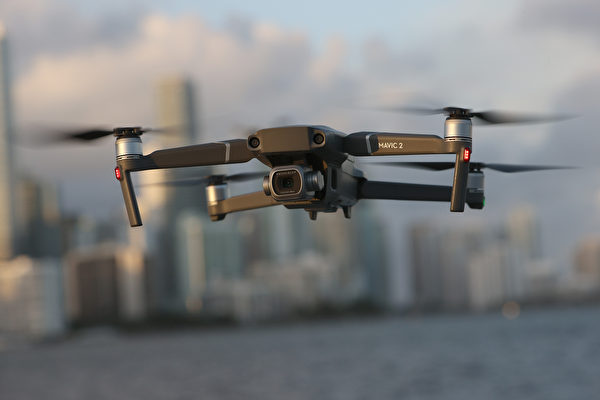
Chinese drone giant DJI has already pulled its products from Beijing stores. Starting at 4 p.m. on April 29, all retail locations in the city stopped selling DJI drones, and e-commerce platforms ceased deliveries to Beijing addresses, according to Chinese tech news outlet MyDrivers News via Sina.
The restrictions have rippled into the secondary market. Listings for used drones surged in early 2026, with resale prices for popular models dropping sharply, according to Chinese media outlet Red Star News.
Two Taiwan-based China analysts say Beijing’s approach marks a fundamental shift in regulatory logic.
Sun Kuo-hsiang, a professor of international affairs and business at Nanhua University in Taiwan, told The Epoch Times that the policy goes well beyond traditional flight restrictions.
“This is not just about prohibiting flights—it’s about making it impossible to even buy a drone for recreational use,” he said.
Sun described the policy as moving from managing flight behavior to controlling risks at the source through what he called “full-chain governance.”
In effect, he added, drones are being reclassified from consumer gadgets into politically sensitive items.
A similar view was offered by Hsieh Pei-shiue, a research fellow at Taiwan’s Institute for National Defense and Security Research. He told The Epoch Times that the rules were enacted through local legislation, giving them stronger legal force than typical administrative measures.
“This reflects a shift from post-incident tracking to preemptive risk elimination,” Hsieh said, noting that Beijing could serve as a model for nationwide policy rollout.
War Lessons Reshape Security Thinking
China has long been the world’s largest producer and consumer of commercial drones, with DJI holding more than 90 percent of the global consumer market and nearly 70 percent of the overall drone sector, according to the Special Competitive Studies Project, a nonpartisan U.S. think tank.
The abrupt tightening of restrictions has raised questions about what is driving Beijing’s security calculus.
Sun said recent conflicts, including the Russia–Ukraine war and the conflicts in the Middle East, have transformed how Beijing perceives drone risks. Small, inexpensive drones have been widely used for reconnaissance, targeted strikes, and even assassination operations.
Given Beijing’s concentration of political leadership compounds, military institutions, and foreign embassies, the communist regime is likely concerned about the possibility of sudden, low-cost attacks on sensitive targets, according to Sun.
“It’s like putting a glass shield over the entire city,” he said. “Not because every drone is dangerous, but because a single incident could become a major political security event.”
Hsieh said Beijing is particularly wary of modified drones being used to target senior officials or sensitive sites, or to gather intelligence on leadership compounds.
The two analysts said the impact of the new policy for DJI is both commercial and symbolic.
Sun described the company as facing “dual pressure”: tightening domestic controls that effectively eliminate its consumer market in the capital, alongside ongoing restrictions and scrutiny in overseas markets, particularly the United States.
Hsieh said the removal of DJI products from Beijing carries broader implications.
“The world’s largest consumer drone brand has now been taken off shelves in [its own country’s] capital,” he said. “That sends a powerful signal.”
He noted that China’s domestic security policies may also reinforce international concerns about the technology, even as competitors—including drone manufacturers in Taiwan—gain greater attention in global markets.
Li Jing and Luo Ya contributed to this report.
 Friends Read Free
Copy
Facebook
Tweet
Friends Read Free
Copy
Facebook
Tweet