
The Chinese Communist Party (CCP) will intensify cognitive warfare, gray-zone operations, and infiltration campaigns following the U.S.–China summit in pursuit of its goal of annexing Taiwan, analysts warn.
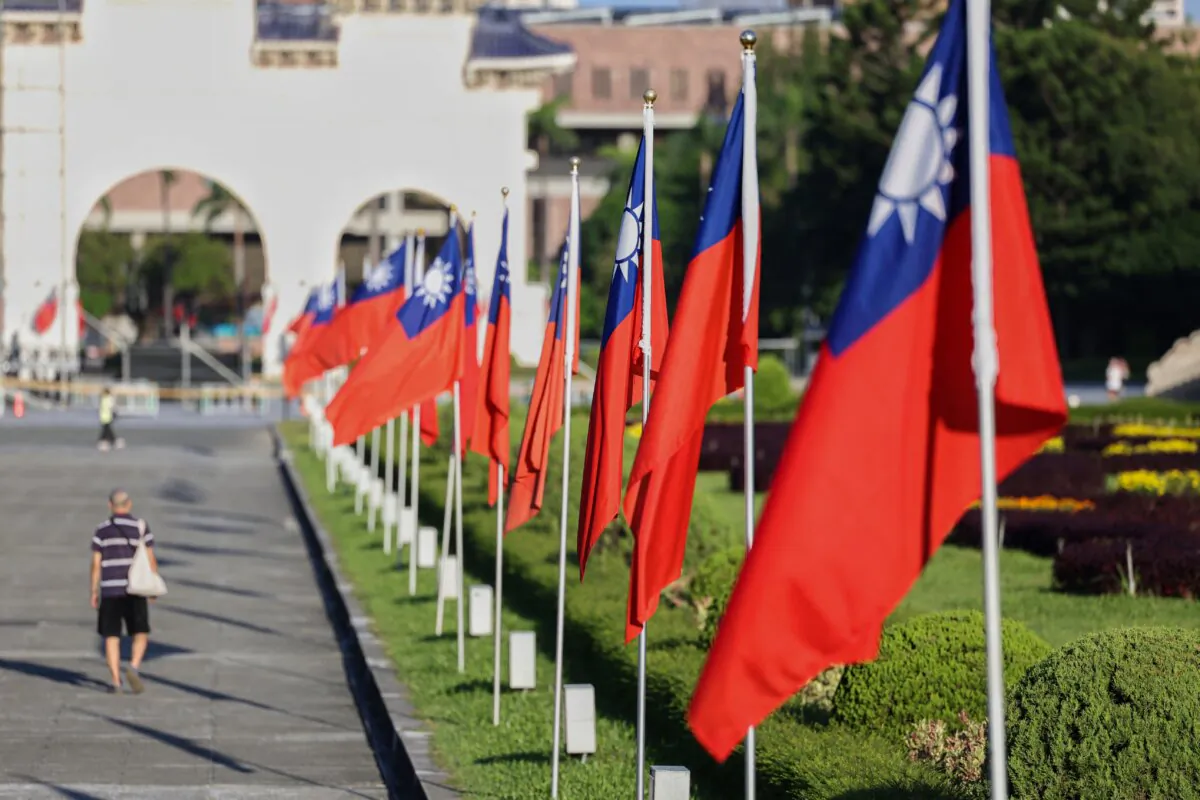
Taiwan President Lai Ching-te said on May 17 that Taiwan is a sovereign democratic country with no “Taiwan independence” issue.
“Adhering to the fact that the Republic of China (ROC) and the People’s Republic of China (PRC) are not subordinate to each other, and insisting that sovereignty cannot be violated or annexed … is the greatest consensus among all Taiwanese people,” Lai wrote in a Facebook post, according to a translation.
Lai referred to the ROC, Taiwan’s formal name, when speaking of the island and to the PRC when discussing the Chinese communist regime.
His remarks appear to be a response to a Fox News interview aired on May 15, in which U.S. President Donald Trump said he is “not looking to have somebody go independent” regarding Taiwan.
However, Trump also emphasized that “nothing’s changed” concerning Washington’s policy toward Taipei.
The CCP’s official propaganda newspapers, including the People’s Daily and Beijing Daily, quickly seized on Trump’s comments to cast doubt on the United States’ support for the island.
“Trump’s public statement once again confirms that the U.S. will never, as some have fantasized, provide unconditional backing for ‘Taiwan independence’ separatist forces,” reads a People’s Daily editorial, according to a translation.
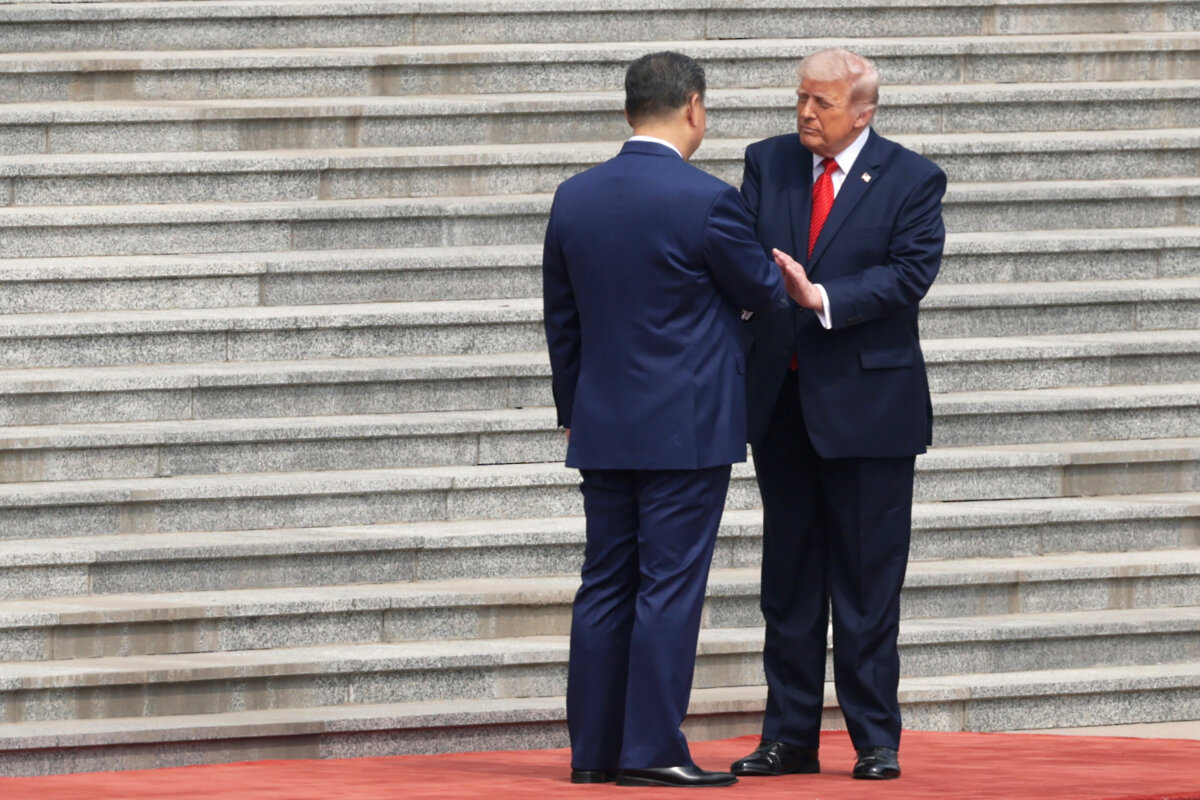
The Fox News interview was broadcast after Trump’s May 14–15 trip to Beijing, where he met with Chinese leader Xi Jinping.
Following the Trump–Xi summit, the White House released a readout describing a “good meeting” between the two leaders, making no mention of Taiwan.
But Xi stressed that the Taiwan issue “is the most important issue in China–U.S. relations” during his talks with Trump, according to China’s Ministry of Foreign Affairs’ official statement on May 14.
Taiwan is a self-governed democracy that the CCP has never controlled but has vowed to annex by force.
While Washington and Taipei lack formal diplomatic ties, their unofficial partnership is underpinned by the Taiwan Relations Act of 1979, which guarantees the island defensive arms and supports extensive commercial and cultural exchanges between the two sides.
Cognitive Warfare
Ken Wu, vice president of the Los Angeles chapter of the Formosan Association for Public Affairs, said Chinese state media coverage shows Beijing is twisting Trump’s remarks to spread “the America Skepticism Theory,” even as the U.S. president has affirmed Washington’s “One China” policy remains unchanged.
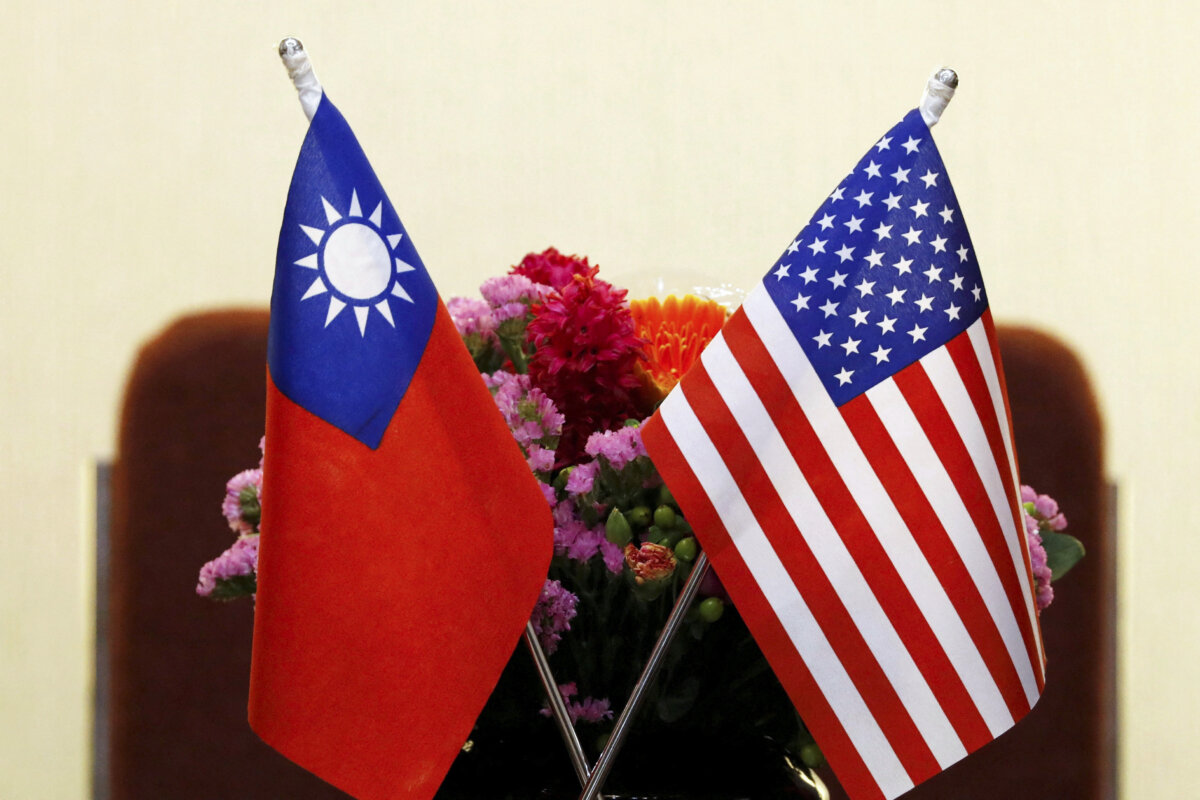
“The America Skepticism Theory” is the Chinese regime’s central narrative, framing Washington as an unreliable partner that would abandon Taiwan in a crisis.
“China is using such tactics to sow discord in U.S.–Taiwan relations, and these efforts are drawing widespread attention,” Wu told The Epoch Times.
“Beijing will inevitably repackage this theory in new forms, targeting audiences who do not closely follow Washington–Taipei dynamics.”
This calculated attempt will disrupt political circles on both sides, with the CCP aiming to raise the cost of their security cooperation, according to Wu.
“This will complicate the ‘rock-solid’ U.S.–Taiwan partnership we often speak of, as public skepticism begins to emerge in both societies,” he said.
Tzeng Wei-feng, an associate research fellow at National Chengchi University’s Institute of International Relations, concurred, saying that Beijing’s propaganda push on Taiwan will likely intensify ahead of Xi’s potential White House visit in September.
“Chinese media will continuously churn out articles in the coming months to build a case that the Trump–Xi summit produced a consensus on Taiwan,” Tzeng told The Epoch Times.
“They will also broadly promote one-sided narratives across international media platforms to shift public opinion in China’s favor.”
Deepening Infiltration
Ahead of the Trump–Xi summit, Taiwan’s opposition-majority legislature approved a NT$780 billion ($25 billion) defense spending bill on May 8 following repeated delays.
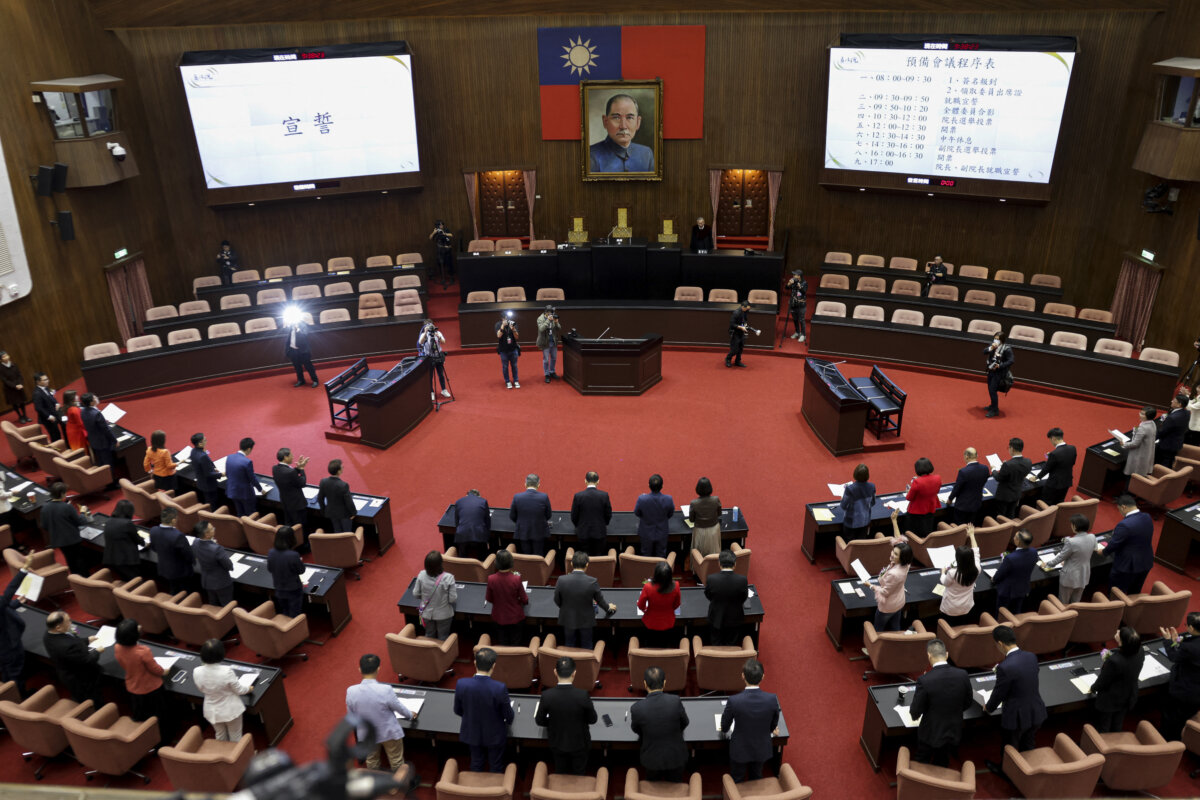
The slashed budget, just two-thirds of the $40 billion originally requested by Lai, drew a U.S. State Department warning the same day that stalling the island’s military buildup amounts to a “concession” to the CCP, per Taiwan’s Central News Agency.
The CCP has refused to engage with Taiwan’s Democratic Progressive Party (DPP) since 2016, opting instead to penetrate Taipei’s legislature as a backdoor to exert influence—pressure Wu believes will only intensify following the U.S.–China leaders’ meeting.
“Beijing will continue to lie low while nurturing proxies among political factions in Taiwan aligned with its interests,” Wu said.
“There have also long been signs of the CCP co-opting figures within Taiwan’s business, academic, and even defense sectors, meaning it is actively undermining the island’s democracy through various channels.”
Taiwan’s Mainland Affairs Council, a government agency that handles China affairs, warned in November that Beijing is escalating its infiltration targeting political parties, grassroots organizations, and military personnel.
Tzeng said that with Cheng Li-wun, chair of Taiwan’s opposition Kuomintang (KMT), explicitly advocating for cross-strait unification, the CCP will likely align with such elements to sustain its “united front” operations.
Cheng met with Xi on April 10 in Beijing, lauding the regime’s development in terms that echoed CCP propaganda.
“Wang Huning, top-ranking CCP official in charge of Taiwan affairs, previously stated the need to ‘firmly support pro-unification forces on the island’, a directive that underscores the regime’s strategic direction behind such high-level outreach,” Tzeng said.
“Whether by forming alliances with these political forces or utilizing civic groups to pull the island toward Beijing, I believe the CCP will continue to deploy these influence campaigns.”
Gray-Zone Harassment
Tzeng also said the Chinese regime’s longstanding gray-zone harassment—aggressive and coercive actions that are designed to intimidate an opponent yet remain below the threshold of warfare—will likely continue to escalate after the Trump–Xi summit.
“Beijing will likely ramp up its disinformation efforts, using propaganda warfare to sway public opinion against Taipei,” he said.
“On the diplomatic front, the CCP will amplify anti-independence rhetoric and attempt to poach the island’s remaining allies.”
Since 1971, when the Chinese regime took the “China” seat at the United Nations from Taiwan, most countries have shifted their formal recognition to Beijing and kept only unofficial ties with Taipei.
The democratic island has just 12 diplomatic allies worldwide, most of them in the Pacific, Latin America, and the Caribbean.
Despite lacking formal relations, Taiwan has long maintained extensive economic and technological cooperation with key international players, including the United States, the European Union, and Japan.
Echoing Tzeng’s assessment, Wu said Beijing will not hesitate to pressure even partners without official ties to Taipei.
“Lithuania is a prime example—its support for Taiwan triggered diplomatic and economic sanctions from China, and I believe this scenario will keep happening,” he said.
The Chinese regime’s military coercion against the island will likewise persist, according to Wu.
“Beijing knows Washington’s red line is a full-scale Chinese invasion of Taiwan, and [the CCP] will exploit every avenue short of that threshold,” Wu said.
“Therefore, we can expect a surge in live-fire drills and high-frequency naval and aerial harassment near the island, posing a constant threat.”
 Friends Read Free
Copy
Facebook
Tweet
Friends Read Free
Copy
Facebook
Tweet