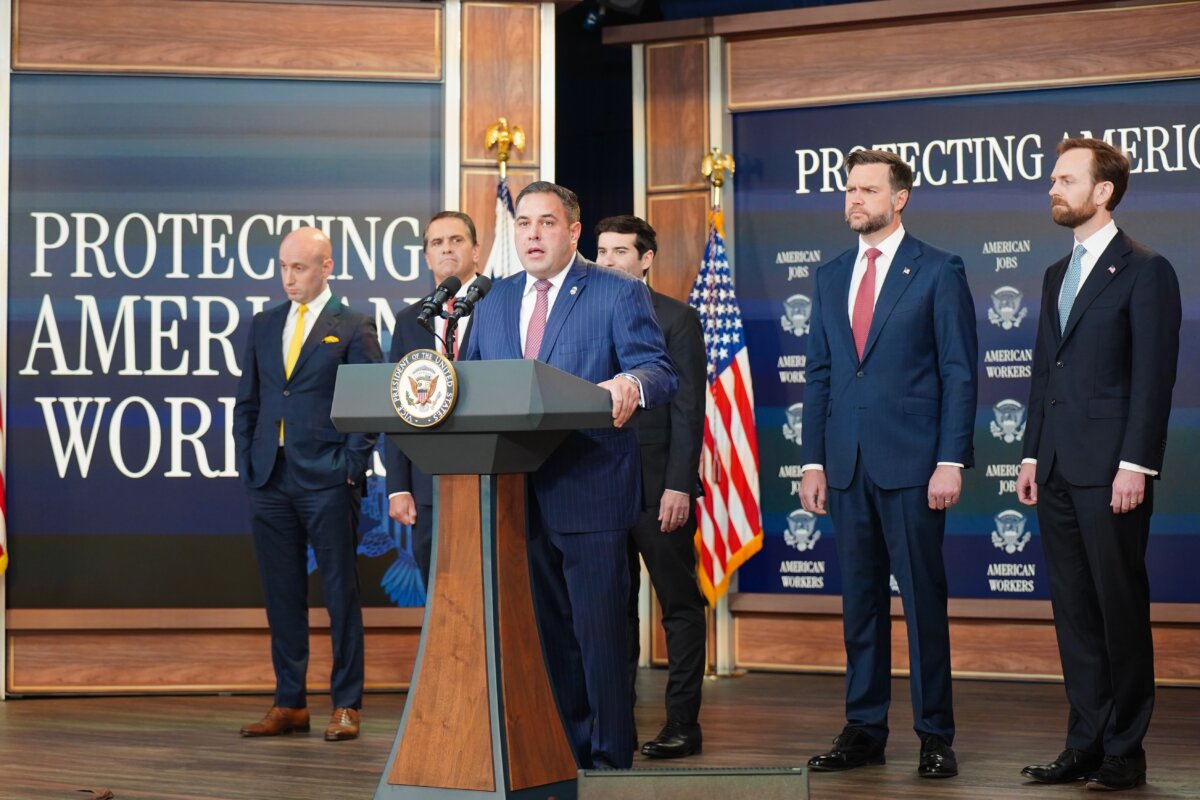

The Labor Department’s inspector general said Oct. 8 that federal investigations involving nine major American universities would examine whether foreign influence, financial relationships, or visa abuse are compromising taxpayer-funded research, specifically warning about threats from the Chinese Communist Party (CCP).
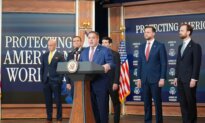
Inspector General Anthony D’Esposito said subpoenas had been served in investigations involving Harvard, Yale, Stanford, Brown, the University of Pittsburgh, University of California–Davis, Caltech, Arizona State University, and MIT.
“The Chinese Communist Party doesn’t need to kick down the doors of America’s research laboratories if our own institutions are willing to leave the doors wide open,” he said at a White House press conference.
“We will investigate whether foreign influence, improper financial relationships, or visa abuse are compromising federally funded research,” D’Esposito said.
The investigation centers on suspected misuse of J-1 visas, which allow foreign scholars to conduct research at American universities. D’Esposito accused institutions of improperly using the visa classifications to avoid employment obligations and exploit taxpayer-funded programs.
The government has not publicly identified specific Chinese institutions or research projects connected to the investigations.
Universities Respond to Federal Investigation
Brown University and the Massachusetts Institute of Technology confirmed to The Epoch Times that they had received federal investigative demands.
Brown said it received a subpoena for “various records pertaining to foreign labor programs administered by the U.S. government” and would respond promptly.
“Brown’s international scholars, students, and employees make essential contributions on our campus, including to teaching and research that advances American innovation, competitiveness, and economic vitality,” the university said.
MIT confirmed receiving a request from the Labor Department’s inspector general on Oct. 8 and said it was reviewing what it described as a “very broad subpoena.”
“Of note, each J-1 visa holder at MIT has been vetted and authorized to come here by the U.S. government, and we take seriously our obligations to follow U.S. law,” an MIT spokesperson said.
MIT also said attracting international talent while protecting U.S. economic and security interests was a national strength.
Visa Practices Under Investigation
Vice President JD Vance said foreign researchers brought in through J-1 visas at the nine universities were paid approximately $20,000 less annually than American researchers.
The State Department’s J-1 research scholar program legally permits international research collaboration. Universities sponsoring these scholars must screen participants, verify their qualifications, and monitor their research activities.
D’Esposito accused universities of improperly using visa classifications to avoid employment obligations. The Epoch Times sought clarification from the Labor Department’s inspector general on the specific suspected violations and has not received a response.
Arizona State University defended its hiring practices in a statement to The Epoch Times, saying its substantial research operations required a large scientific and technical workforce.
ASU said it hired the necessary personnel “in complete compliance with existing United States policy and law.”
Yale University said it is committed to complying with federal visa requirements, including those governing J-1 researchers.
“The university will review the documents concerning this investigation once they are received,” Yale said in a statement to The Epoch Times.
Stanford University also affirmed its compliance with federal visa requirements.
“Stanford complies with all applicable visa laws, including those relating to J-1 visas. We will cooperate with the investigation,” the university said in a statement to The Epoch Times.
D’Esposito said his office was establishing a visa fraud strike team to coordinate investigations across federal agencies and work with the Justice Department.
“We will follow the money, uncover the schemes, and work with Attorney General Todd Blanche to prosecute criminals,” he said.
Previous Concerns About Chinese Military Access
Congress has previously examined how partnerships with Chinese institutions could expose American research to the CCP’s military.
A September 2025 House investigation examined Chinese doctoral students with academic ties to defense-linked institutions at six American universities, including Stanford.
A separate September 2025 congressional report warned that Chinese regime-funded joint university institutes could give Beijing access to American scientific expertise and military-relevant technologies through CCP-influenced leadership, research programs, and financial arrangements. The committee also credited eight U.S. universities, including the University of Pittsburgh, with closing such partnerships following congressional scrutiny.
Those congressional investigations were separate from the newly announced J-1 inquiry.
 Friends Read Free
Copy
Facebook
Tweet
Friends Read Free
Copy
Facebook
Tweet