
North Korea and Russia aim to soon open a road bridge over the Tumen River to connect the two countries directly, North Korean state media KCNA said on April 23.
But the Tumen also flows through China, so the bridge will further block China’s access to the Sea of Japan, with multiple implications on Northeast Asian geopolitics, analysts told The Epoch Times.
North Korean state media didn’t give an opening date, but the Russian Embassy in Pyongyang wrote on Telegram that the bridge would be completed on June 19.
Russia and North Korea held a ceremony on April 21 to celebrate the structural joining of the bridge, according to Russian media outlet The Moscow Times.
The two nations reached an agreement on the construction of the bridge during Russian President Vladimir Putin’s visit to North Korea in 2024. Construction started in late April 2025.
A River to the Sea Blocked
The Tumen River runs through China, North Korea, and Russia, flowing into the Sea of Japan on the Pacific Rim. Russia and China have long had territorial disputes in this region.
During czarist Russia’s colonial expansion in the 19th century into the Far East, Qing Dynasty China established by the Manchus ceded large territories to Russia under the Treaty of Aigun in 1858 and the Treaty of Peking in 1860, including territories along the coast and a stretch of land in the lower stream of the Tumen River, which made Jilin Province from a coastal province into a near-coastal, landlocked region and deprived China of its natural outlet to the Sea of Japan.
Russia’s seizure of the Chinese territories also made the final 11 miles of the Tumen River a border between Russia and Korea, which has extraordinary strategic significance in Northeast Asian geopolitics.
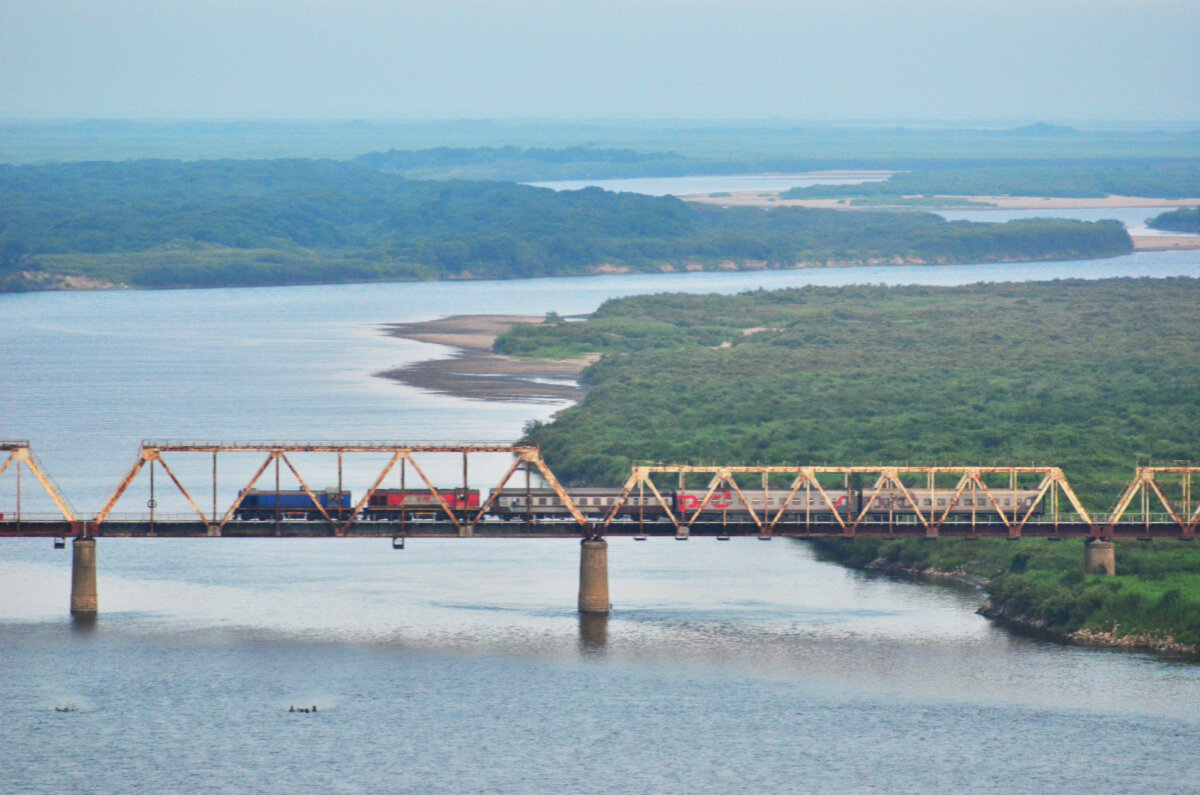
The new Russia–North Korea road bridge is next to the Korea–Russia Friendship Bridge, a railway bridge over the Tumen River, which was built in 1959 during the Soviet era and is still in service. The railway bridge features a low vertical clearance of only about eight meters (about 26 feet), rendering it utterly impassable for large vessels. It cuts off the large Chinese vessels’ access to the mouth of the Tumen River that goes into the Sea of Japan.
The new Russia–North Korea road bridge—with a mere seven-meter vertical clearance—features the same dense pier structure and, likewise, precludes the passage of large vessels, according to Chinese media, which called the bridges a “double lock” on the Tumen River.
In fact, the mouth of the Tumen River is of immense importance to China, Shen Ming-shih, research fellow at the Division of National Security Research at Taiwan’s Institute for National Defense and Security Research, told The Epoch Times.
“This is because if goods from China’s northeastern provinces are to be exported via the sea, they must necessarily pass through the Tumen River. However, now that this bridge has been constructed, the most significant issue is that large vessels will be unable to navigate the Tumen River to reach the open sea; this constitutes the single greatest impact on China,” he said.
China has been fully aware of the implication, Shen said.
“Back when North Korea and Russia first announced building this bridge, this very issue was already being raised—namely, the impact the bridge would have on China’s access to the sea,” he said.
The Chinese regime called on Russia and North Korea to ensure Chinese navigation rights in the mouth of the Tumen River in talks with Russia in 2024 and 2025.
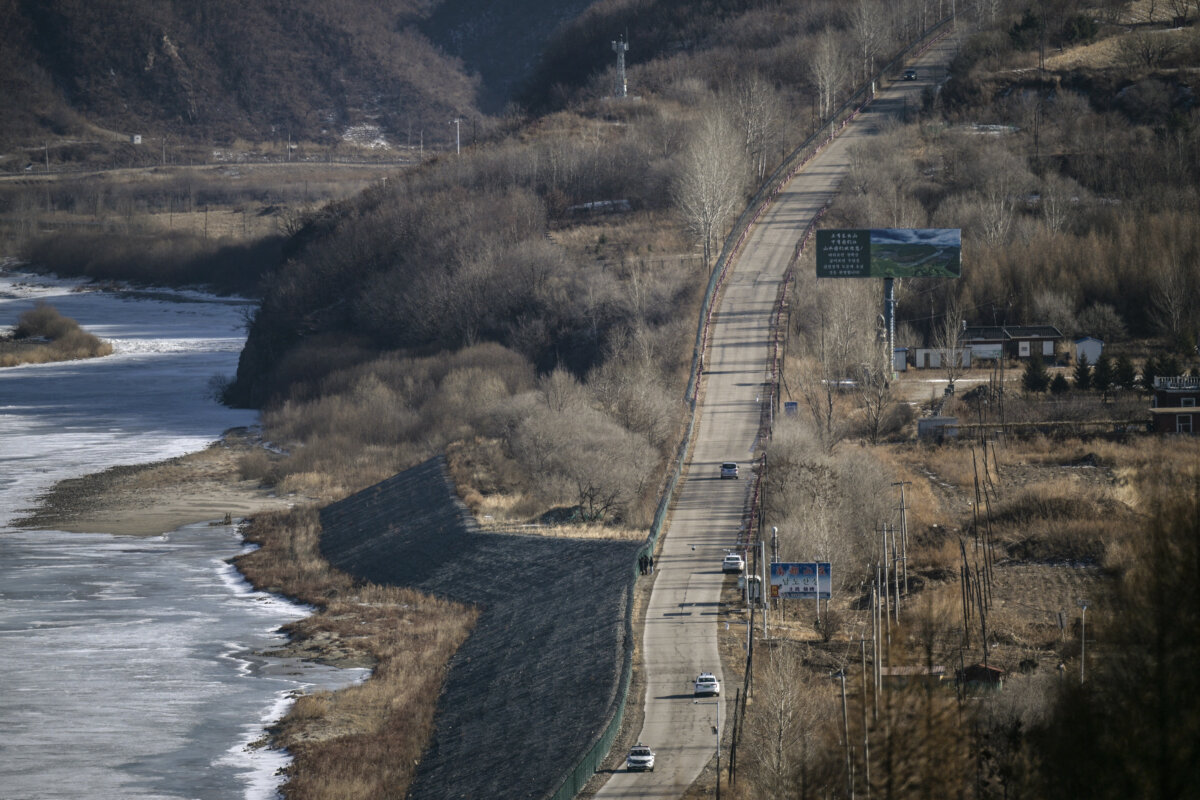
Apparently, both North Korea and Russia have ignored China’s calls, Lin Chih-Hao, an assistant research fellow at the Institute for National Defense and Security Research, who specializes in Korean Peninsula security, told The Epoch Times.
“The completion of this road bridge effectively shatters China’s hopes of securing an outlet to the sea via the Tumen River,” he said. “It appears that North Korea and Russia have no intention of altering their current bilateral operational framework. This may well signify that both nations harbor significant reservations regarding China’s potential use of the Tumen River outlet to access the Sea of Japan.”
The ruling Chinese Communist Party (CCP) appears to be downplaying the completion of the road bridge amid official rhetoric promoting positive China–Russia relations.
At present, the CCP’s ability to undertake countermeasures is quite limited, Lin said, adding that “it has offered no definitive official response to the new bridge.”
“This is likely because, constrained by the current international geopolitical landscape, the CCP must continue to maintain friendly relations with North Korea and Russia,” he said.
CCP leader Xi Jinping has been taking a more aggressive stance in foreign policy in recent years, and the Chinese regime has increasingly found itself at odds with the outside world. Following U.S. forces’ takedown of former Venezuelan leader Nicolás Maduro and significant weakening of the Iranian regime, Russia and North Korea are among Beijing’s few remaining allies.
Shen said that relations between North Korea and Russia have grown increasingly close over the past year or two, noting Kim Jong Un’s support of Russia’s war against Ukraine.
“It can’t be ruled out that by the completion of the road bridge, North Korea might join forces with Russia to counter China’s trade exports across the borders,” he said.
Geopolitical Implications
The Sea of Japan lies off the Korean Peninsula, with Japan situated on the east. Japan, serving as the starting point of the First Island Chain, geographically locks down the maritime outlets of the Sea of Japan in conjunction with South Korea, thereby controlling the strategic chokepoint for naval vessels sailing south from Russia and northeast China.
The First Island Chain is a Cold War-era strategic line in the Asia-Pacific, including Japan, Taiwan, and the Philippines, designed by the U.S. military to contain communist China.
“From North Korea’s perspective, the entry of Chinese maritime forces into the Sea of Japan is likewise detrimental to its own security, as it could alter the current security landscape of the region,” Lin said.
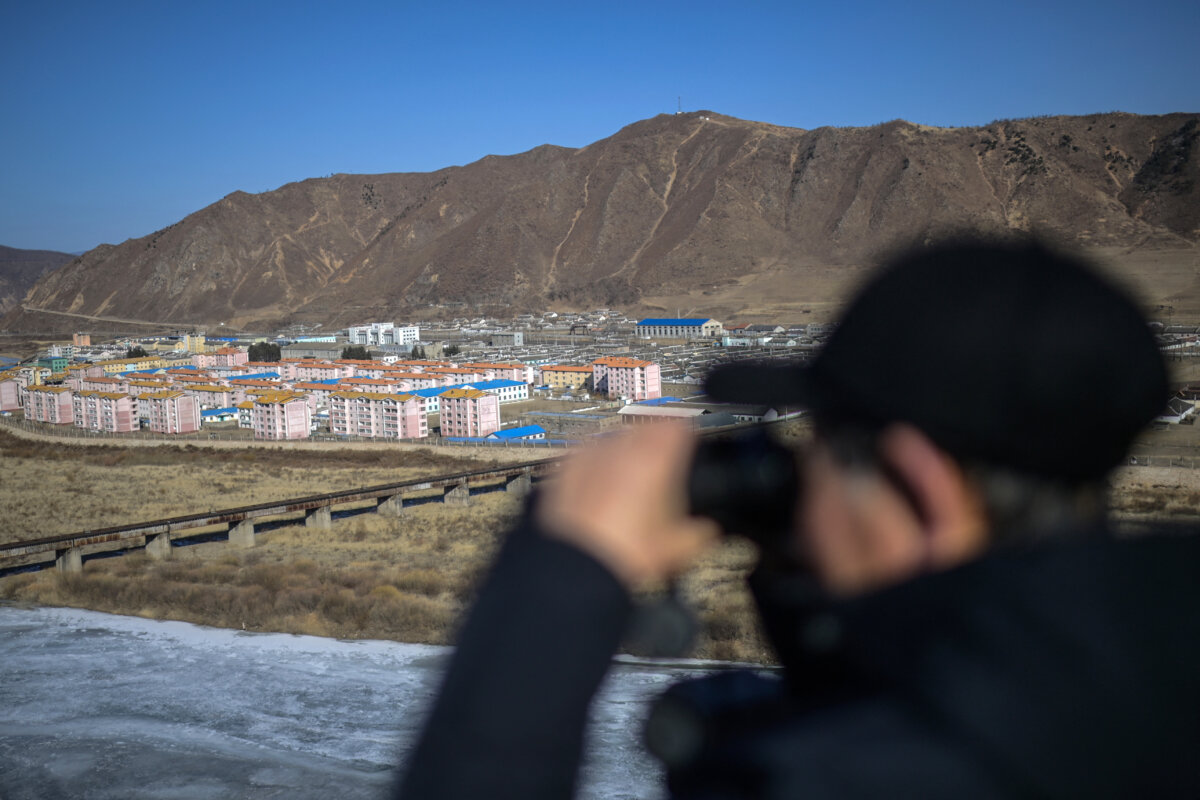
The construction of the North Korea–Russia road bridge holds immense historical significance; it marks the first permanent, large-scale physical road bridge to establish a connection with the Korean Peninsula since the eras of czarist Russia and the Soviet Union, according to Lin.
The bridge indicates that “the scale of North Korea–Russia exchanges will continue to expand—encompassing everything from military cooperation to cross-border trade, logistics, and people-to-people exchanges—and that North Korea’s military provocations will continue to impact Japan,” he said.
“This bridge also signifies that Russia intends to leverage the superb strategic location of northeastern North Korea to develop its Far Eastern Primorsky Krai region and to counterbalance U.S. influence on the Korean Peninsula.
“Simultaneously, it serves to solidify Russia’s more substantive and effective administrative control over these territories, which originally belonged to the Qing Dynasty China, making it an established fact.”
This immediate border region shared by the three nations is an area particularly prone to disputes and conflicts, Shen said.
“Historically, this specific area has been the site of territorial disputes between China and Russia,” he said.
Century-Long Territorial Disputes
The signing of the Sino-Russian Treaty of Aigun in 1858 ceded the last 17 kilometers (about 11 miles) of the northern bank of the Tumen River to Russia. Territories ceded under the treaty also made the coastal province Jilin an inland province, thereby causing China to lose its coastline along the Sea of Japan, yet the Qing did not relinquish the mouth of the Tumen River.
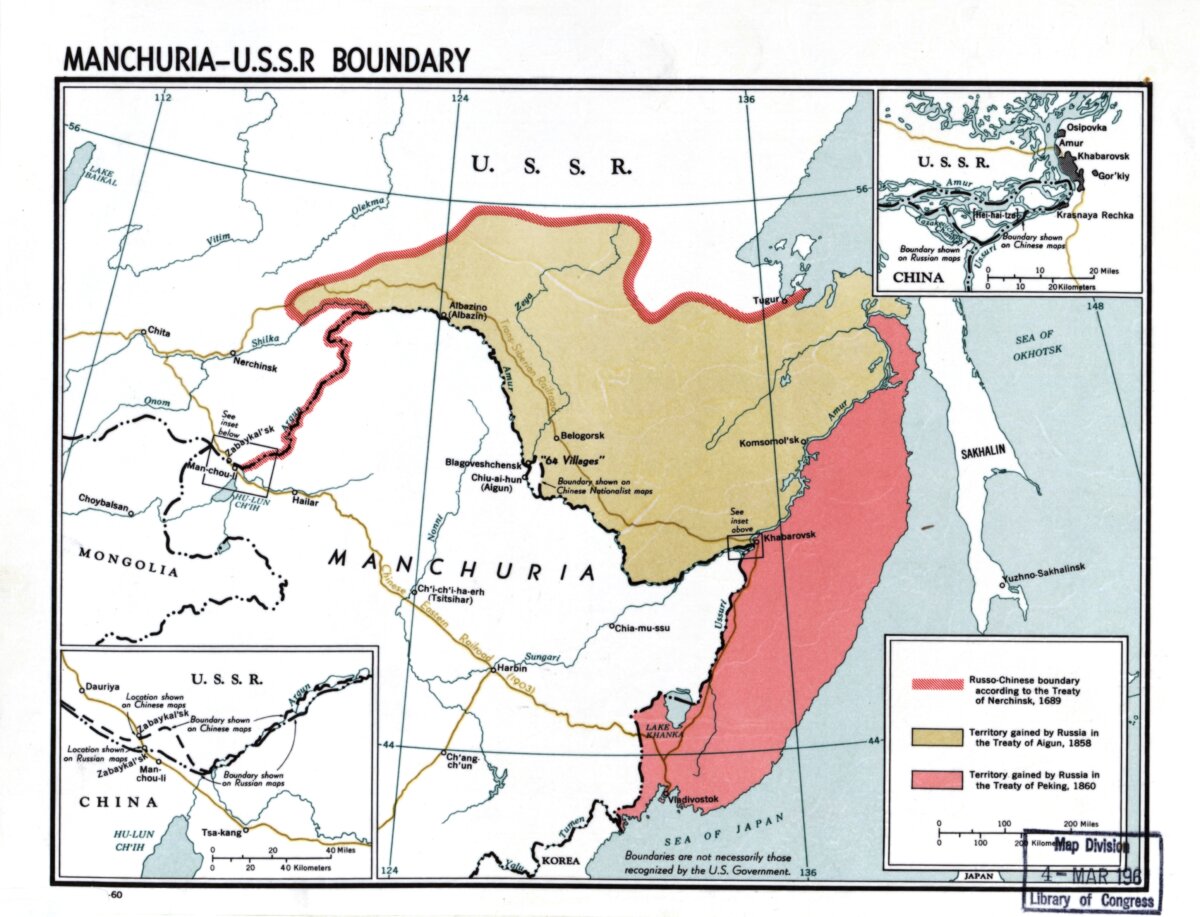
Under the Sino-Russian Treaty of Peking of 1860, the Qing Dynasty of China ceded nearly 400,000 square kilometers of Chinese territory, including the northeast coastal region, to czarist Russia. However, in 1886, while surveying the final section of the boundary along the coast of the Sea of Japan, the Chinese side secured the right to navigate Chinese ships on the Tumen River to the sea. This right was subsequently preserved in later Sino-Russian boundary agreements in the 20th century.
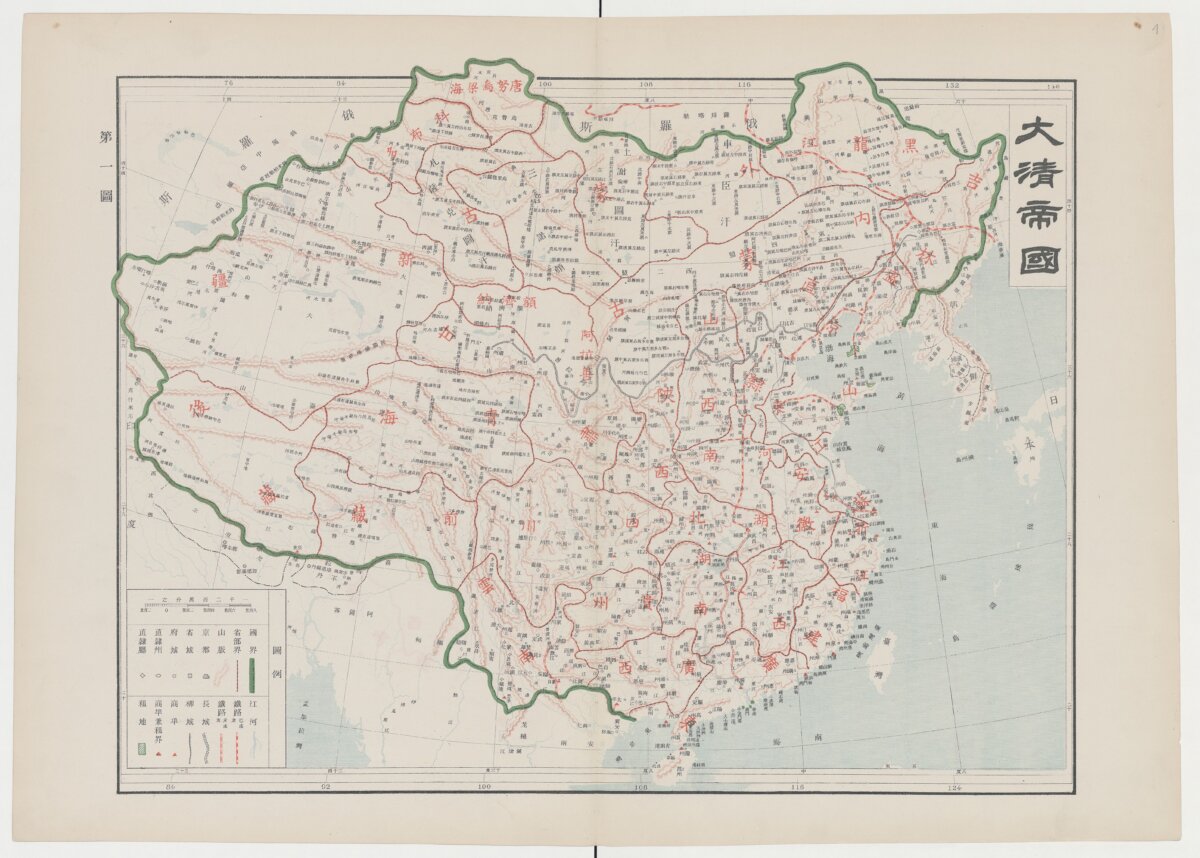
At the end of World War II, the Soviet Union’s Red Army took over northeast China from Japan, occupying more Chinese territories. The nationalist government of the Republic of China claimed back some of the occupied territories from the USSR, but that government was soon defeated by the Chinese communists in 1949 and retreated to Taiwan.
The territorial dispute between China and the Soviet Union continued into the Cold War era, despite both being communist regimes.
In December 1999, former CCP leader Jiang Zemin and then-Russian President Boris Yeltsin signed an agreement on disputed border territory in Beijing. Jiang signed another treaty with Russian President Vladimir Putin in 2001, the Sino-Russian Treaty of Good-Neighborliness, Friendship, and Cooperation.
In these treaties, Jiang officially relinquished sovereignty claims over the Russian-occupied Chinese territories, giving up at least 1.5 million square kilometers that had belonged to China since the Tang Dynasty to Russia, including Wulianghai, Sakhalin Island, and Vladivostok—an area equivalent to dozens of Taiwans. Jiang also gave the mouth of the Tumen River to Russia, sealing off the access of northeast China to the Sea of Japan.
As the geopolitical landscape continues to shift in the 21st century, Shen said that he shared the perspective of more and more strategists who believe that “if Russia is defeated in the Russo–Ukrainian War, or if its national power declines significantly, China might potentially reclaim the territories in this region.”
“Specifically, the lands ceded to Russia under the historic Treaty of Aigun,” Shen said. “Were these lands to be reclaimed, the dispute over the Tumen River—which currently stands as a potential territorial flashpoint between China and Russia—would, of course, cease to exist.”
Luo Ya and Reuters contributed to this report.
 Friends Read Free
Copy
Facebook
Tweet
Friends Read Free
Copy
Facebook
Tweet