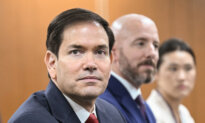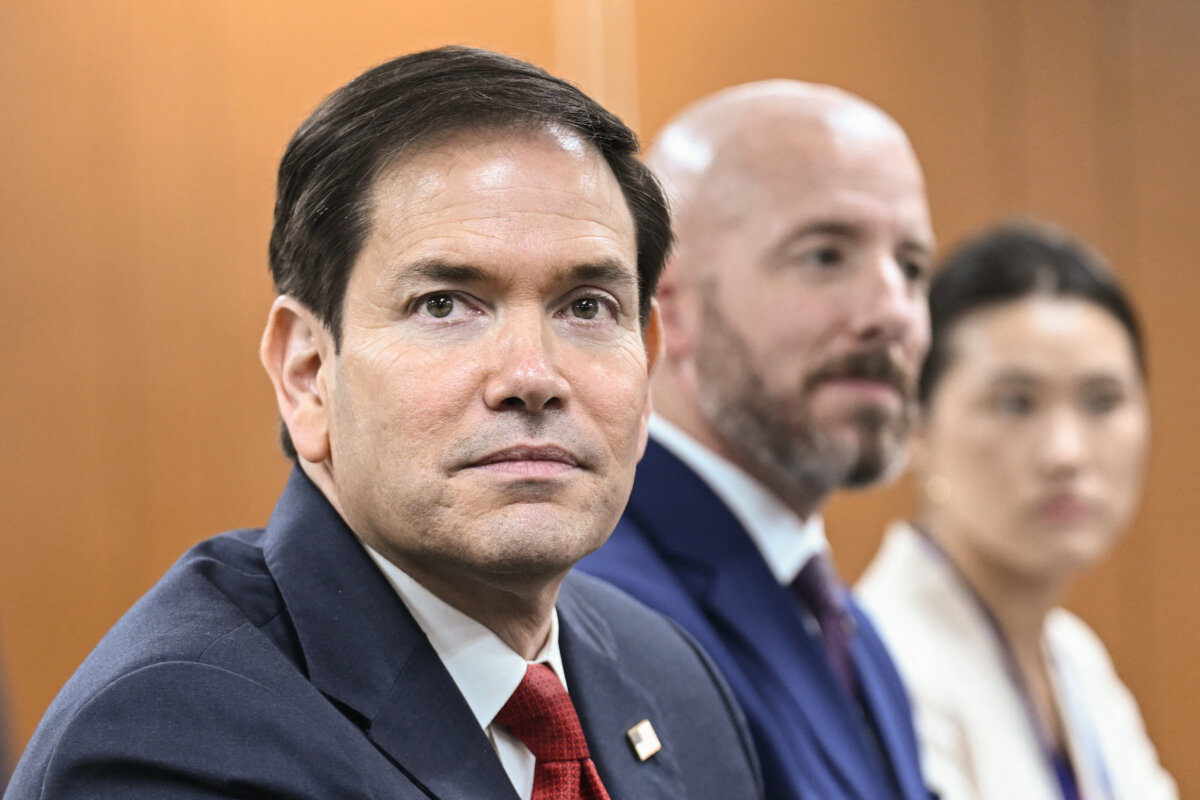

U.S. Secretary of State Marco Rubio said on Thursday that Washington has no plans to lift Hong Kong-related sanctions, even though Chinese officials had brought up the issue during a bilateral meeting a day before.
Speaking to reporters in the Philippines’ capital of Manila, Rubio rejected the view that the Trump administration eased sanctions on Hong Kong by letting one legal basis for the restrictions expire.
“A significant number of individuals in Hong Kong that remain sanctioned that were not covered by the executive order,” Rubio explained. “And that remains in place.”
Referring to a meeting with China’s top diplomat on Wednesday, Rubio said, “That was raised with us yesterday, but we don’t see a change anytime in the near future on that.”
The U.S. Treasury’s Office of Foreign Assets Control last week announced that the president’s Executive Order on Hong Kong Normalization has expired. Signed by President Donald Trump in 2020 during his first term, the executive order declared a state of national emergency in Hong Kong, in response to a draconian national security law Beijing imposed on the former British colony.
The office noted that the emergency order’s expiration does not affect other Hong Kong-related measures, including a 2020 act that provided a legal framework for sanctions on officials and entities involved in the Chinese regime’s subversion of the city’s autonomy.
Rubio, speaking at the briefing in Manila, linked the lapse of the 2020 measures to a change in judgment of the circumstances behind the decision.
“It wasn’t easing of sanctions,” Rubio said, adding that “the circumstances had changed in the president’s judgment.”
In addition to ending some of Hong Kong’s special trade privileges, the 2020 executive order formed a legal basis for sanctions against the city’s chief prosecutor Paul Lam Ting-kwok and other officials found to be eroding the territory’s autonomy.
A Treasury spokesperson said at the time that the president didn’t renew the emergency declaration because it had “significant overlap” with a different Hong Kong-related act. The spokesperson noted that sanctions on 39 of the 48 individuals affected by the expiration remain in place.
“The non-renewal is consistent with sanctions modernization efforts that streamline sanctions for greater efficiency and effectiveness, including by ensuring our sanctions are not duplicative,” the spokesperson told The Epoch Times last week.
The State Department also clarified that the president “allowed the national emergency to end,” but the executive order “otherwise remains in effect.”
As the executive order states, Hong Kong is “no longer sufficiently autonomous to justify differential treatment” in relation to China under certain U.S. laws and provisions listed in the order, a State Department spokesperson previously told The Epoch Times.
The spokesperson added that the United States will continue to “hold individuals accountable for undermining Hong Kong’s autonomy.”
In its latest annual report released in April, the State Department assessed that the Chinese and Hong Kong authorities have systematically eroded Hong Kong’s political autonomy and suppressed civilian rights and freedoms, including through the enforcement of two national security laws and engagement in “transnational repression of U.S. citizens.”
 Friends Read Free
Copy
Facebook
Tweet
Friends Read Free
Copy
Facebook
Tweet