
The Chinese communist regime’s consulate in Odesa, Ukraine, was damaged again in a large-scale Russian airstrike. An investigation by Ukrainian authorities found that the wreckage of the drones used in the attack contained Chinese parts.
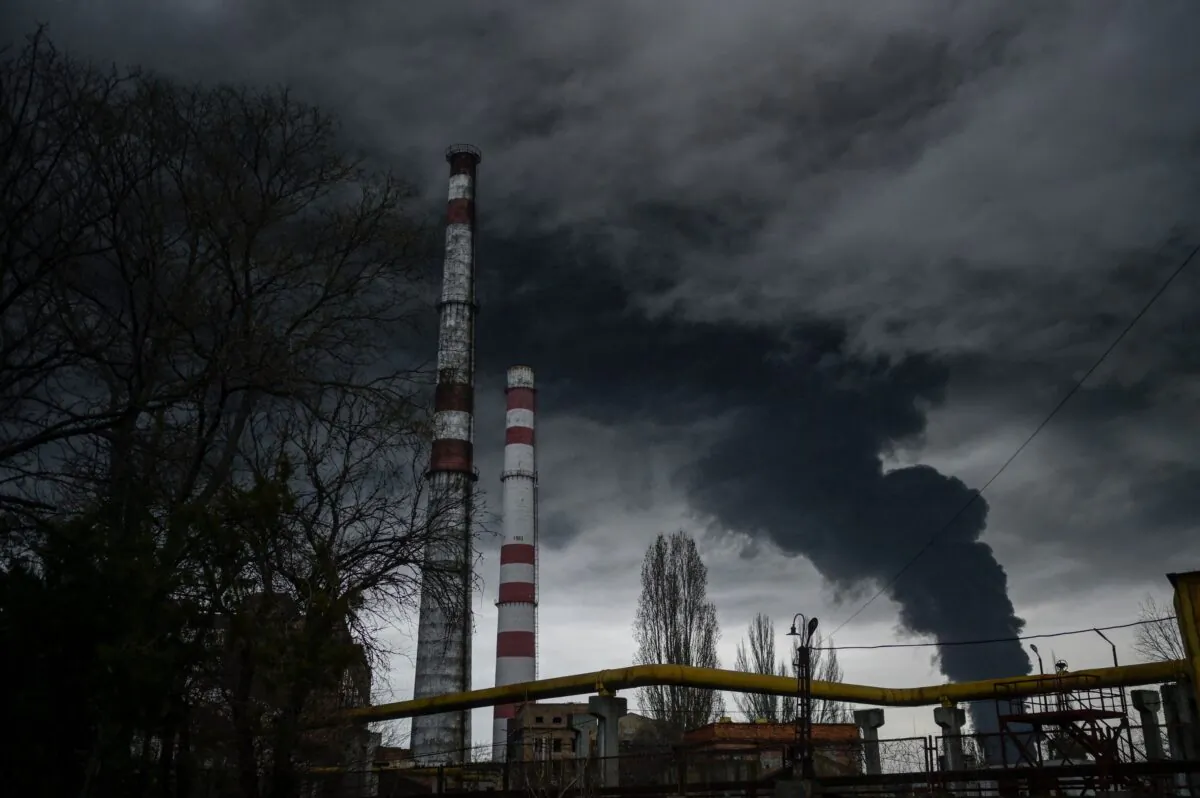
From the night of July 3 to the early morning of July 4 local time, Russia launched a new round of large-scale airstrikes on Ukraine, causing casualties in multiple cities, including Kyiv and Odesa, in the fourth year of fighting since Russia’s invasion of Ukraine in February 2022.
According to Ukrainian authorities and media reports, the Chinese Consulate General in Odesa was affected by the airstrike, with its exterior walls and glass damaged. This is the second time the Chinese consulate has been damaged in a Russian attack since July 2023.
The Chinese regime, Russia’s ally and a major supporter of its war efforts, has not publicly condemned the Russian attack.
Ukrainian Deputy Foreign Minister Andrii Sybiha posted on social media platform X on July 4, saying Ukrainian investigators had found a large number of Chinese-made components in the wreckage.
“Following tonight’s massive Russian air attack on Ukraine, we discovered in Kyiv a component of a Russian-Iranian ‘Shahed-136’/’Geran-2′ combat drone, which was made in China and supplied just recently,” he wrote.
He then noted the minor damage suffered by China’s consulate building in Odesa, saying, “There is no better metaphor for how Putin continues to escalate his war and terror while involving others, including North Korean troops, Iranian weapons, and some Chinese manufacturers.”
The Ukrainian Security Service issued a statement on July 4, saying that parts marked “Made in China” were found in the wreckage of the attack drones used by Russia in the nighttime airstrike on Kyiv. These parts came from Suzhou Ecod Precision Manufacturing Co. in Jiangsu Province, China.
On July 8, Ukrainian President Volodymyr Zelenskyy issued a decree imposing a ban on Chinese companies that supplied Russia with the attack drones used in the July 4 airstrike.
Oleh Ivashchenko, head of the Foreign Intelligence Service of Ukraine, said earlier this year that the Chinese regime provided Russia with mechanical equipment, special chemicals, gunpowder, and key components. He also said that as of the beginning of 2025, 80 percent of critical electronics for Russian drones were of Chinese origin.
Despite the continued denial by the Chinese Communist Party (CCP) of any form of military assistance to Russia, the United States and the European Union have imposed sanctions on dozens of Chinese companies suspected of assisting Russia’s military-industrial system.
Yuan Hongbing, a dissident and legal scholar based in Australia, told The Epoch Times on July 6 that the Chinese drone parts found at the attack site in Ukraine this time are “specific evidence of the CCP’s comprehensive support for Russia.”
Shen Ming-shih, director of the Division of National Security Research at Taiwan’s Institute for National Defense and Security Research, told The Epoch Times on July 6 that because of China’s continuous support, Russia will certainly not agree to a cease-fire.
According to Shen, the Russian military’s increasing reliance on foreign countries’ assistance on the Ukrainian battlefield and the fact that China provided key components of weapons indicate that “China–Russia military cooperation has upgraded from tactical support to system integration.”
“This shows that China’s assistance to Russia has become a systematic project, covering aspects such as weapon parts, logistical supplies, and battlefield information,” he said.
CCP’s Vested Interest in Russia–Ukraine War
Shen said if Russia achieves great results in Ukraine with China’s assistance, or even occupies more land, “it will certainly encourage China to launch provocative or offensive actions in the East China Sea, South China Sea, or Taiwan Strait, and Russia will certainly provide assistance.”
“This may cause the United States and NATO to have to deal with two large conflicts in Ukraine and the Indo-Pacific region at the same time, which is bad news for the Trump administration,” he said.
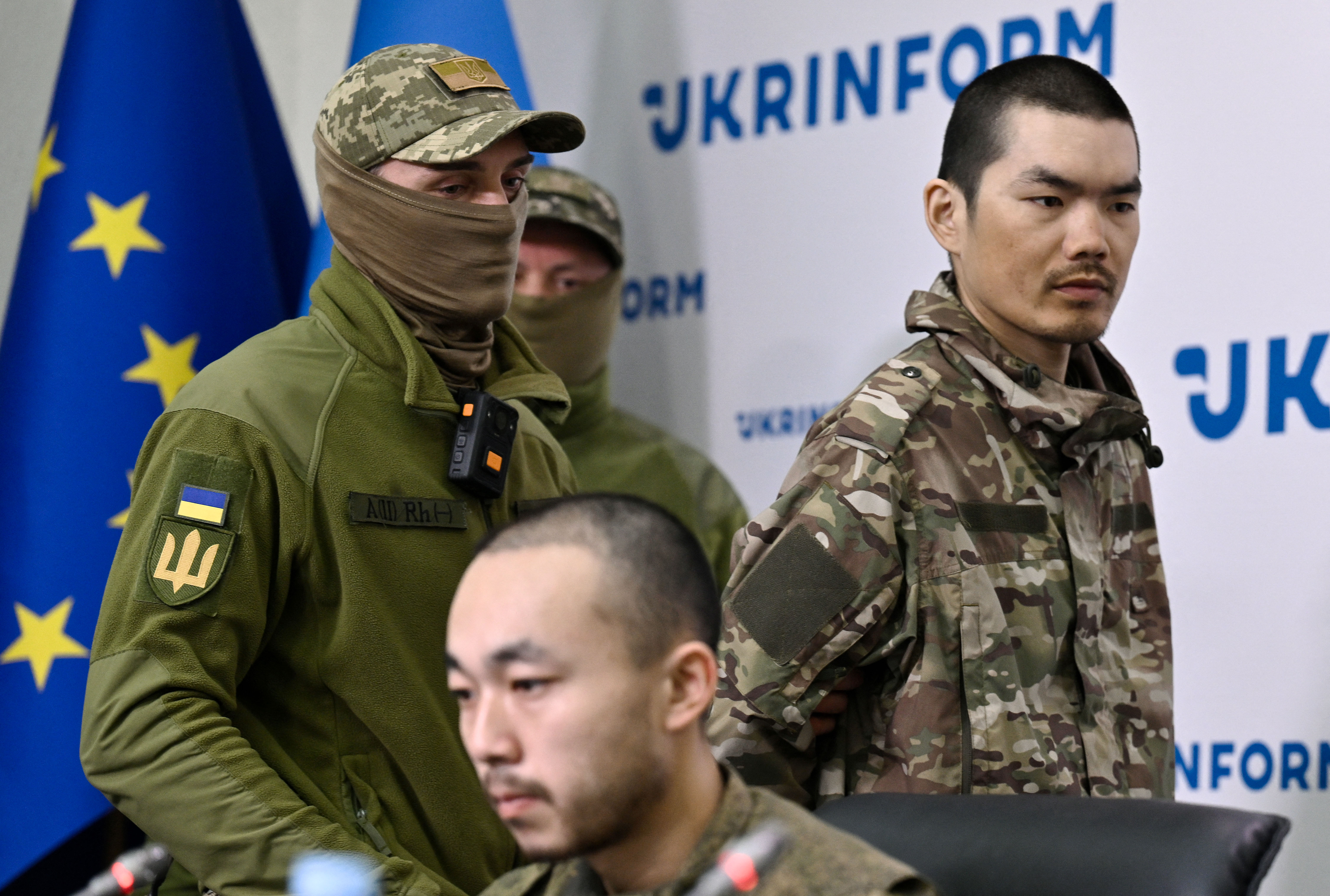
Russia’s accidental hit of the Chinese consulate this time should be viewed as “friendly fire” and does not represent a breakdown in Sino–Russian relations, Chung Chih-tung, an assistant research fellow at Taiwan’s Institute for National Defense and Security Research, told The Epoch Times on July 6.
“Instead, it highlights the fact that the Chinese regime has long provided Russia with dual-use military and civilian supplies,” he said.
Chung noted that China–Russia military cooperation has taken on the form of a “quasi-military alliance”—Russia relies on the Chinese regime to maintain its combat capability, while the CCP uses Russian scenarios to test its key equipment and technologies and to accumulate practical experience for military modernization.
During his visit to Europe, Chinese Foreign Minister Wang Yi told top EU diplomat Kaja Kallas on July 3 that Beijing cannot accept Russia losing its war against Ukraine, as this could allow the United States to turn its full attention to China.
Wang’s rare statement has attracted wide attention from the international community regarding China’s involvement and vested interest in the Russia–Ukraine war.
Yuan said the Chinese regime’s support for Russia ranges from international politics to the economy to the military.
“It supports Russia in all aspects, confronting the West, EU, the United States, and NATO,” he said. “The purpose is to divert attention and national resources of the United States to Europe, so as to create basic conditions for launching a war in the Taiwan Strait in international politics.
“The CCP’s strategic bottom line is that it cannot accept Russia losing the war.”
Li Jing and Luo Ya contributed to this report.
 Friends Read Free
Copy
Facebook
Tweet
Friends Read Free
Copy
Facebook
Tweet