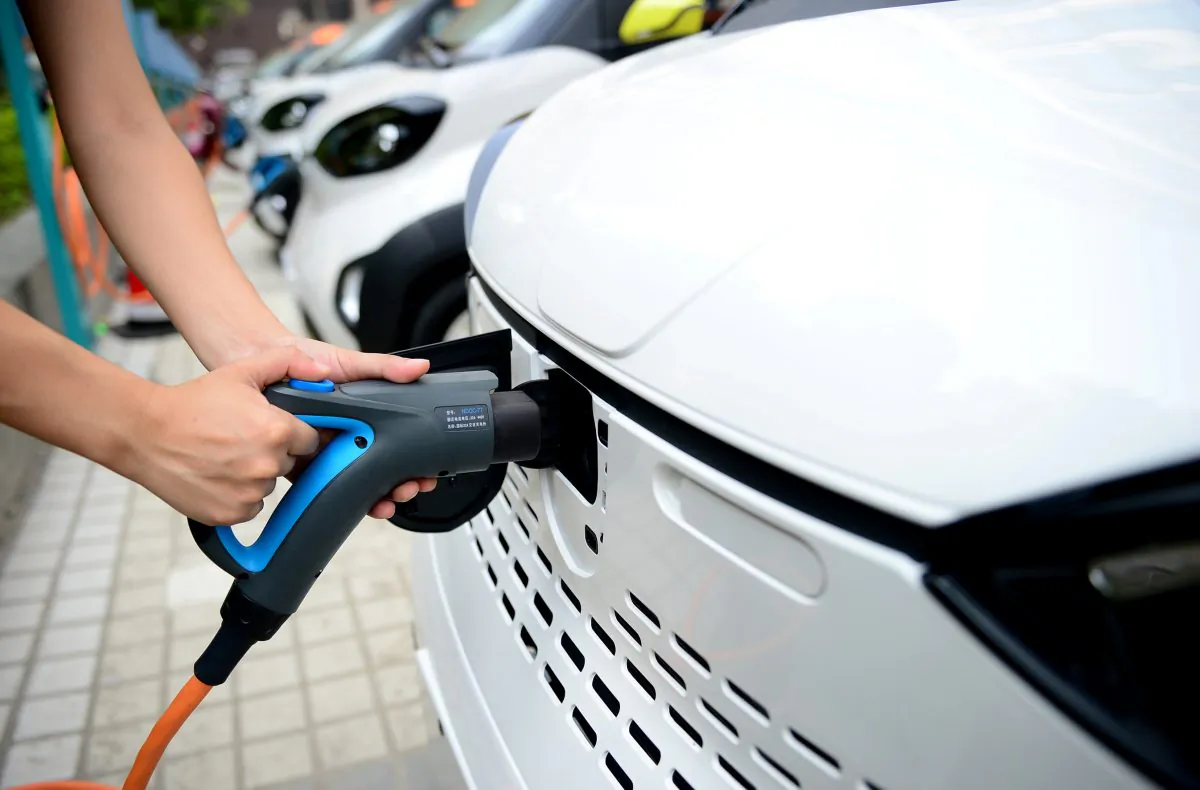
A severe shortage of EV charging facilities hampered the Chinese public’s travel during the busy Oct. 1 holiday week, highlighting China’s industrial imbalance between production capacity and service infrastructure, according to analysts.
During the Chinese regime’s National Day holiday week (Oct. 1–7), the volume of electric vehicles (EVs) on China’s highways surged—peaking at approximately 17.8 million trips on the first day alone, or 1.8 times the usual level, according to the regime’s Ministry of Transport.
Despite installing around 89,000 charging facilities at service areas nationwide, the imbalance between supply and demand remains acute.
Severe congestion occurred at service areas across many regions; some drivers found themselves as far back as 169th in line, facing wait times that typically ranged from five to seven hours—or even required waiting through the entire night, according to Chinese media reports and social media videos. Even after queuing up, EV owners are not guaranteed a quick charge.
Some high-power “flash chargers” have slowed down to “slow charging” speeds because continuous use by multiple vehicles depleted the energy storage units. Battery-swapping stations are also facing similar congestion, with dozens of people waiting and processes taking over five hours.
State media Xinhua News Agency published an article on Oct. 4 about long EV charging lines at highway service areas during the holiday, but framed it as another sign of China’s booming EV industry.
China produces about 16 million electric and plug-in hybrid vehicles annually, making it the world’s largest EV manufacturer.
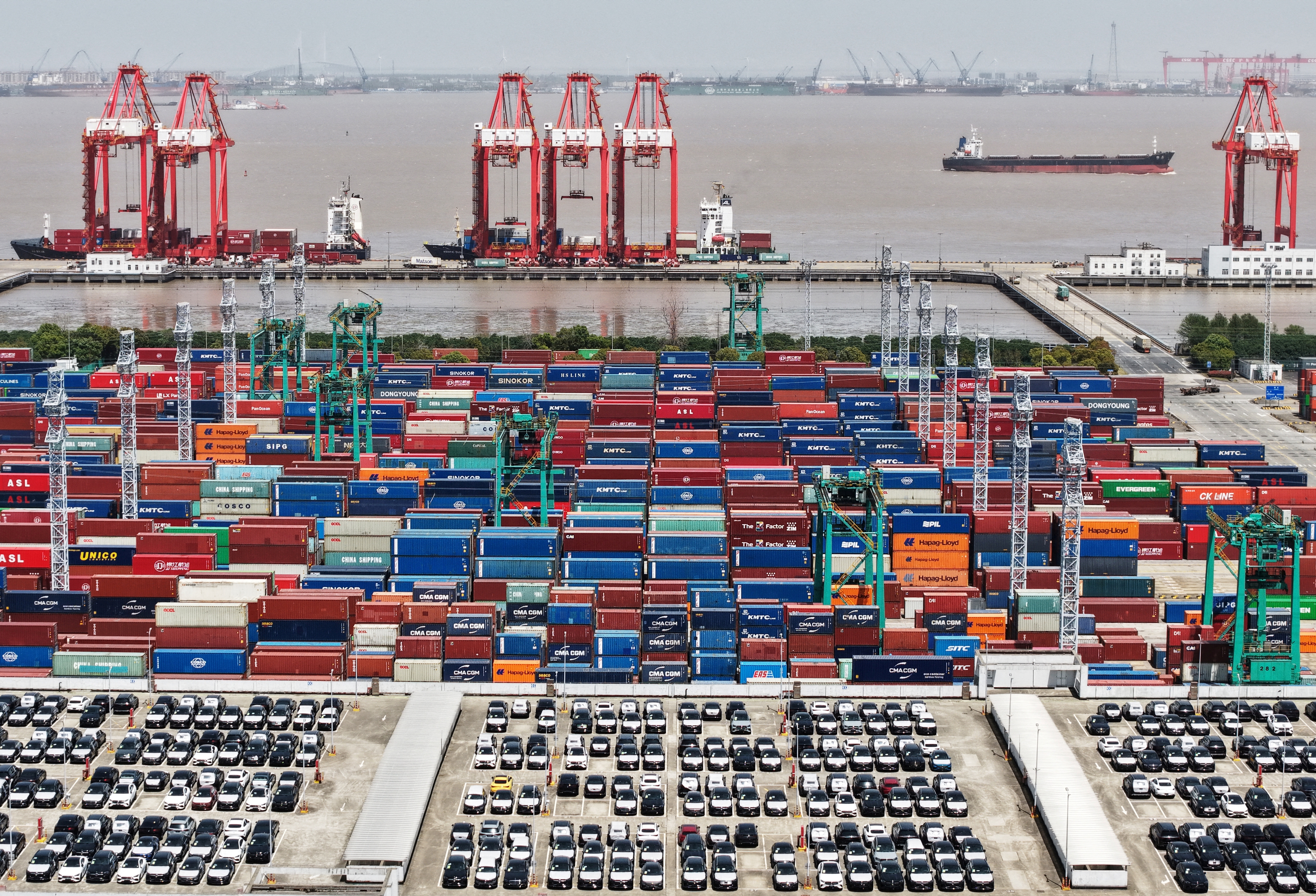 A drone view shows electric vehicles (EVs) for export and containers sitting at a port in Shanghai, China, on April 13, 2025. (China Daily via Reuters)
“Manufacturing and selling EVs can directly generate revenue, investment, and be shown as officials’ political achievements,” he said.
In contrast, charging stations, transformers, grid capacity upgrades, service area renovations, and associated traffic management require sustained government investment and coordination across departments, which have lagged behind production expansion, Wong said.
The long waiting lines and the difficulty of high-speed charging cannot be simply attributed to an insufficient number of charging piles, he said.
“Even if the piles are available, power capacity may be inadequate, requiring power to be shared when multiple vehicles charge simultaneously; furthermore, space at service areas is limited, and queues can block the entrance,” he said.
As China’s EV production capacity expands, and companies reap profits, Chinese Communist Party officials easily tout production volume, sales figures, exports, and the scale of factory construction as achievements, Wong said. However, consumers are left to bear the resulting inconvenience and long-term risks, including waiting times, ancillary costs, quality risks, and environmental toll, Wong noted.
“This distribution of costs is precisely the core issue that demands scrutiny regarding industrial policy,” he said.
Grid Capacity Constraints
The EV service facility shortage in China is hard to change, Wang He, a U.S.-based senior China analyst, told The Epoch Times.
He said highways and surrounding areas are essentially a state-owned monopoly.
“Many highway locations are in remote, undeveloped areas where power supply capacity is limited,” he said. “The current push for fast charging places heavy demands on the power grid. However, upgrading the infrastructure, such as increasing capacity and installing larger transformers, entails astronomical costs, which the Chinese regime won’t fund.”
Another reason is that the charging piles installed in China prior to 2020 are now largely obsolete, Wang said. “Moreover, profit margins in the charging industry are currently declining and are very low. Consequently, resolving this issue in China is quite difficult, as it involves economic interests,” he said.
In addition, many Chinese hybrid vehicle owners choose to charge their cars rather than refuel them, as fuel prices in China remain high, Wang said.
“This also places increased strain on charging infrastructure,” he said.
Wong said that under the circumstances, some consumers might reconsider traditional internal combustion engine vehicles or hybrids that can run on fuel.
“When the money saved on fuel comes at the cost of hours spent waiting, restricted travel plans, or even the fear of continuing the journey, it alters their assessment of the cost of vehicle ownership,” he said.
Luo Ya and Li Jing contributed to this report.
 Friends Read Free
Copy
Facebook
Tweet
Friends Read Free
Copy
Facebook
Tweet