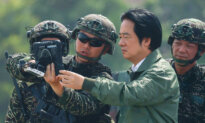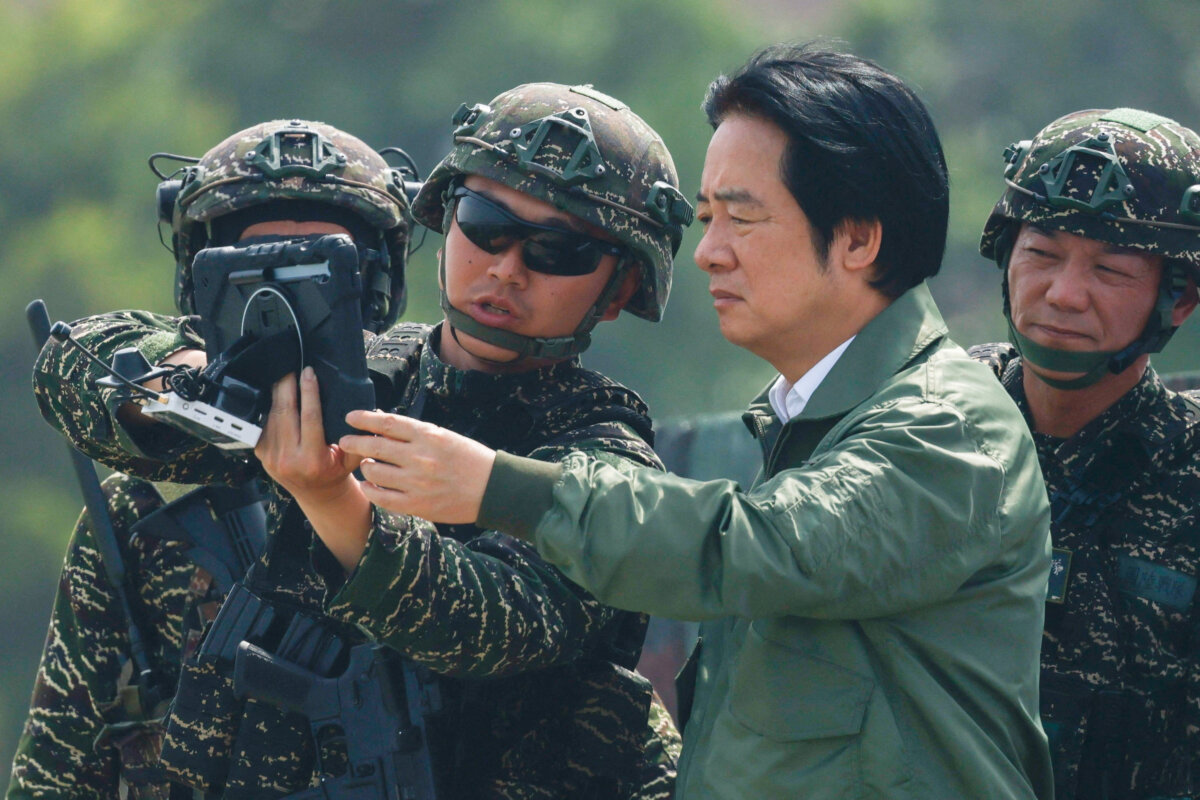
Taiwan President Lai Ching-te said on Oct. 8 that the island nation will boost defense spending to secure peace through strength, as he called for deeper U.S.–Taiwan cooperation in defense technology and urged the development of a drone supply chain that excludes China.
Lai made the remarks while meeting a delegation led by U.S. Sen. Michael Bennet (D-Colo.) in Taipei ahead of Taiwan’s Oct. 10 National Day.
“Peace and stability in the Taiwan Strait are not Taiwan’s concern alone, but bear on the stability and development of the entire first island chain and the Indo-Pacific region,” Lai said, according to Taiwan’s Presidential Office.
He said Taiwan’s overall defense budget has risen to 3.2 percent of its gross domestic product this year and is expected to reach 3.9 percent of GDP next year, accounting for more than 20 percent of the central government’s total expenditures. Taiwan aims to raise defense spending to 5 percent of GDP by 2030, he said.
“Taiwan is determined to enhance its self-defense capabilities and to safeguard peace through strength,” Lai said.
Lai also emphasized that the increased spending was intended to transform how Taiwan prepares for a potential conflict, rather than simply increase the size of its defense budget.
“In increasing our investment in national defense, what matters is not simply a larger budget, but a change in the way Taiwan defends itself,” he said.
Taiwan is seeking to incorporate artificial intelligence, unmanned systems, space technology, and new communications and command systems into its military, Lai said.
He thanked bipartisan members of the U.S. Congress and the Trump administration for supporting Taiwan’s efforts to strengthen its defenses and said Taipei hopes to work with Washington to build a drone supply chain that excludes Chinese technology.
US Senator Pledges Continued Support
Bennet said Congress has strong bipartisan support for maintaining peace and stability across the Taiwan Strait, including providing Taiwan with weapons necessary for its defense.
He said he would continue working with his congressional colleagues to ensure that previously authorized and funded support for Taiwan is implemented.
Bennet praised Taiwan as one of the world’s strongest and most dynamic democracies, saying its resilience and commitment to building a free and open society are essential to maintaining a free and open Indo-Pacific.
The senator also highlighted Taiwan’s planned acquisition of more than $24 billion worth of military equipment through a special defense budget, as well as more than $7 billion allocated to unmanned systems.
Conflicts in Ukraine and the Middle East have demonstrated the importance of unmanned systems, Bennet said, adding that developing such capabilities in Taiwan would strengthen the island’s deterrence.
Space and Tech Cooperation
The visit also underscored growing U.S.–Taiwan cooperation in emerging technologies.
Lai noted that Bennet represents Colorado, which he described as a leading center for American space technology. Bennet has also been promoting legislation aimed at strengthening U.S.–Taiwan cooperation in space.
Taiwan began deploying its first domestically developed optical remote-sensing satellite constellation, Formosat-8, last year. Lai said he hopes Bennet will continue supporting deeper cooperation between Taiwan and the United States in space technology.
Bennet said Colorado and Taiwan have already developed closer partnerships in areas including space, quantum technology, optoelectronics, agriculture, and semiconductors. He pledged to continue promoting bipartisan cooperation in the Senate to strengthen U.S.-Taiwan space cooperation and deterrence in the Indo-Pacific.
Lai also highlighted Taiwan’s efforts to strengthen what he called “whole-of-society defense resilience.”
Taiwan has combined its annual Han Kuang military exercises with urban resilience exercises designed to prepare civilians and local communities for emergencies, he said.
“By conducting them at the same time and under the same conditions, we aim to achieve the goals of military-civilian cooperation and all-out defense,” Lai said.
Bennet said the United States and its bipartisan congressional leadership would continue supporting Taiwan’s democracy, security, and prosperity.
“The American people stand with Taiwan,” he said, according to Taiwan’s Presidential Office.
Zhong Yuan contributed to this report.
 Friends Read Free
Copy
Facebook
Tweet
Friends Read Free
Copy
Facebook
Tweet