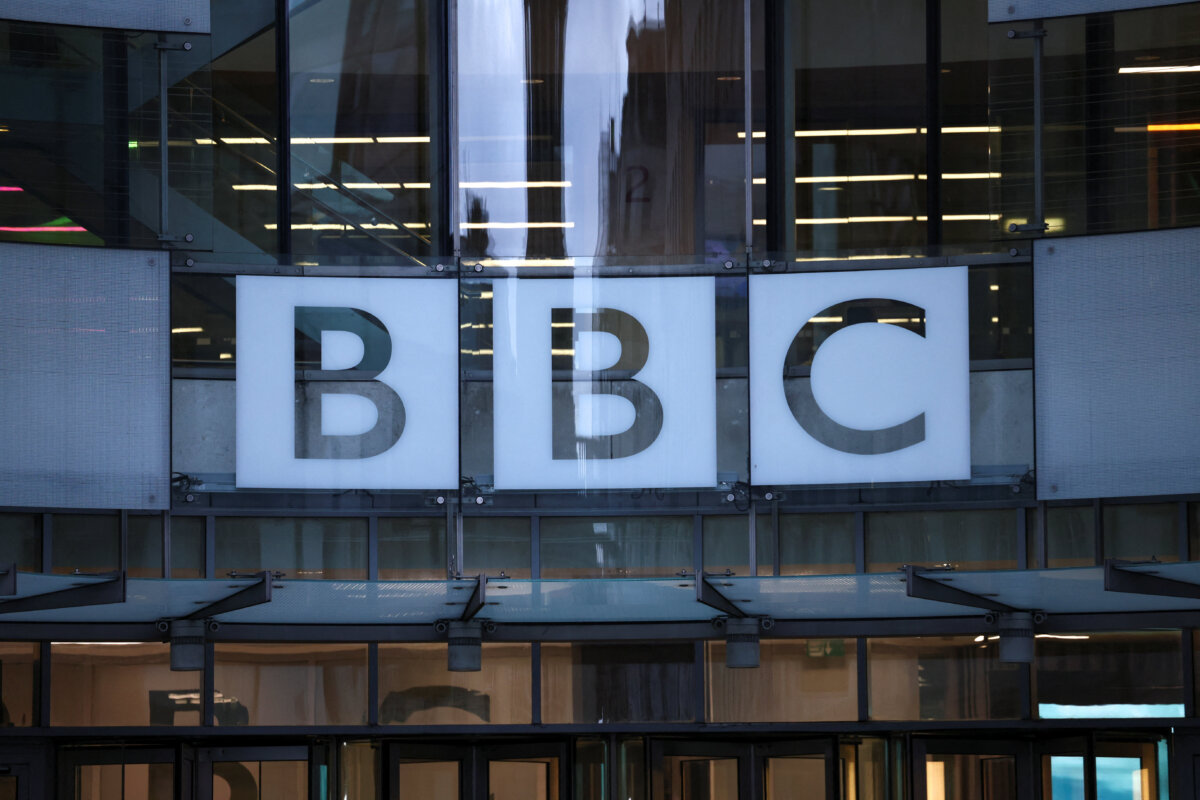

The British Broadcasting Corporation (BBC) said on April 15 that it will cut up to 2,000 jobs as part of a sweeping effort to reduce costs by roughly 10 percent, amounting to about 500 million pounds ($677 million), over the next two years.
The announcement was delivered to staff during an internal call, marking one of the broadcaster’s most significant restructuring efforts in recent years. According to interim director-general Rhodri Talfan Davies, the move is intended to address mounting financial strain from inflation, pressure on the license fee, and broader economic uncertainty.
“I know this creates real uncertainty, but we wanted to be open about the challenge,” Davies said in a message to employees.
The scale of the planned reductions makes it the largest round of job cuts at the BBC in more than a decade. The majority of the reductions are expected to take place in the fiscal year beginning April 1, 2027, as part of a broader plan to shrink the broadcaster’s budget by about a 10th by 2029.
The restructuring comes as the BBC navigates leadership changes. Former Google executive Matt Brittin is set to assume the role of director-general next month, filling a vacancy left after the resignations of director-general Tim Davie and BBC News CEO Deborah Turness.
Their departures followed criticism over a BBC documentary that edited remarks made by U.S. President Donald Trump during a Jan. 6, 2021, speech. The broadcaster was accused of combining separate excerpts in a way that critics said misrepresented the timeline of Trump’s comments.
Davie, who spent two decades at the BBC, said in a letter to staff that stepping down was his decision, though he acknowledged the controversy contributed to the timing.
“There have been some mistakes made, and as Director-General I have to take ultimate responsibility,” he wrote.
Turness, in her resignation statement, said the situation had reached a point where it was “causing damage to the BBC—an institution that I love,” adding that “the buck stops with me.”
Founded in 1922 as a radio service designed to “inform, educate and entertain,” the BBC has since grown into one of the world’s largest public broadcasters. It now operates multiple television channels, national and local radio stations, and a global digital presence, including its iPlayer streaming platform.
The organization is primarily funded through an annual license fee paid by British households that watch live television or access BBC content. The fee recently rose to 180 pounds ($244), though it has faced increasing scrutiny from critics who argue it is outdated in the streaming era.
 Friends Read Free
Copy
Facebook
Tweet
Friends Read Free
Copy
Facebook
Tweet