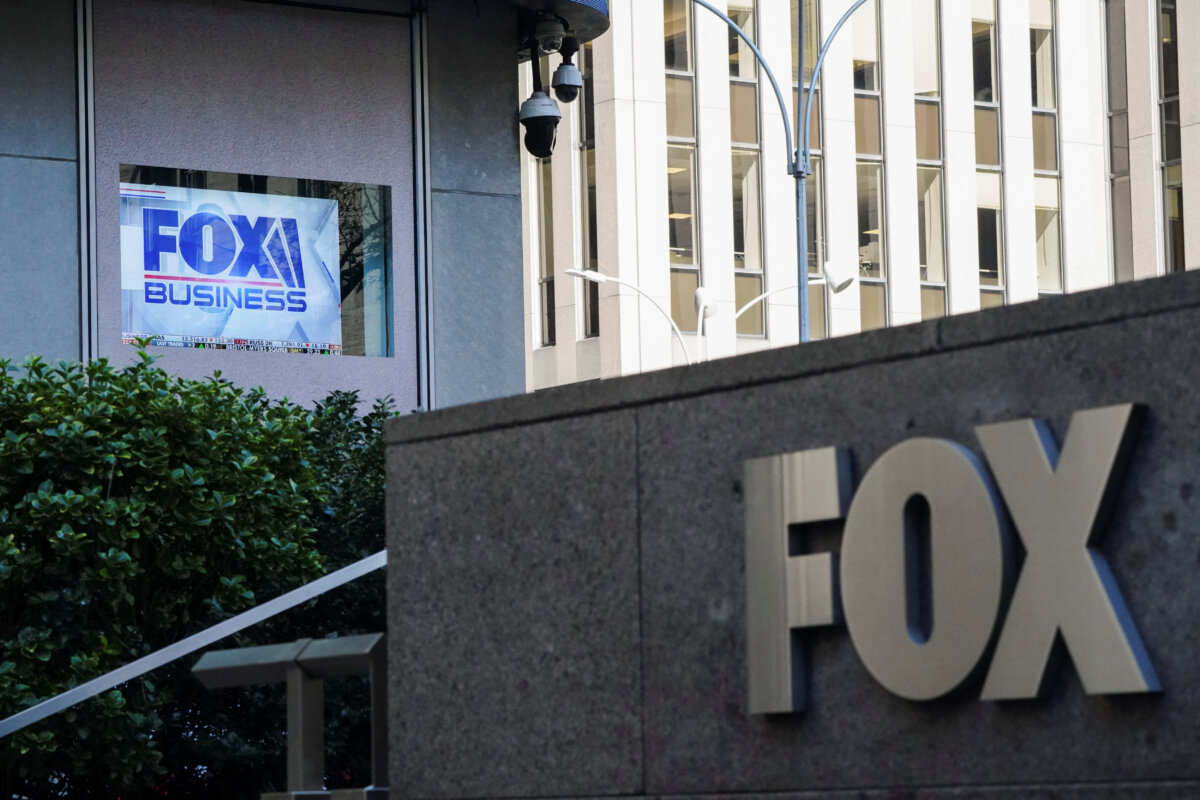

Fox Corporation and YouTube announced on Aug. 28 that they had reached a deal to renew their carriage agreement, ensuring Fox channels remain available on YouTube TV.
Fox said in a statement that the full portfolio of Fox networks—including Fox News Channel, Fox Business Network, Fox Sports, and local Fox stations—would be renewed for broadcasting on the streaming platform.
YouTube said in a blog post, “We’re happy to share that we’ve reached an agreement with Fox to keep their content on YouTube TV, preserve the value of our service for our subscribers and offer more flexibility in the future.”
The corporations did not disclose the financial terms of the agreement.
The two companies had been in talks to renew their carriage contract, with YouTube saying on Aug. 25 that Fox channels may go dark on its YouTube TV platform if an agreement could not be made with Fox Corporation by 5 P.M. ET on Aug. 27.
The companies reached a short-term extension on Aug. 27 to prevent disruption to YouTube TV subscribers, allowing both parties to continue to work on the new agreement, which was completed the following day.
Before reaching a deal, the two media giants publicly acknowledged the state of their negotiations. YouTube said on Aug. 27 that Fox Corporation was asking for fees “far higher” than those paid to other partners offering similar content.
Meanwhile, Fox said that it had been committed to reaching a fair agreement, but was “disappointed that Google continually exploits its outsized influence by proposing terms that are out of step with the marketplace.”
In Time for College Football
Federal Communications Commission (FCC) Chairman Brendan Carr weighed in on the carriage dispute, writing on X the day before the deadline that the removal of the Fox channels from YouTube TV “would be a terrible outcome.”
“Millions of Americans are relying on YouTube to resolve this dispute so they can keep watching the news and sports they want—including this week’s Big Game: Texas [at] Ohio State,” the FCC chairman wrote, adding, “Get a deal done Google!”
The urgency to secure a deal in time for major college sporting events was acknowledged by YouTube, which said in its Aug. 28 statement that the newly reached agreement meant “football fans will not miss any of the action this weekend.”
Carr wrote on X on Aug. 28 in response to news of the agreement: “I’m very pleased that Google and Fox have now reached a deal. This is great news for college football fans and avoids blackouts.”
YouTube TV Partnerships
YouTube has partnerships with content providers such as Fox, Paramount, and CNN to offer their channels through its subscription-based streaming service, YouTube TV.
In February, YouTube TV and Paramount Global—which owns channels including CBS, Comedy Central, MTV, and Nickelodeon—renewed their partnership, after negotiations had earlier stalled.
In the past, YouTube TV has faced other carrier contract disagreements, including a two-day blackout of Disney content in 2021 that revoked subscriber access to channels such as ABC, ESPN, and FX.
According to a February 2024 letter from YouTube CEO Neal Mohan, YouTube TV had more than 8 million subscribers. In December 2024, the company raised its monthly subscription price by $10, from $72.99 to $82.99, more than double the original $35-a-month price at its launch in 2017.
According to the latest figures from audience analytics company Nielsen, streaming accounted for nearly half (47.3 percent) of all TV viewing in July.
Nielsen’s The Gage—which is a monthly snapshot of total streaming, cable, and broadcast consumption through a television screen—found that the streaming share was followed by cable (22.2 percent), broadcast (18.4 percent), and other sources (12.1 percent).
In terms of streaming, YouTube Main (excluding YouTube TV) set a platform record in July, with 13.4 percent of the viewership, followed by streaming giant Netflix at 8.8 percent.
 Friends Read Free
Copy
Facebook
Tweet
Friends Read Free
Copy
Facebook
Tweet