

This article includes affiliate links, which may earn us a commission, to support truthful and independent journalism at no extra cost to you. Prices, discounts, product details, and availability can change; verify current terms before buying.
Search “natural bug spray,” and you’ll get thousands of results, but not all of them belong in the same conversation. Some plant-derived ingredients are EPA-registered and have been shown to perform as well as low-concentration DEET. Others are pleasant-smelling essential oil blends that lose their effect within the hour. The goal of this guide isn’t to tell you plant-based is automatically better — it’s to help you tell the difference before you’re the one getting bitten.
Why people are moving away from DEET
- Skin sensitivity:DEET can irritate skin and eyes in some people, especially at higher concentrations, and isn’t recommended on infants under 2 months old.
- Household exposure:Families with young kids, pregnant members, or pets at home often prefer to limit synthetic pesticide use where they can, particularly for repellent that’s reapplied daily on skin.
- Material damage:DEET can degrade certain plastics, synthetics, and rubberized gear — a real annoyance for hikers and campers who spray it near watch bands, sunglasses, or tent fabric.
- Scent and feel:Plenty of people simply don’t like how DEET smells or feels on skin over a full day outdoors.
None of that makes DEET unsafe when used as directed — it’s still the ingredient most experts reach for first, and it remains the benchmark against which other repellents are measured. But it does explain why “plant-based” has become one of the fastest-growing categories in insect repellent, and why it’s worth knowing which plant-derived ingredients can actually stand in for it.
What “Plant-Based” Actually Means
Not every plant-based repellent meets the same standard. A critical factor to consider is whether the active ingredient is EPA-registered.
🌿 Backed by real testing
- Oil of Lemon Eucalyptus (OLE / PMD): the CDC-recognized plant-derived option, shown to perform close to low-concentration DEET.
- 2-Undecanone: a plant-derived compound (also found in tomato leaves) registered by the EPA as an active repellent ingredient.
- Catnip oil and oil of citronella: also appear on the EPA’s registered list, though typically with shorter protection windows.
⚠️ Read the label carefully
- Pure essential oil blends (peppermint, lavender, eucalyptus, vanilla) are often not EPA-registered and tend to lose effectiveness within about an hour as the oils evaporate.
- Higher essential-oil concentrations can mean longer protection — but also a higher chance of skin irritation.
- “Natural” and “non-toxic” aren’t regulated marketing terms. The EPA registration number on the label is the reliable signal, not the front-of-bottle claim.
A quick sourcing note: not every product marketed as “plant-based” relies exclusively on naturally derived ingredients. Some use synthetic compounds inspired by chemicals found in nature—for example, picaridin was developed based on a compound found in black pepper plants. For this guide, we’ve focused on repellents whose active ingredients are genuinely plant-derived, and we’ve noted when a formula includes a synthetic ingredient to enhance performance.
The most direct DEET swap. Most of the picks below use oil of lemon eucalyptus (OLE) at the 30% concentration that independent testing has linked to 5–7 hours of mosquito protection.

Murphy’s Naturals Mosquito & Tick Bug Repellent Spray 6 oz.
30% OLE · EPA Registered
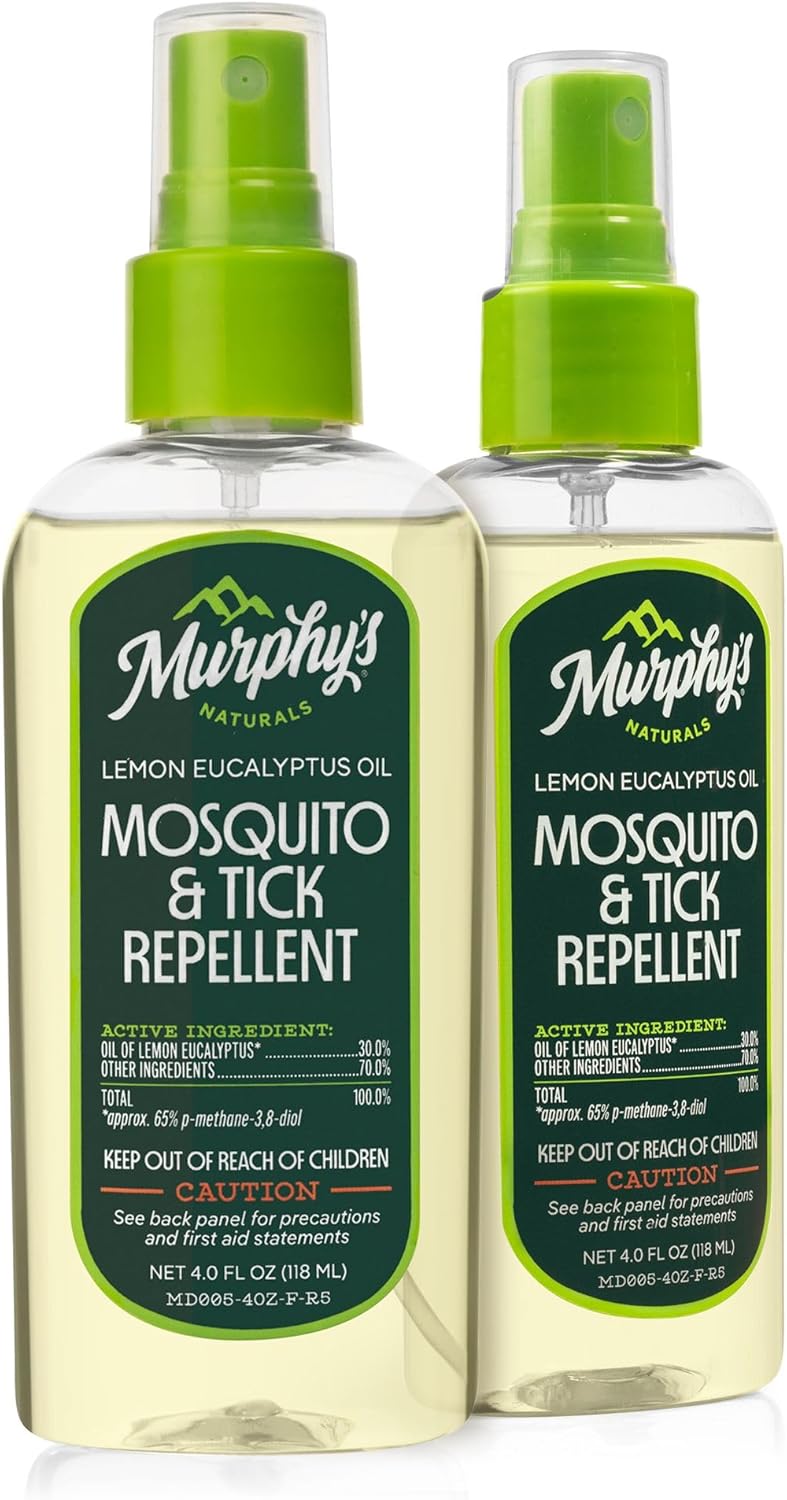
Murphy’s Naturals Mosquito & Tick Bug Repellent Spray 4 oz.
30% OLE · EPA Registered
No synthetic actives, dyes, or added fragrance – just OLE, water, and corn ethanol. Rated for ~6 hrs on mosquitoes and up to 8+ hrs on lone star and brown dog ticks. Gear-safe, TSA carry-on size available ($8 from Sprout Farmers Market).

Repel Lemon Eucalyptus Insect Repellent 4 oz.
30% OLE · EPA Registered
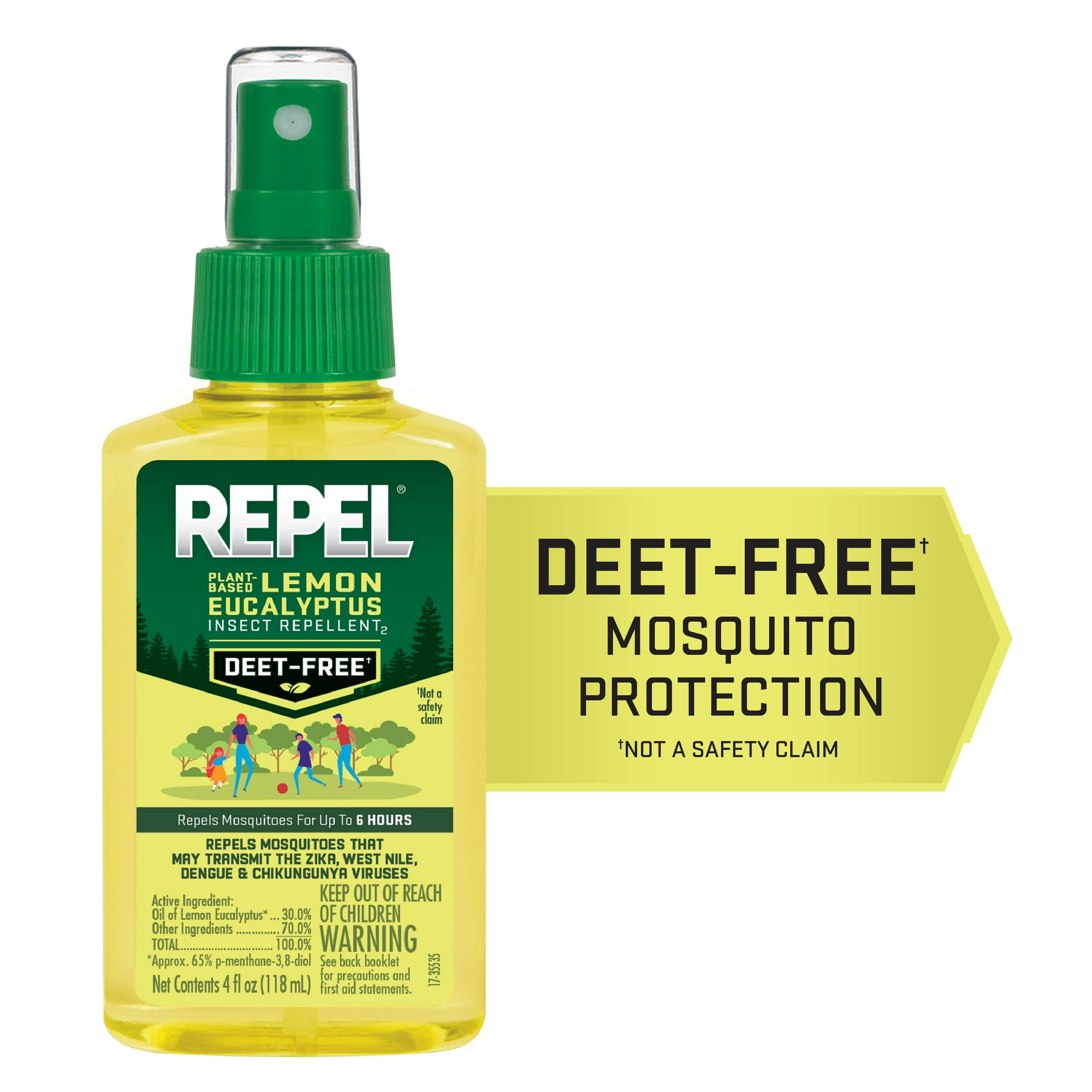
Repel Lemon Eucalyptus Insect and Mosquito Repellent 4 oz.
30% OLE · EPA Registered
One of the most widely available OLE sprays on shelves. Independent testing has specifically credited Repel’s pump spray with holding up well against ticks, not just mosquitoes – a gap a lot of “natural” sprays don’t cover.

Cutter Lemon Eucalyptus Insect Repellent 4 oz.
30% OLE · EPA Registered
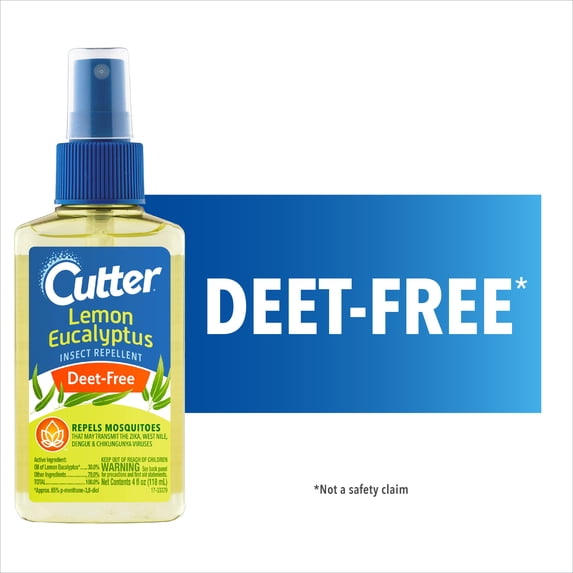
Cutter Lemon Eucalyptus Insect and Mosquito Repellent 4 oz.
30% OLE · EPA Registered
Same parent company and concentration as Repel, formulated for up to 6 hours of mosquito protection. Brand reports a light lemon eucalyptus scent without an oily residue on skin.

Natrapel Lemon Eucalyptus Eco-Spray 6 oz.
Citriodiol® OLE · EPA Registered

Natrapel Lemon Eucalyptus Pump 3.4 oz.
Citriodiol® OLE · EPA Registered
Built on branded Citriodiol® OLE extract. Safe to spray directly on gear and clothing in addition to skin, which is handy for treating packs and tents in one pass.
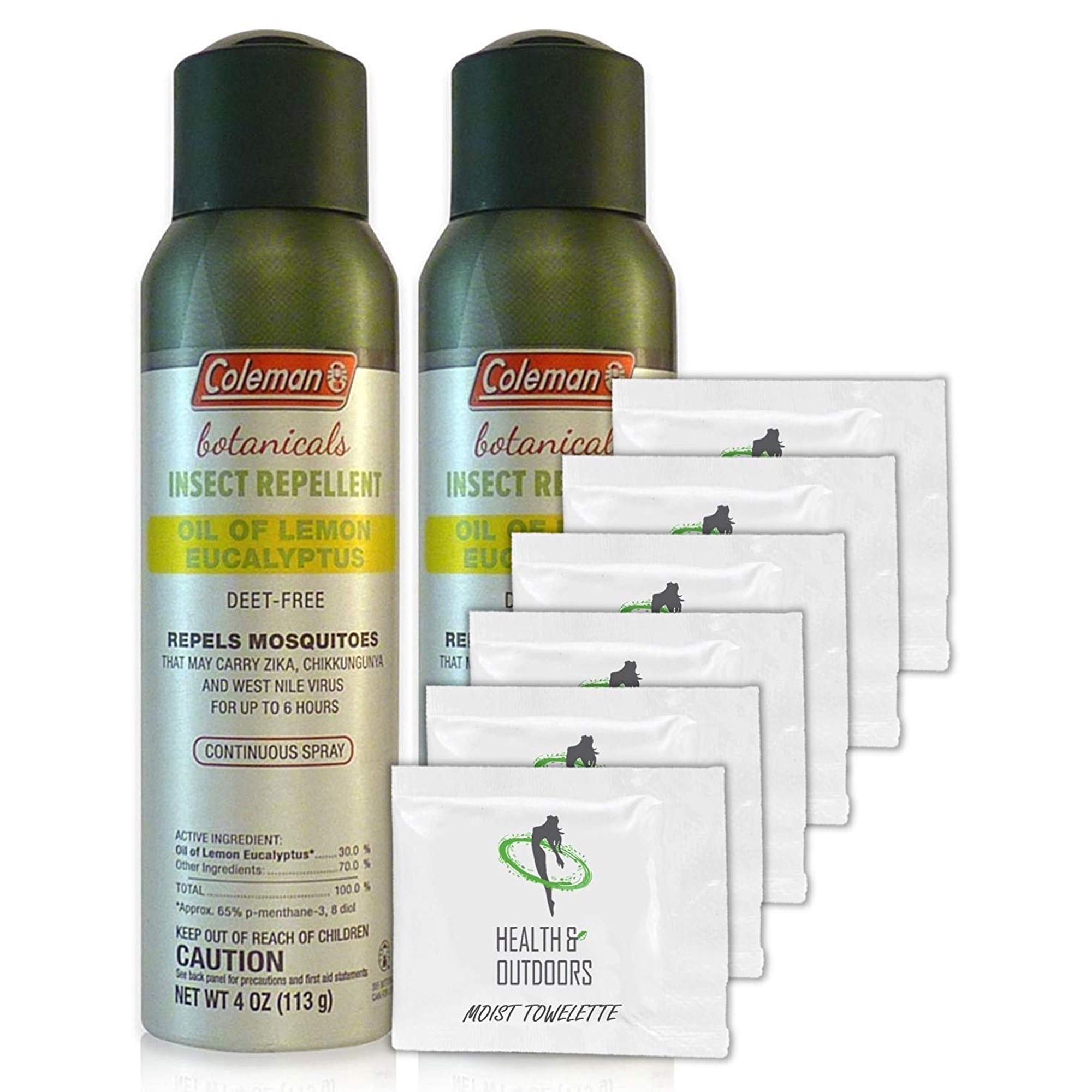
Coleman Botanicals Lemon Eucalyptus Insect Repellent 4 oz.
30% OLE · EPA Registered
Three-ingredient formula – OLE, ethyl alcohol, and deionized water. Up to 6 hrs on mosquitoes and ticks. Non-greasy with a mild lemon-eucalyptus scent; continuous spray and pump versions available.

Mimikai Mosquito & Tick Repellent Spray 3.4 oz.
EPA Registered · OLE + 2-Undecanone
Dual-active formula pairing OLE with 2-undecanone (federal EPA reg. 93616-1). Brand-rated 8 hrs mosquito / 4 hrs tick protection. Scented with essential oils (clove, allspice, star anise, frankincense) rather than fragrance-free – a plus if you like a warm scent, a pass if you wanted unscented. EPA-registered for ages 2+. TSA carry-on size available ($10 from Revolve).
Frequently Asked Questions
Is plant-based repellent as effective as DEET?
It depends on the ingredient. Oil of lemon eucalyptus (OLE/PMD) and 2-undecanone are EPA-registered and tested to perform close to low-concentration DEET. Pure essential oil sprays without an EPA-registered active generally protect for a much shorter window, often under an hour.
Is oil of lemon eucalyptus the same as lemon eucalyptus essential oil?
No, and this is a common mix-up on labels. OLE/PMD is a specific, separately regulated repellent compound derived from the plant. Raw lemon eucalyptus essential oil is not recommended as a stand-alone repellent.
Are plant-based repellents safe for kids?
Many are, but “plant-based” alone isn’t a safety guarantee. Follow the age guidance on the label, patch-test new products, and check with a pediatrician for infants, since some actives (including OLE) aren’t recommended under a certain age.
Do citronella candles actually work?
They can modestly reduce mosquito activity in a small, sheltered area like a patio table, but they’re not a substitute for a repellent applied to skin or clothing if you’re actually moving through mosquito or tick habitat.
 Friends Read Free
Copy
Facebook
Tweet
Friends Read Free
Copy
Facebook
Tweet