
Commentary
The long government closure put data releases on hiatus, which meant nothing much to report on the state of the economy for a full month. That came to an end with a crucial jobs report released by the Bureau of Labor Statistics (BLS). Much is on the line here because we have evidence of the initial test of some of Trump’s more bold policies.
What does the jobs report suggest about what has happened in the first year in light of all the changes, including the tariffs meant to restore American manufacturing in addition to providing a new source of government revenue? None of the details matter if the average person is not feeling better about his economic prospects.
Here are five takeaways.
1. Unemployment is up but not by much. The press release from BLS said unemployment is mostly unchanged, moving from 4.4 percent to 4.6 percent. This is conventional language from such press releases. If the change in the data is so small as to be attributable to normal fluctuations or even just reporting exigencies, it is said to be mostly unchanged.
The media, however, wasn’t having it. Virtually every report said that unemployment edged or inched up and is now higher than any point since the end of pandemic lockdowns. It was designed to send the message: your suffering is intensifying. But the truth is that the government’s release is more accurate. Not much has changed.
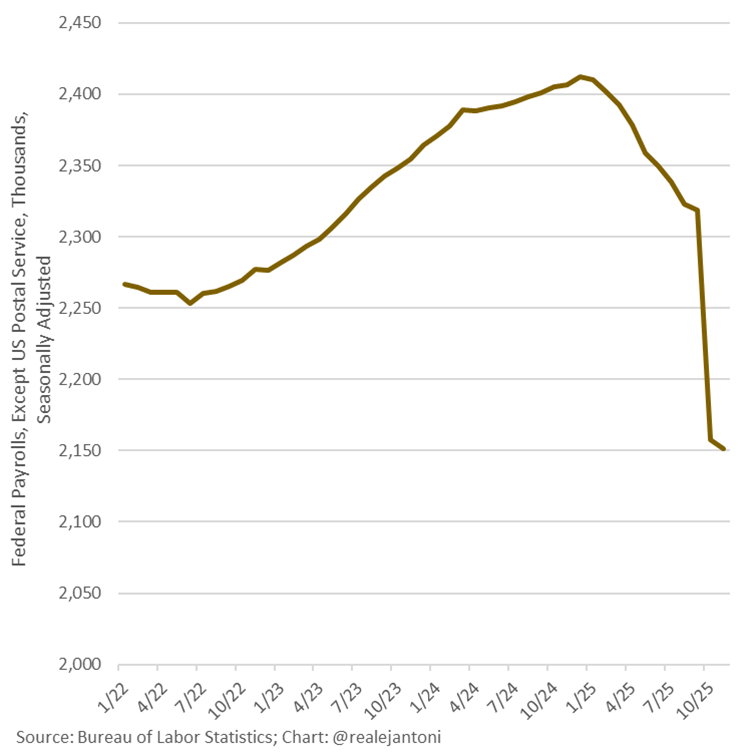
2. Government has been cut. The big news of the jobs report is the wonderful reveal that government jobs fell by an incredible 162,000 people. These are from jobs holders who took the deal offered early in the Trump administration to accept severance and resign. They had hoped more would sign up but they did get a substantial number out.
As a result, we have fewer people working for the federal government since 2014. That’s not mind-blowing news (Obama-era government was too big) but it is progress. It is worth celebrating at least this one victory.
The possible counterpoint is about AI, which is sure to be taking over more functions of government in the future. With new technologies, the size of government will no longer be measured by the number of personnel. It will be measured by its efficiency in collecting revenue and enforcing its edicts.
H.L. Mencken once said he was grateful that we don’t get as much government as we pay for. With AI behind the controls, we might get far more government than we really want. Human beings at least have some capacity for empathy. The same cannot be said of machines.
3. Native-born workers are finding jobs. E.J. Antoni is one of the few economists actually looking carefully at the granular details of the jobs report. He spotted a remarkable number. For the first time in years, native-born jobs holders outpaced foreign-born workers. Indeed, native born workers have actually reached a high.
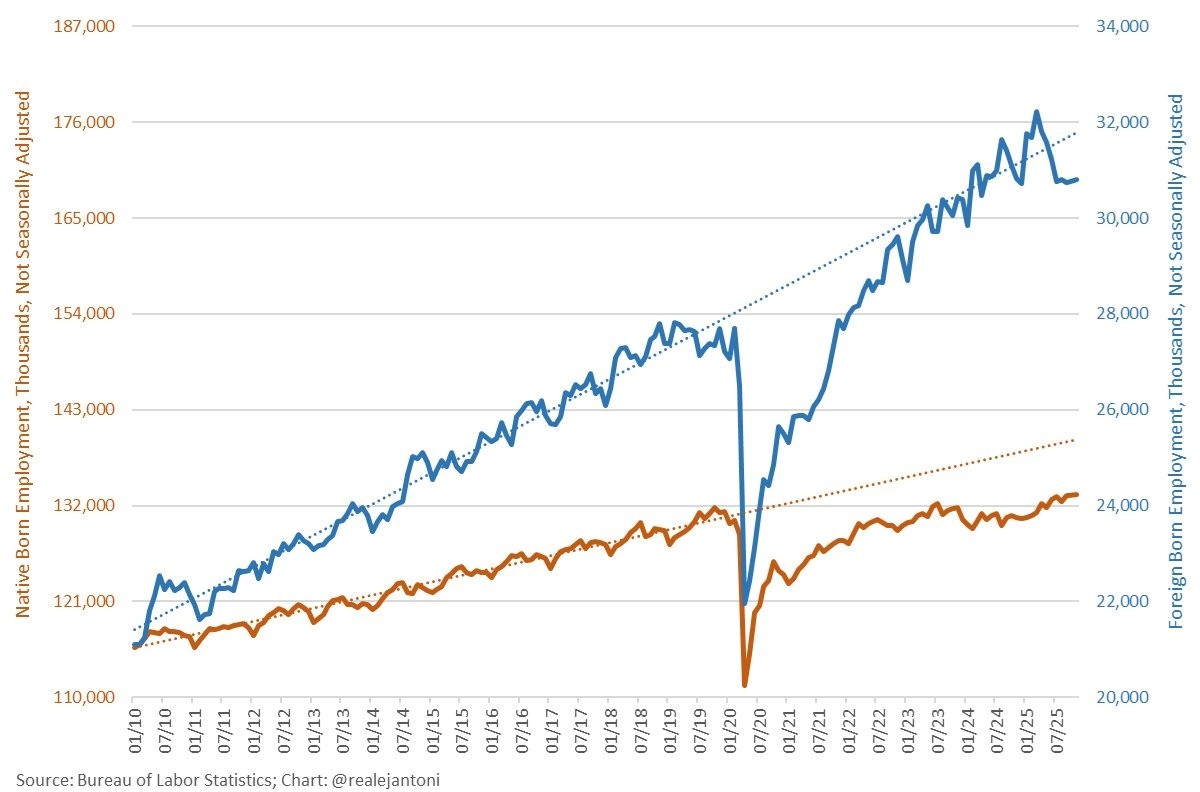
Such job creation is still off-trend, once again underscoring a theme on which I’ve hammered for five years. COVID was a turning point in the history of prosperity, freedom, and civilization. Government in all forms and in most places indulged in the wild fantasy that there was some off switch in the course of normal commercial life that could be pulled in order to wait for an inoculation. The result was disastrous. We are still paying the price.
4. There is no manufacturing revival yet. Indeed, we are seeing signs of the opposite, which is not what Trump’s tariffs were supposed to achieve. The Wall Street Journal notes: “In January BLS reported 12,755,000 workers in all manufacturing industries. The number rose by a few thousand through April, but then began to fall each month and in November hit 12,697,000. That’s a net loss of 58,000 jobs, including 19,000 in the last three months.”
The Trump administration was looking only at large trade deficits and hoping that tariffs would rectify the situation. It has to a large extent. The trade deficit has fallen due to a dramatic decline in import purchases. The problem I believe they failed to consider is that major beneficiaries of international trade are in fact domestic wholesalers and retailers. They are the ones paying the tariff tax and bearing the compliance costs. This is not good for business.
In other words, the sharp increase in tariffs raises the question of whether they so far have had a net impact of hurting rather than helping domestic manufacturing employment numbers. People say that we should wait longer and be patient. Sure, but all the records we have so far comply with the economic orthodoxy that a nation engaged in protectionism ends up hurting itself more than it helps domestic production.
5. Neither boom nor bust. In general, what we have in the jobs report is neither overall great nor foreshadowing of recession. Once adjusted for inflation, almost every macroeconomic sign is flat for many years. This includes retail sales, wholesale inventories, and manufacturing output. What seems to be an upward trend is actually nothing other than price increases.
In short, we have not yet seen any substantial signs of a Trump boom, while the disaster many economists foretold does not seem to be happening either.
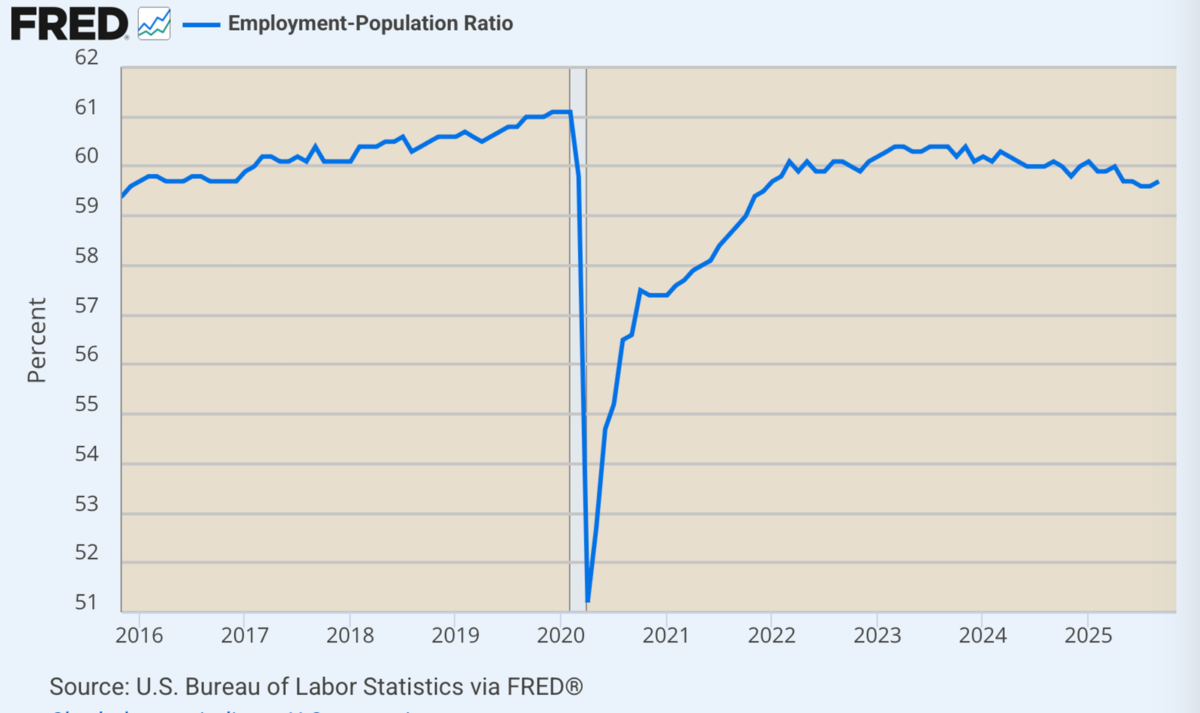
There is a wound that traces to 2020 and impacts both parties. Neither labor force participation nor the employment-population ratio have fully recovered from the lockdowns. There are ways out of this economic quagmire but it is going to take more of what is in short supply: courage, willingness to cut government spending and regulation much more dramatically, and some patience to see the effects.
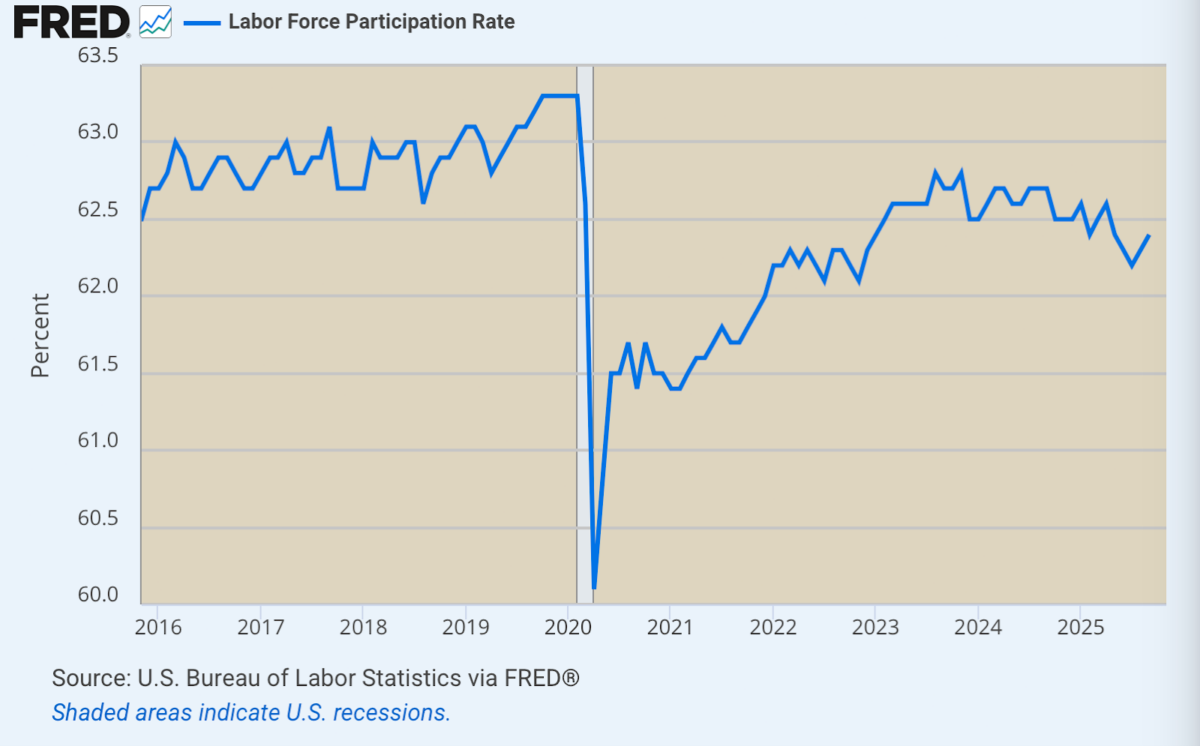
If it is jobs creation we want, something dramatic has to be done to lower the cost of hiring in the form of health-care mandates and the payroll tax. The Republicans were handed an opportunity on a silver platter with the need to revisit Obamacare. They should have liberated American businesses and workers from the tie between employment and medical insurance. They did not do that, which means that US business continues to be saddled with the very heavy burden of carrying forward a failing and inefficient sector.
Nor do I expect these trends to change so long as politicians lack the vision to fix the underlying problem. The jobs report, neither dire nor thrilling, underscores the point. If we truly want a new Golden Age, the cure for what ails economic life requires much more dramatic efforts to free the market from all that hobbles it.
Views expressed in this article are the opinions of the author and do not necessarily reflect the views of The Epoch Times.
 Friends Read Free
Copy
Facebook
Tweet
Friends Read Free
Copy
Facebook
Tweet