
Commentary
Fingerprints have long been considered the gold standard of crime investigation techniques. As early as 1903, America—with its new young president and former New York City Police Commissioner Teddy Roosevelt—began using fingerprints in criminal investigations. Fingerprint analysis became a “thing” back in the mid-18th century in India.
Within a couple of decades, the FBI began cataloging fingerprints. Today, the bureau is storing more than 200 million fingerprints.
Until recently, the FBI described fingerprint identification as 100 percent infallible. That is no longer the case. In the past 20 years, there hasn’t been a lot of good news when it comes to forensic analysis, including fingerprint analysis.
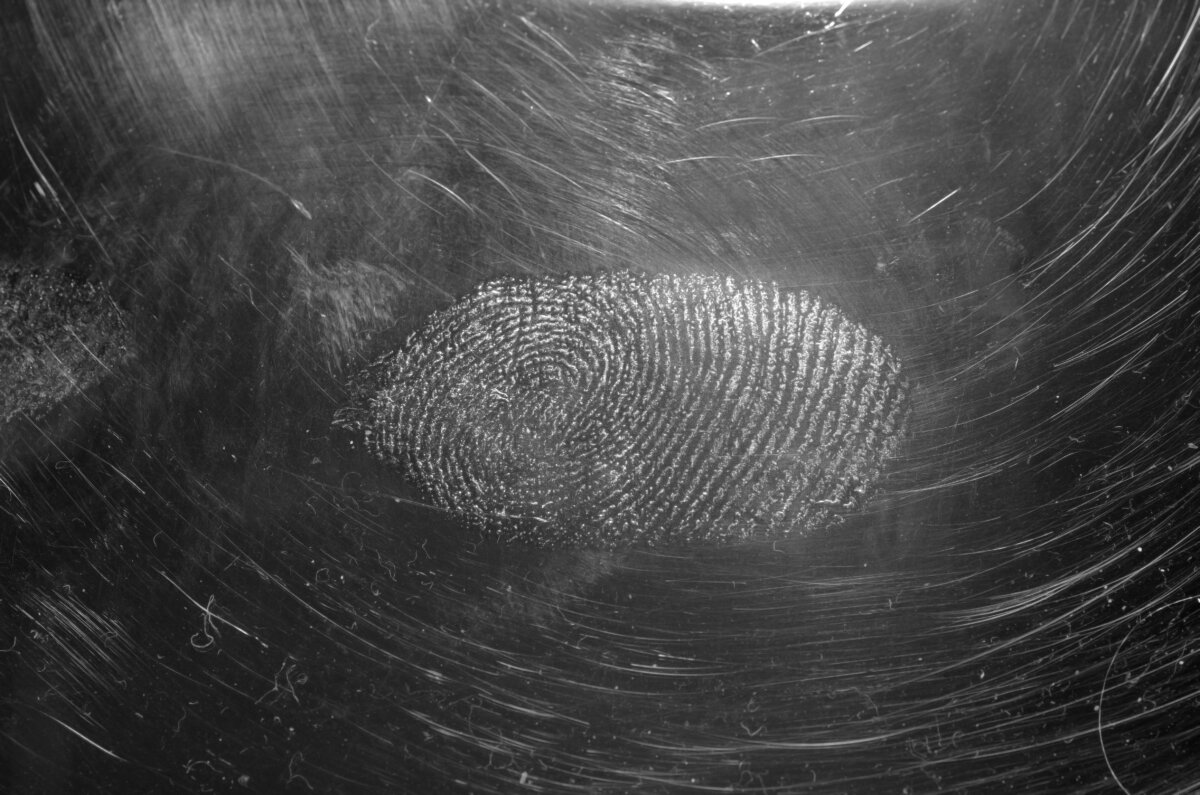
What do we know about fingerprints? Impressions of fingerprints are left behind on various surfaces by the natural secretions of sweat. The friction ridges, the raised portion of the epidermis on fingers consisting of one or more connected ridges, are often the point of comparison.
First, an intentional recording of the fingerprint is made with black ink on a white card or recorded digitally. These are often collected after arrest and secured in a database. At a crime scene, a “latent print,” the chance recording of a fingerprint deposited on a surface, is captured through chemical methods and brought into a lab for expert analysis.
Fingerprint identification came under scrutiny in 2004. The FBI publicly acknowledged the fingerprint misidentification of an Oregon lawyer wrongfully implicated in a terrorist bombing in Madrid—a place he had never visited.
Through a study conducted in 2004, cognitive neuroscientist Itiel Dror found that otherwise competent and well-meaning experts were swayed by what they knew about a case submitted for analysis. Dror’s study demonstrated that if an analyst knew that the suspect confessed or was arrested, the analyst’s findings could be influenced. According to Frontline, cognitive bias seeped into the process even with the best-trained experts.
In steps deep learning, the use of multi-layered artificial intelligence (AI) to automatically learn complex patterns from vast amounts of data.
A recent study published in Science Advances titled “Unveiling intra-person fingerprint similarity via deep contrastive learning” revealed a breakthrough in fingerprint analysis.
Law enforcement agencies worldwide have operated under the long-standing belief that no two fingerprints are alike, even across the 10 fingers of a single individual.
The authors of the study suggest that an investigator can sidestep the same-finger limitation by exploiting nontraditional fingerprint features.
“Past studies provided evidence that fingerprint patterns may be partially genetically determined which implies that there could be similarities among fingerprints from the same person,” the authors wrote.
In addition, “recent research shows that partial fingerprints from different users have common features that can be exploited to fool authentication systems.”
The study concluded, “The ability to process and match distinct fingerprint samples from the same individual opens new investigative possibilities, particularly in cases where fingerprints are partial or collected under suboptimal conditions.”
This breakthrough moves investigators away from matching the best print with the exact finger of a suspect.
The study found, “The new AI model reduces this dependency by identifying shared features that remain stable across different fingers.”
How does fingerprint evidence get in front of a jury?
Specialized rules of evidence allow expert testimony if the conclusions are based on knowledge, skill, experience, training, or education in the techniques involved and if the specialized knowledge will assist the judge or jury in understanding the evidence or determining a fact in issue. The testimony must be based on reliable principles and methods, consistently applied.
Here is the new dilemma. If AI is used to determine a fingerprint match, how does the expert witness convey the process of using AI to evaluate the evidence? This information is crucial to whether a judge allows the expert’s opinion and whether the opinion helps jurors understand the reliability of evidence.
Views expressed in this article are the opinions of the author and do not necessarily reflect the views of The Epoch Times.
 Friends Read Free
Copy
Facebook
Tweet
Friends Read Free
Copy
Facebook
Tweet