
Commentary
Tyson Foods is shrinking its beef-processing footprint.
At first glance, this seems like an ordinary corporate story. Tyson expects its beef business to lose hundreds of millions of dollars this year. The United States has one of its smallest cattle herds in roughly 75 years. There are fewer cattle available for slaughter, which means that enormous packing plants compete for increasingly expensive animals while operating below the capacity for which they were designed.
Closing plants makes economic sense, and that is precisely what worries me. Americans are paying extraordinarily high prices for beef. Ranchers are being told that we desperately need to rebuild the American cattle herd. At the same time, some of the infrastructure those ranchers will eventually need to sell those cattle into is disappearing. How exactly is that supposed to work?
Four companies—Tyson, JBS, Cargill, and National Beef—process the overwhelming majority of America’s fed cattle. Tyson isn’t abandoning beef, but it is consolidating its beef operations while increasingly emphasizing chicken and prepared foods, businesses with very different economics.
Cattle are stubbornly biological.
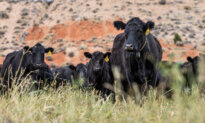
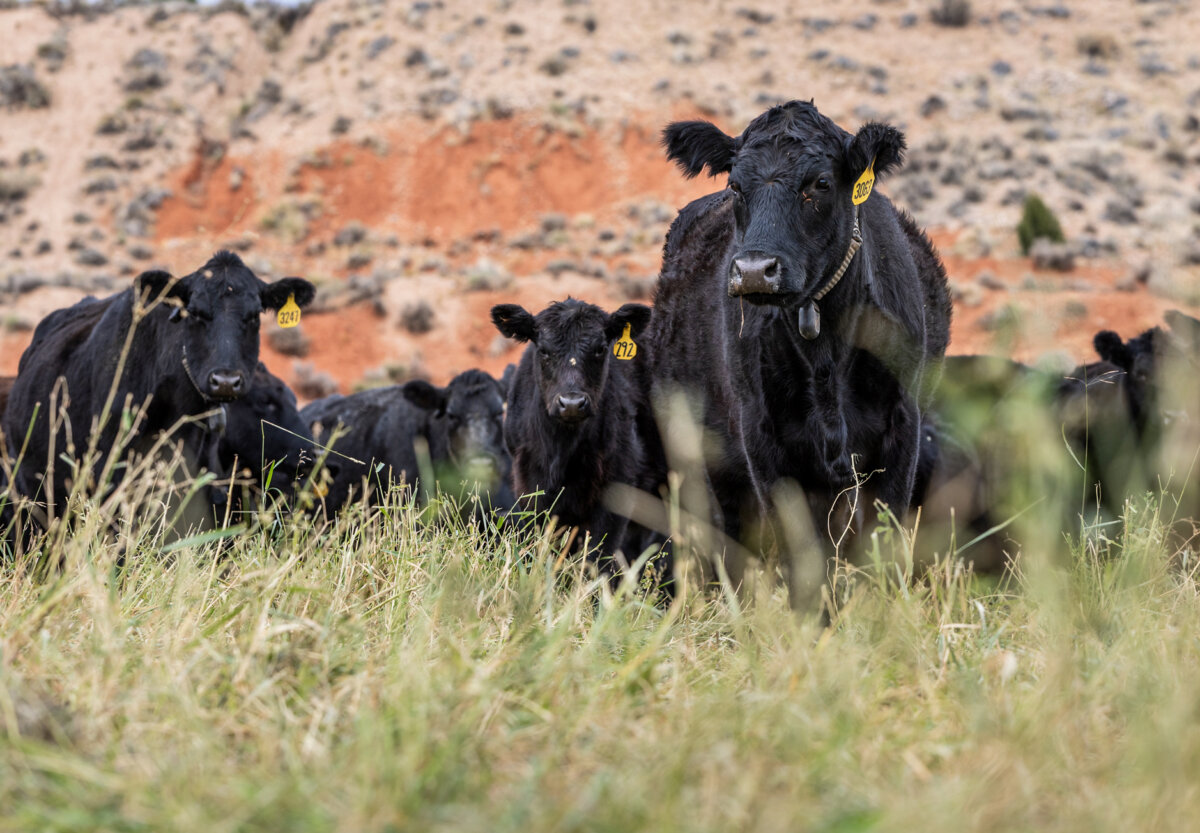
I raise cattle. We take our animals to a Department of Agriculture-inspected slaughter facility, and after my husband and children, my cattle are among the greatest joys of my life. This is somewhat ironic because I love outcomes. I love results. I love looking at numbers and seeing progress. I am exactly the kind of person who can be seduced by efficiency.
Cattle won’t let me live that way entirely.
Stand quietly in a herd and cattle will pull you completely into the present. You notice who is chewing her cud, who is standing apart, which calf belongs to which mother, whether the grass has changed, whether an animal is behaving slightly differently than yesterday. They demand attention to what is happening right now.
At the same time, almost every meaningful decision you make with cattle is about the future. Which heifer should I keep? Which bull should breed her? Do we have enough grass for the animals I want next year? If I keep this calf instead of selling her, what might she contribute to the herd three years from now?
Cattle have taught me something our food system seems determined to forget: You can be completely present while still making decisions for the long game.
If a rancher decides today to rebuild a herd, she may begin by keeping a heifer she otherwise could have sold. That means giving up income today for the possibility of income years from now. She has to grow, breed, carry a calf for roughly nine months, give birth, and raise that calf. Then the calf needs time to grow. There is no quarterly earnings version of this process. You cannot demand that biology move faster because the market suddenly needs more beef.
Yet we seem to be creating a feedback loop. We have too few cattle. Giant packing plants become unprofitable because there aren’t enough cattle to keep them full. Plants close. Ranchers have fewer buyers and fewer places to process cattle. The industry becomes even more concentrated. Then we wonder why rebuilding the American cattle herd is difficult.
There is another piece of this story that rarely gets discussed.
Across rural America are small slaughterhouses and custom processors. Some are tiny family businesses. Some have butcher shops or meat markets attached. They have coolers, cutting rooms, equipment, and people who know how to turn an animal into food.
Many of them can slaughter my cow for me. What they often cannot do is slaughter my cow and allow me to sell that meat by the individual package.
Under the federal custom exemption system, meat processed for an animal’s owner is marked “Not for Sale.”
Think about that. The rancher exists. The cow exists. The slaughterhouse exists. The butcher exists. The customer who wants to buy local beef exists. Yet the legal pathway connecting them can be prohibitively difficult.
I am not arguing that we should eliminate meat inspection. Inspect it.
Twenty-nine states already operate their own meat and poultry inspection programs under standards required to be at least equal to federal inspection. There is also a federal Cooperative Interstate Shipment Program through which qualifying small state-inspected processors can ship meat across state lines. We already have pieces of the solution.
Instead of continually trying to build bigger processing infrastructure, why not make it dramatically easier for existing small processors to enter inspected commerce? Make state inspection more accessible. Give custom processors a realistic pathway to become inspected facilities. Allow farmers to take animals to local inspected processors and sell that meat directly into their communities.
The goal shouldn’t be less food safety. It should be more pathways to safe food.
Lately I feel like a broken record. Every food and agriculture issue I investigate seems to lead me back to the same place. Why are farmers disappearing? Why are supply chains fragile? Why are small processors struggling? Why can decisions made by a handful of corporations have enormous consequences for ranchers scattered across an entire continent?
Again and again, I find consolidation underneath it.
For decades, we have treated efficiency as though it were synonymous with progress: fewer slaughterhouses processing more animals, fewer farms producing more calories, fewer companies moving more food through longer supply chains at lower unit costs. On a spreadsheet, it looks extraordinary.
But biology doesn’t live on a spreadsheet.
Grass grows when it rains. Drought happens. Soil takes years to rebuild. Farmers get old. Skilled butchers retire. A slaughterhouse that closes does not magically reappear when cattle numbers recover. The uncomfortable truth is that resilience requires some inefficiency.
A local slaughterhouse operating below maximum capacity looks inefficient until the enormous plant hundreds of miles away closes. Thousands of independent ranchers look inefficient compared with a vertically integrated protein supply chain until we desperately need those ranchers to rebuild a national cattle herd.
I don’t blame Tyson for responding to the economics in front of it. A company losing hundreds of millions of dollars cannot reasonably be expected to maintain unnecessary processing capacity because America might need it someday. That is the point. We have built a food system in which the rational decision for an individual corporation can make the entire system less resilient.
The answer isn’t forcing Tyson to keep an unprofitable slaughterhouse open. It is building a food system that doesn’t need Tyson to.
A resilient food system will contain things that look inefficient: small slaughterhouses, independent butchers, regional processors, smaller farms, unused capacity, and redundant supply chains. That redundancy costs money. So does discovering, after we’ve eliminated it, that we needed it.
A cow cannot read an earnings report. She cannot accelerate a pregnancy because beef prices are high. Grass cannot be ordered from a factory when the rain doesn’t come. Ranchers cannot rebuild America’s cattle herd simply because Washington or Wall Street suddenly decides that we need more beef.
Biology moves at the speed of biology. Our food system eventually has to learn to do the same.
Views expressed in this article are the opinions of the author and do not necessarily reflect the views of The Epoch Times.
 Friends Read Free
Copy
Facebook
Tweet
Friends Read Free
Copy
Facebook
Tweet