
Commentary
Will the Federal Court of Appeal affirm a powerful 2024 ruling, when the Federal Court Trial Division declared that the federal government acted illegally when freezing bank accounts and inflicting violence on peaceful protesters?
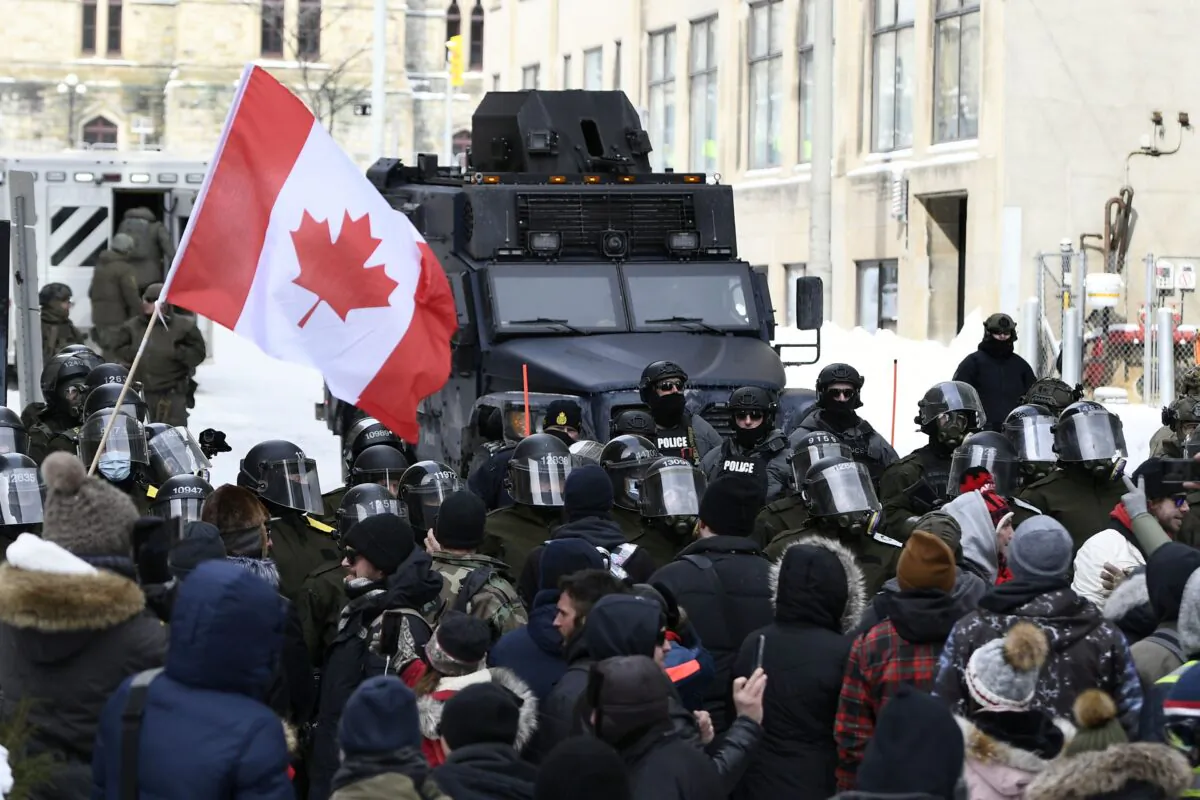
The Federal Court ruled in January 2024 that the federal government’s use of emergency powers to shut down the peaceful Freedom Convoy protest in Ottawa in February of 2022 was “not justified in relation to the relevant factual and legal constraints” required by the Emergencies Act.
The lower court judge, Richard Mosley, was not sympathetic to the truckers or their cause. He made several references to the inconsequential (and likely non-existent) “Diagolon” group, as though it was relevant and influential. He referred to Nazi swastika flags as though they represented the sentiments of peaceful truckers in Ottawa, when in fact only one such flag was ever displayed, briefly, by an anonymous individual who could have been hired by political opponents of the Freedom Convoy.
He claimed that “symbols of hate” characterized the heart or the nature of a peaceful protest that was (unlike many protests) devoid of arson, assault, vandalism, threats, and violence. He accused the Freedom Convoy “blockaders” of inflicting “very real harm” to Canada’s economy, trade, and commerce, without mentioning how years of government lockdowns caused far more damage to far more people.
The judge’s negative attitude towards Freedom Convoy has made it all the more difficult for the federal government to appeal his lower court ruling.
While seeing Freedom Convoy as largely if not entirely negative, the judge still ruled against the federal government because “the record does not support a conclusion that the Convoy had created a critical, urgent and temporary situation that was national in scope and could not effectively be dealt with under any other law of Canada.” This is the standard set out in the Emergencies Act, which the government must meet in order to exercise extraordinary powers. Justice Mosley concludes that Freedom Convoy’s “highly objectionable” events “did not amount to serious violence or threats of serious violence.”
The judge noted that “[t]he situation at Coutts was dealt with by the RCMP employing provisions of the Criminal Code. The Sûreté du Québec dealt with the protests in that province and the Premier expressed his opposition to the Emergencies Act being deployed there. Except for Ottawa, the record does not indicate that the police of local jurisdiction were unable to deal with the protests.” In other words, a local protest in Ottawa, the only one left in Canada when the Trudeau government invoked the Emergencies Act, was not a national emergency. The prime minister and his cabinet did not have reasonable grounds to believe that a threat to national security existed within the meaning of the Emergencies Act. Therefore, their decision was ultra vires (outside of the powers) of the legislation.
The federal government announced its intention to appeal this lengthy ruling (53,000+ words on 100+ pages) within minutes of its release, having obviously not read the ruling.
The Federal Court of Appeal will release its ruling at 11:00 a.m. EST on Friday, Jan. 16.
John Carpay, B.A., LL.B., is president of the Justice Centre for Constitutional Freedom (jccf.ca), which provided lawyers for several of the Applicants in this court action against the federal government.
Views expressed in this article are the opinions of the author and do not necessarily reflect the views of The Epoch Times.
 Friends Read Free
Copy
Facebook
Tweet
Friends Read Free
Copy
Facebook
Tweet