
Commentary
Six years ago, maybe even five, if someone had told me that I’d be speaking at the Gun Owners of America conference—the Gun Owners Advocacy and Leadership Summit in Ohio—publicly advocating for the Second Amendment, I would have laughed.
In my first marriage, I was so liberal, so deeply indoctrinated into the worldview I had inherited, that when my husband bought a handgun in California, I wouldn’t let him pick it up after the mandatory 10-day waiting period. Looking back now, I probably owe him a gun.
At the time, I genuinely believed that guns represented violence. I believed that ordinary people did not need them. I believed that safety came from institutions and systems. But over the past several years, as I’ve studied history, governments, agriculture, health, and human nature itself, my perspective has fundamentally changed.
A lot of my liberal friends still talk about the Second Amendment as if it exists mainly to protect hunting. They’ll say things such as, “You don’t need an AR-15 to go duck hunting.” But the Second Amendment was never about duck hunting.
Our Founding Fathers were not sitting around worried about sporting rifles. They had just fought a revolution against centralized power, and they understood exactly what governments are capable of when citizens become too dependent and too disarmed to resist.
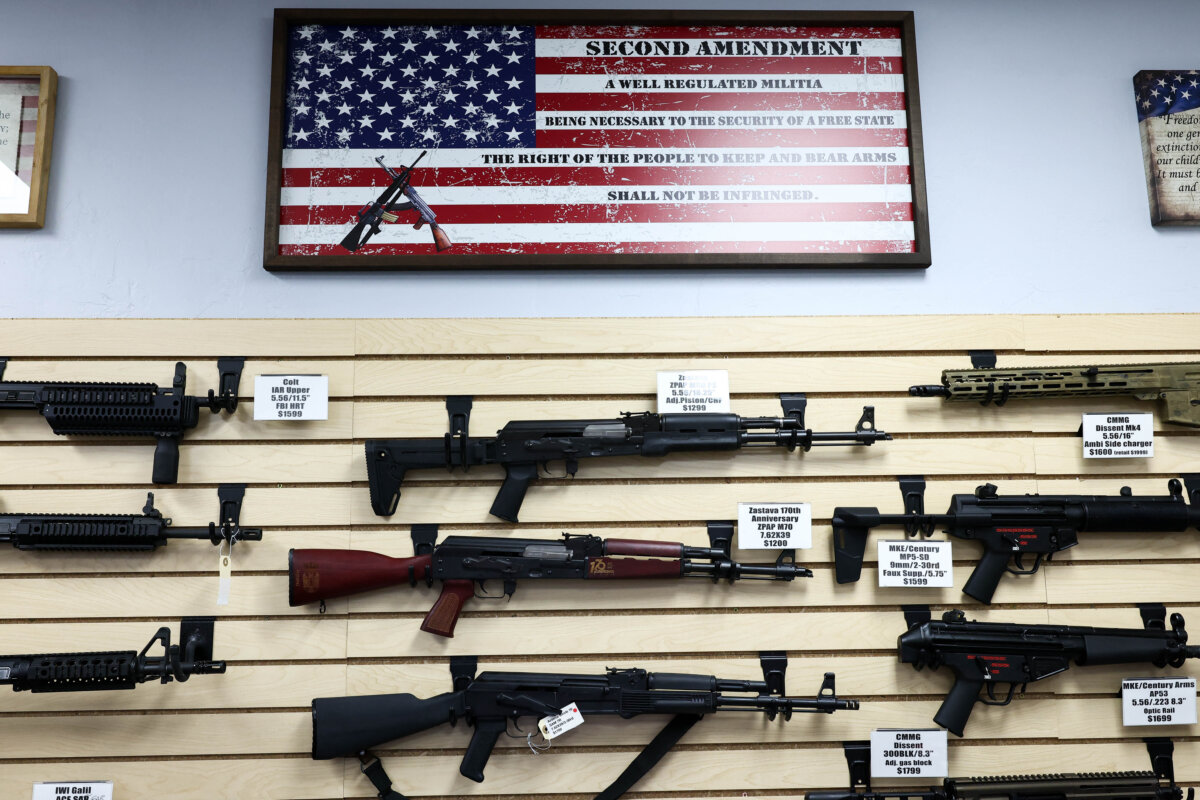
The amendment itself is pretty clear: “A well regulated Militia, being necessary to the security of a free State, the right of the people to keep and bear Arms, shall not be infringed.”
It’s important to understand that when the Constitution was written, “well regulated” did not mean heavily controlled by the government, as we use the phrase today. It meant something closer to well-trained, functional, prepared, and capable. A “well regulated militia” meant ordinary citizens capable of defending a free society, not simply a government-controlled army.
The phrase “necessary to the security of a free State” matters. This was about preserving a population capable of pushing back against tyranny if necessary. Whether people agree with that today or not, that was the context.
People often argue that civilian gun ownership no longer matters because the government has tanks, drones, and fighter jets. Maybe. But I think that that argument misses something important. Americans still own more firearms than any civilian population in the world, and an armed population changes the relationship between citizens and the state psychologically, culturally, and politically.
At the same time, I’ve started wrestling with another question entirely.
What if we preserve firearm ownership to varying degrees depending on what state you live in, while allowing almost every other pillar of human freedom to quietly erode around us?
While everyone argues over gun laws, massive data centers are being built across the country. Surveillance systems expand every year. Corporations and governments know where we go, what we buy, what we believe, and increasingly even how we think.
Sometimes I also wonder whether the gun debate itself has become part of the distraction. Every mass shooting dominates headlines for days or weeks. The country splits into predictable camps. Everyone argues. Everyone panics. Everyone posts memes.
Meanwhile, surveillance systems expand quietly in the background. Corporate consolidation deepens. Our food system becomes more centralized. Fertility rates collapse. Chronic illness rises. And almost nobody notices because all attention has been captured by the loudest fight in the room.
Meanwhile, our food system becomes more centralized by the day. We spray chemicals directly onto food before harvest. We normalize chronic illness in children. We flood grocery stores with ultra-processed products engineered for convenience and addiction. We alter seeds, patent life, and build agricultural systems in which independent farming becomes harder every year.
So I keep coming back to the same uncomfortable thought: If we hold the line on the Second Amendment but surrender our food, our health, our privacy, our fertility, and our ability to live independently from centralized systems, then what exactly are we protecting?
What will my children have left 20 years from now? A rifle, but no real food? The ability to own firearms while being completely dependent on corporations and government systems for survival?
The more I study the Constitution, the more I think that there were things the Founders assumed were so obvious, so natural to human life, that they never imagined that they needed to write them down explicitly.
The Ninth Amendment states, “The enumeration in the Constitution, of certain rights, shall not be construed to deny or disparage others retained by the people.”
The 10th Amendment reserves undelegated powers to the states or to the people themselves.
The Founders lived in an agrarian society. Families growing food, raising animals, trading with neighbors, preserving seed, hunting, fishing, and producing necessities locally were simply part of normal life. I don’t think that they imagined a future in which a farmer could be told that he cannot sell food directly to his neighbor without navigating endless bureaucracy.
I don’t think that they imagined chemicals sprayed from the sky onto communities. I don’t think that they imagined corporations partnering with governments so closely that questioning the food system itself could become controversial. And they certainly could not have imagined a technological age in which surveillance, artificial intelligence, algorithms, and centralized digital infrastructure might control populations more effectively than armies ever could.
Every man and woman who stands for the right to bear arms also needs to stand for the other fundamental human freedoms that make liberty possible in the first place.
Because freedom is not just about whether you can own a firearm. It’s about whether you can feed your family without total dependence on corporations. Whether you can raise healthy children in a world saturated with chemicals. Whether you can grow food, sell food locally, protect your privacy, and live without being economically cornered by systems becoming larger and more centralized every year.
If we defend only one amendment while quietly surrendering the foundations that make independent human life possible, what remains will eventually become symbolic rather than real.
The Founders may not have been able to foresee artificial intelligence, endocrine disruptors, data centers, digital surveillance, or patented seeds. But they understood something timeless: Concentrated power becomes dangerous when ordinary people lose the ability to live freely outside of it.
That is why this conversation has to become bigger than guns alone.
Because the goal is not simply to preserve the ability to bear arms. The goal is to preserve free human beings living lives worth defending in the first place.
Views expressed in this article are the opinions of the author and do not necessarily reflect the views of The Epoch Times.
 Friends Read Free
Copy
Facebook
Tweet
Friends Read Free
Copy
Facebook
Tweet