
Commentary
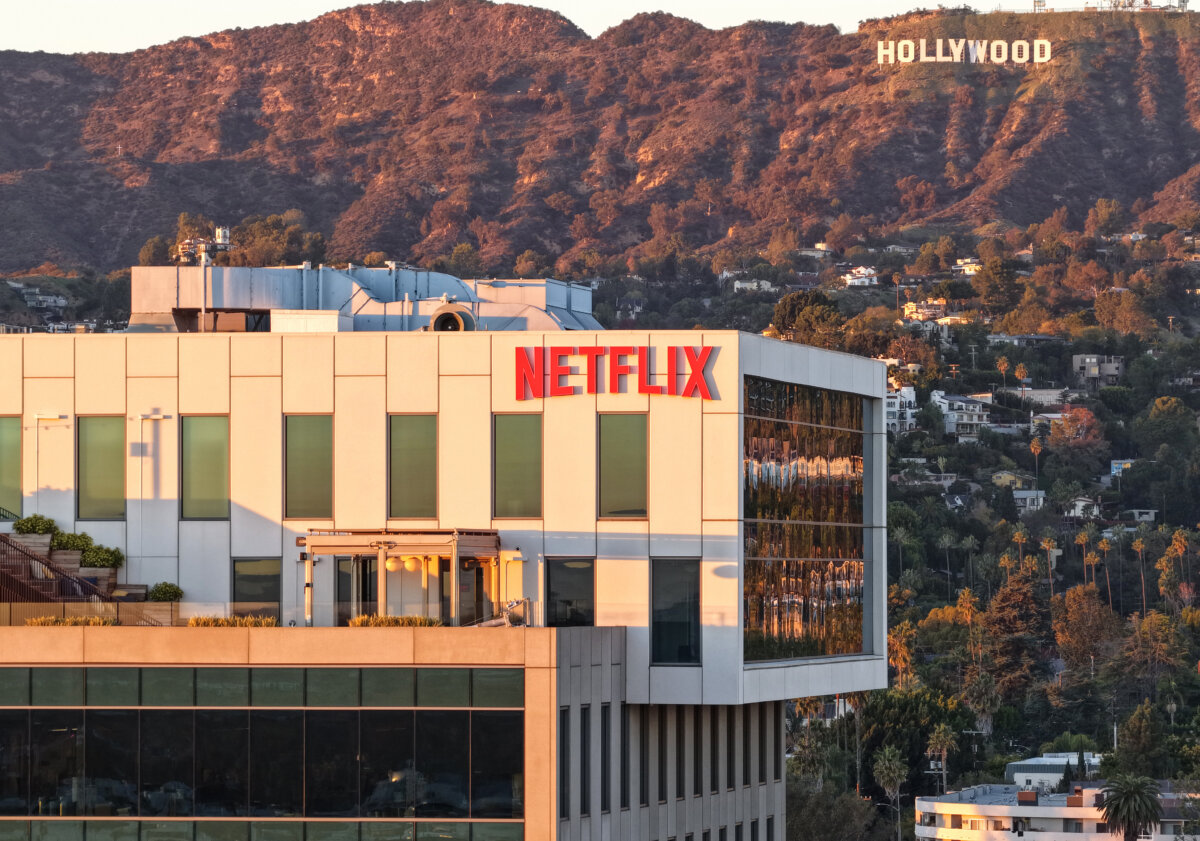
The battle between Netflix and Paramount-Skydance (“PSKY”) to purchase Warner Bros. Discovery (“WBD”) rages with even more drama.
Gail Slater, who headed the Department of Justice’s antitrust division, abruptly resigned last Thursday, further frothing speculation about anticipated antitrust regulatory actions. On Tuesday, WBD, with Netflix’s approval, gave PSKY until Feb. 23 to present its “best and final offer” (despite Netflix’s signed deal) because PSKY signaled that it will bid even higher than its current offer of $30 per share plus billions in cash for break, ticking, and other fees that WBD’s board rejected last month. WBD continues to state its preference for Netflix. Netflix only must match PSKY’s offer for PSKY to automatically lose. As of now, WBD’s special shareholder vote meeting on the Netflix deal is still scheduled for March 20.
Interestingly, PSKY and WBD shares rose 7 percent and 2.5 percent, respectively, on the news, and Netflix shares fell 1.4 percent, indicating that the broader market somewhat favors PSKY. Netflix shares have dropped steadily from around $125 per share in September 2025 (when PSKY first approached WBD) to around $77 per share today, which indicates that Netflix shareholders aren’t all that excited about winning the deal. PSKY’s overtures have done wonders for WBD’s share price, which, after a long decline period, rocketed from around $12 per share in September 2025 to around $29 per share as of Friday’s close.
WBD’s board of directors has final responsibility for the company’s business and affairs. Its recommendation on whether the shareholders should ratify or reject the Netflix deal is important. Accordingly, the board and each individual board member must carefully follow their fiduciary duties to the company and the stockholders, who in turn owe fiduciary duties to other stockholders, especially where they own significant percentages of the company. Furthermore, directors may not have conflicts of interest or act in bad faith. Instead, they must act with care and make decisions based not on their own personal interests, but rather solely in the best interest of the corporation and stockholders.
Thus, whether the WBD board conducted a fair process is very important because a court will likely end up carefully examining it. Generally, boards of directors are not supposed to first declare a preferred outcome and then afterward try to justify that outcome while rejecting the alternatives. Instead, when analyzing competing mergers and acquisitions proposals, they are supposed to maximize value for shareholders while being transparent and fair to the bidders. Of course, price per share is not the only factor; for example, a board must also consider regulatory difficulties, execution, and debt risks, etc.
Here, Netflix presents a lower overall price—especially because its deal does not include WBD’s cable TV properties—significantly higher regulatory risks, as the recent Senate hearing showed, and significant execution risks. Furthermore, PSKY is very likely to again improve its proposed terms, add guarantees, including billions of dollars more in personal guarantees from Larry Ellison, and continue simplifying the transaction. It is possible that WBD gave PSKY this extra opportunity because the board was concerned about how a court would view its process thus far, especially because WBD’s board was so outspoken from the beginning about preferring Netflix and appeared to move the goalposts on PSKY. Alternatively, perhaps WBD’s board reopened discussions with PSKY to keep playing Netflix and PSKY against each other and thus drive up the final share price. Either way, WBD’s board has not been transparent as to what assumptions and comparisons keep driving its preference so strongly toward Netflix. Whatever the case, the board must follow its fiduciary duties to the company and the stockholders, especially because increasingly more shareholders and outside investors have stated that they strongly prefer PSKY.
Finally, Netflix faces serious regulatory hurdles. For example, the Senate antitrust subcommittee, at its hearing earlier this month, inflicted a bipartisan verbal beatdown on Netflix’s Ted Sarandos. Many senators skeptically viewed Sarandos’s attempt to define Netflix’s market so overbroadly as to include YouTube and TikTok within the definition of subscription video-on-demand (“SVOD”) companies such as Netflix, HBO Max, Disney+, etc. YouTube and TikTok are fundamentally different from SVODs, if only because their free, user-generated, short-form content is fundamentally different from SVODs’ movies and TV shows (think “The Sopranos” or “The Wire” vs. cat videos). Clearly, they are not the same nor interchangeable; Netflix or HBO Max subscribers aren’t canceling their subscriptions to only watch TikTok videos instead.
Sen. Mike Lee (R-Utah), the subcommittee’s chairman, stated that the Netflix–WBD deal “raises serious antitrust concerns that warrant scrutiny”; Sen. Amy Klobuchar (D-Minn.) expressed concerns about content creators, labor, and monopsony, noting that Netflix historically raised prices while adding subscribers; and Sen. Cory Booker (D-N.J.) expressed his “concerns about Netflix getting more power over consumers and leaving fewer alternatives and streaming platforms.” The committee’s senators also scoffed at Sarandos’s claim that Netflix and WBD weren’t competitors and thus would be a vertical merger (both are competing SVODs that spend lots of money to produce award-winning long-form content and distribute it, along with live sports and others’ content). Although the Justice Department, which already has opened an investigation, will conduct the U.S. antitrust review, the Senate subcommittee on its own could tie up Netflix–WBD for many months with even more subpoenas for testimony and documents.
The senators and the Antitrust Division are right to be concerned about a Netflix–WBD merger. Netflix is by far the No. 1 SVOD and HBO Max is No. 3. Netflix has more than 80 million U.S. subscribers and 325 million worldwide subscribers; HBO Max has about 55 million U.S. subscribers and 125 million worldwide subscribers. Thus, Netflix–WBD combined would have well over 30 percent of the American SVOD market, a significant antitrust red flag according to Justice Department guidelines, and that number doesn’t include wireless or cable provider bundling.
The numbers are even higher in the UK and European Union, which means that those antitrust enforcers almost certainly will thwart a Netflix–WBD merger. Moreover, Netflix recently locked up Pay 1 and Pay 1B exclusive multibillion-dollar worldwide licensing deals with Sony, Universal (animated), and Universal (live action), and WBD renewed its Pay 1 deal with A24, which means Netflix–WBD would have a combined total of six studios, including themselves, across multiple genres and production values. The very real antitrust concern is that a single platform consolidated so many Pay 1 outputs and thus could and would be gatekeepers with both market and exclusionary foreclosure power, which additionally can lead to tying concerns.
Accordingly, WBD’s board members should follow their respective fiduciary duty requirements to put aside their personal feelings and conduct a fair and impartial mergers and acquisitions process, and thus do what’s best for the company and its stockholders. Because the value of the Discovery Global spinoff, on which Netflix’s valuation relies, is unclear, and because of Netflix–WBD’s practically certain regulatory problems, a PSKY–WBD combination is likely better from regulatory, business, and artistic standpoints.
Views expressed in this article are the opinions of the author and do not necessarily reflect the views of The Epoch Times.
 Friends Read Free
Copy
Facebook
Tweet
Friends Read Free
Copy
Facebook
Tweet