
Commentary
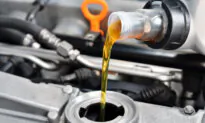
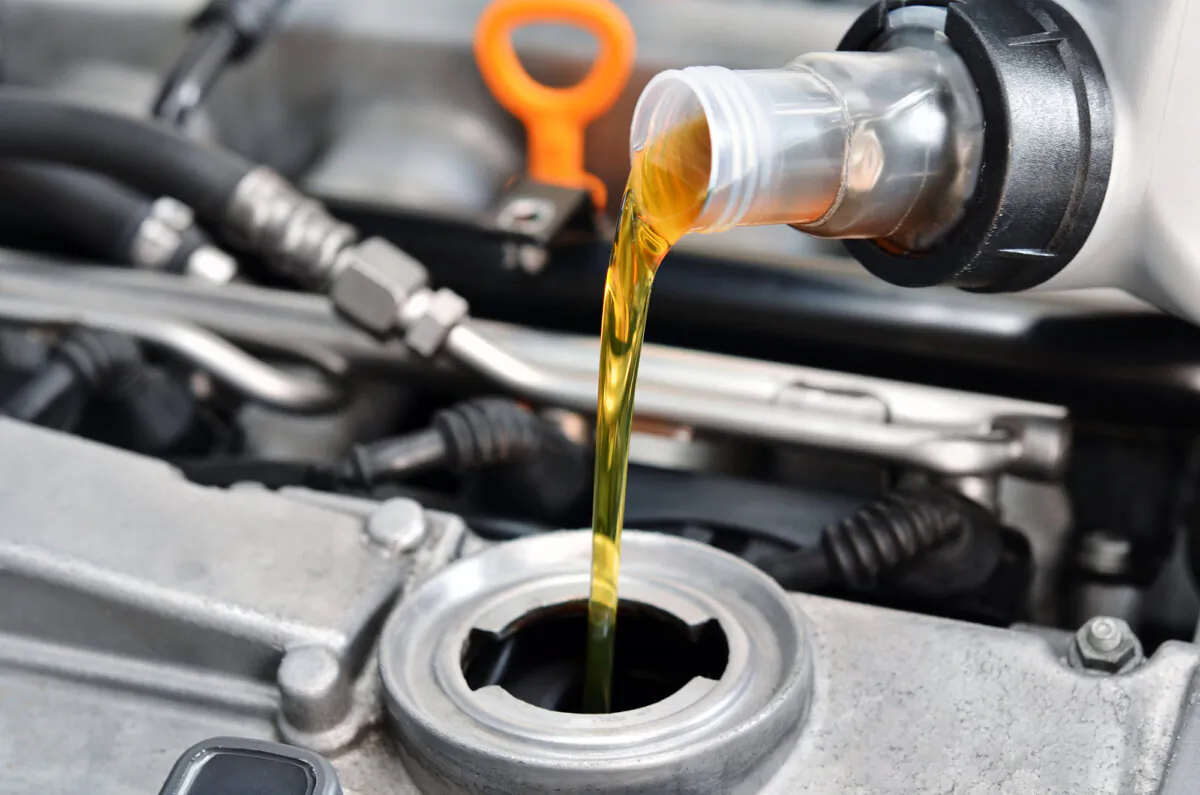
After a week of leaked internal documents circulating online, Nissan has reportedly confirmed that a dealer communication warning about engine oil shortages was authentic. The letter warned dealerships about supply constraints tied to global refining disruptions and instability in the Middle East.
According to the document, Nissan planned to allocate genuine Nissan oil products at roughly 55 percent of prior-year purchase volumes, while warning dealers that price increases were likely to come. Toyota has reportedly circulated similar communications internally, and there is growing suspicion that other automakers are quietly preparing contingency plans as well.
At first glance, it sounds ridiculous. Motor oil shortages in America?
But the more I looked into it, the more it felt like another example of a pattern many of us first noticed during COVID-19: Our systems are incredibly efficient but also increasingly fragile.
For decades, motor oil was relatively simple. Older engines could tolerate a range of viscosities and formulations. A truck from the 1990s might run just fine on conventional 10W-30 picked up from almost any gas station or auto parts store in America.
Modern engines are different.
Today’s vehicles increasingly rely on ultra-low-viscosity synthetic oils such as 0W-16 and 0W-8. These thinner oils are designed to reduce friction and improve fuel economy in order to meet modern emissions standards. They work well, but they also depend on highly specialized refining processes, additive packages, and global supply chains.
That is where the tradeoff becomes clear.
The old ranch truck may not be as efficient, quiet, or technologically advanced, but if you are in a bind, you can usually pour in a variety of commonly available oils and keep going. Many newer vehicles require very specific formulations that may not be sitting on the shelf at a rural gas station.
We live in a culture that assumes newer always means better. Smarter. More advanced. More optimized.
Until the system gets disrupted.
During the COVID-19 pandemic, the fragility of the supply chain stopped feeling theoretical to me. We had a farm vehicle sitting idle because we could not get a brake line for nearly two years. Eventually, we had to have the part custom-made in the United States at enormous expense just to get the vehicle running again.
We dealt with the same issue on a tractor. Dealers could not source the part, the manufacturer could not get it, and eventually, we had to find someone willing to fabricate it independently.
I know we were not alone. Millions of Americans experienced some version of this during the pandemic. I purchased a Ford vehicle that was supposed to arrive within weeks. It took nine months to show up.
Before COVID-19, most Americans assumed shortages occurred elsewhere. Not here. Not in a country where almost anything could appear at your doorstep within a day or two.
But the pandemic exposed how little redundancy exists inside many modern systems. One factory shuts down, one shipping route is disrupted, or one supplier disappears, and entire industries begin to stall.
Now I see that fragility everywhere, even when the system appears to be functioning perfectly.
I see it in tractors that farmers are no longer allowed to repair themselves. I see it in vehicles dependent on proprietary software and specialized fluids. I see it in appliances designed to be replaced rather than fixed. The more specialized our systems become, the more dependent we become on distant manufacturers, technicians, software updates, and supply chains that most people never think about until something breaks.
The problem is not technology itself. Modern engineering has brought real improvements. Vehicles today are cleaner, safer, and often more fuel-efficient than older models.
But efficiency and resilience are not always the same thing.
Older systems were often less polished, but they could tolerate disruption. They allowed substitution. They could be repaired locally. A farmer with tools and mechanical knowledge could often keep equipment alive for decades.
Today, many machines are essentially computers wrapped in sheet metal.
That is why these Nissan and Toyota communications matter. They are not really about motor oil. They are reminders that modern life has become highly optimized and deeply interconnected, often in ways that leave very little room for disruption.
Sometimes the old ranch truck still starts while the newer vehicle sits, waiting for a specialty part, a software update, or an oil shipment that has not arrived yet.
That does not mean we should reject innovation. But it may mean we should rethink the assumption that newer automatically means stronger.
Because resilience matters, too.
Views expressed in this article are the opinions of the author and do not necessarily reflect the views of The Epoch Times.
 Friends Read Free
Copy
Facebook
Tweet
Friends Read Free
Copy
Facebook
Tweet