
Commentary
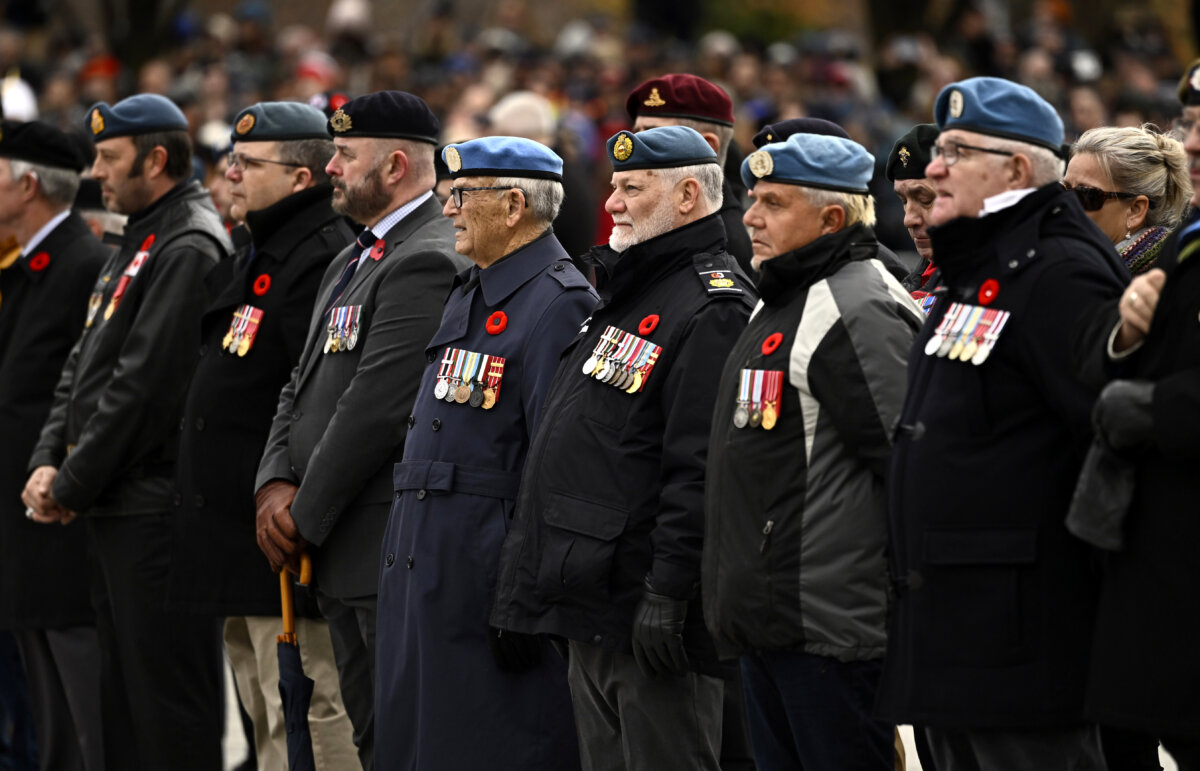
As we approach the 80th Remembrance Day since the end of World War II, it will be one of the last in which veterans of that war will be present at ceremonies. Once this living connection to the wars that forged modern Canada is lost, it will be our duty to carry on the legacy. If we fail to do so, our national identity as a people will be greatly weakened.
According to estimates from Veterans Affairs Canada, there are roughly 9,000 veterans of the Second World War and Korean War still alive in Canada. Representatives of this brave warrior generation were once a fixture at school Remembrance Day assemblies, but few remain to tell their tales, and historians are racing to collect their memories.
The tragic loss of this generation will mean that fewer Canadians will be directly and intimately familiar with the wars they fought in and the noble sacrifices they made. Veterans of recent wars—including 21st century conflicts like Afghanistan—will continue to share their stories, but the living links to the World Wars and the Korean wars will be severed.
This loss of memory comes at a time when polls are showing a decline in knowledge about basic elements of Canadian history.
An Ipsos poll conducted by Historica Canada in October 2024 found that fewer than one in five Canadians scored a passing grade in a quiz about various elements of national history. A lack of knowledge of general trivia is one thing; much more concerning was the startling absence of familiarity with famous Canadian historical figures.
A majority of 56 percent confessed to being unfamiliar with Lucy Maud Montgomery, the celebrated author of Anne of Green Gables. Another 15 percent had heard Montgomery’s name, but were not sure what her achievements were.
While historical knowledge may be slipping, Canadian enthusiasm for honouring history—particularly Remembrance Day—is not necessarily diminishing.
The proportion of Canadians saying they would attend a Remembrance Day ceremony actually increased from 26 percent in 2016 to 37 percent in 2023, according to Ipsos polling. While some of this shift may be explained by a post-pandemic desire to go out and experience in-person events again after several years of Zoom calls and Netflix, it is a good reminder that historical consciousness is not in a state of permanent decline.
In that same poll, a resounding majority of 87 percent said that “Canada should be doing more to educate young people about our military history.” This speaks to the choice that we must make as a nation: will we allow the memories of the great 20th century conflicts that Canada took part in to fade?
While the loss of the veterans of the world wars and the Korean War will weaken the level of personal connection Canadians have to those wars, whether the importance of Canada’s contributions to these conflicts is erased from the public consciousness altogether depends on if we choose to transmit the memory to future generations.
This is why something as simple as wearing a poppy carries immense importance as an outward symbol of memory and reverence for the past. As of November 2024, 58 percent of Canadians said they intended to wear one, according to a Leger poll.
Attending Remembrance Day ceremonies, wearing poppies, and decorating the graves of fallen soldiers are ways in which citizens can carry on historical memory directly. The government, particularly the education system, has a role of its own in this effort—one that it is failing to live up to.
In a 2024 Fraser Institute study, high school teacher and author Michael Zwaagstra analyzed the K–12 school curriculums of Ontario and British Columbia, and found that both come up short in teaching Canadian kids about their country’s history.
Zwaagstra explained that, in Ontario, no Canadian history at all is taught in Grades 1 and 2—“a missed opportunity to ensure that young students acquire foundational knowledge about their country that can be accessed in higher grades.”
In Grade 3, there is a brief smattering of material about life in pre-Confederation Canada from 1780–1850, before inexplicably zooming back to ancient societies (3000 BC–1500 AD) in Grade 4. In Grade 6, there is “a hodgepodge of topics and issues” ranging from the Chinese head tax to the Underground Railroad. Once Ontario students get to high school, there is only one required course on Canadian history.
Zwaagstra’s assessment of the B.C. education system leaves even more to be desired. From K–8, Canadian history is taught only in Grades 4 and 5—with a heavy focus on past discrimination such as residential schools and the internment of Japanese Canadians. This emphasis continues through Grades 9 and 10, leaving Zwaagstra to conclude that B.C. “wants to make sure students learn about Canada’s discriminatory past but does not have a similar zeal for ensuring that students learn about more positive aspects in Canada’s evolution as a country.”
If we want young Canadians growing up now to remember Vimy Ridge and the D-Day landings, and to pass on the Remembrance Day tradition to their own kids, we have to do much better than that.
Views expressed in this article are the opinions of the author and do not necessarily reflect the views of The Epoch Times.
 Friends Read Free
Copy
Facebook
Tweet
Friends Read Free
Copy
Facebook
Tweet