Commentary
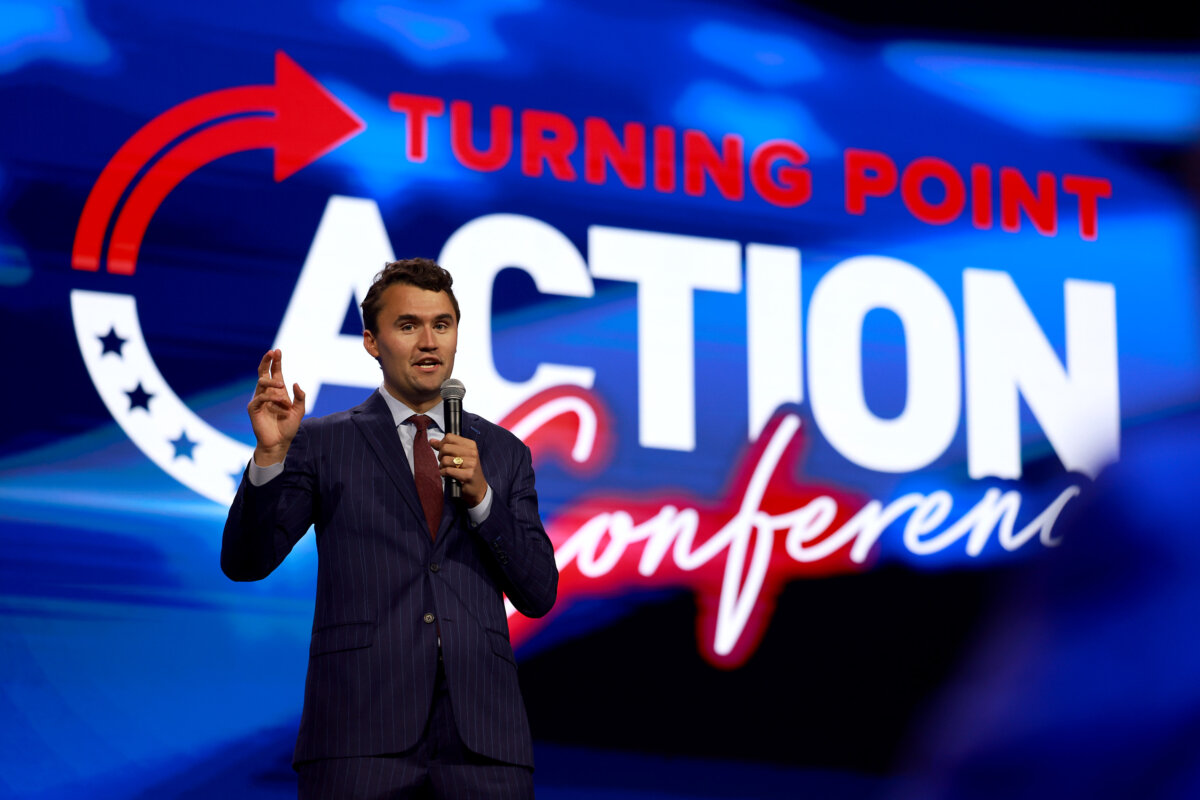
It was 10 years ago when I first received an invitation to address a crowd gathered under the auspices of a new kind of organization. It was called Turning Point USA, founded and led by an implausibly young intellectual leader named Charlie Kirk.
I was aware that this was something new. It was not a think tank, not a political lobby, and not the usual campus activist group. It was something else, but I did not know what. It was my first experience with this group.
The topic I chose was from the weeds of intellectual history: the history of economic thought. This was a huge mistake, one born of a lack of understanding of the venue or crowd. I stood in front of 400 extremely curious students and spoke about thinkers and ideas and debates in various lands and times.
It became obvious at some point that nothing I was saying was connecting. I could not understand why. This was a good of a sort that I had never encountered.
Thinking back on that experience, I see better what was going on and what Kirk had in mind. He had not founded a private intellectual society dedicated to parlor games and academic esoterica. The people attracted to Turning Point USA and Kirk were not the A students, the game players, the careerists, and the teachers’ pets.
Kirk’s job was to give a home to refugees. These were intellectual refugees from the college set who desperately wanted to know the truth. For their curiosity, for their independence of mind, they were shamed, punished, excluded, and browbeaten, all with the goal of getting them to submit to the strange ideologies that had a hegemonic presence on campus.
Kirk gave them a home and some assurance that they were not crazy and not undignified; indeed, they might be correct.
We need to understand the culture of the mainstream U.S. campus as it has come to be in the 21st century. Most of the students are pushed there in the first place because they are told that it is the path to career success. They hope for something beyond what high school provided, perhaps a genuine challenge, a higher level of expectation, and a stronger focus on merit.
The problems begin in orientation, which is run not by professors but by the many strange sectors of the administrative bureaucracy tagged to guard and curate student life. These are the diversity officers, the enforcers of ideological conformity, and the scolds who brand the guilty and innocent before anyone has done anything at all.
These encounters offer not emancipation from the political correctness that they left, but the same political correctness, just one thousand times worse. Students are lectured in ways that are condescending and degrading.
They are taught an already familiar litany about the treatment of victim groups and intersectionality, lessons that always somehow end in the demonization of white Christian males and everything that they have ever represented and done in history. With that comes the denunciation of the West as an idea, Christianity as a religion, whiteness and maleness as diseases worthy of extinction, and the assurance that every thought, word, and deed on campus will be policed to ensure “safety,” a word that does not mean physical safety, but intellectual safety for only one brand of thought.
It is impossible to not get the message: An entire gender, an entire group, an entire faith tradition arrives already condemned for its existence. All of this happens before the first class opens on the first day. The tone is set. The rules are announced. The winners and losers are declared before the game even begins.
Any self-respecting person faces a dilemma in this environment. He can keep his head down, comply, get the grades, and get out four years later. That’s a long time, like doing time. You are already condemned as guilty by virtue of who you are, not by anything that you have done. There is no way out. Your one job is to accept your fate.
Some are able to do this, but many others have looked for another path.
Incredibly, these kids are paying for this experience, as if they are getting something out of it. And what is that thing? It is a college degree, but already 10 years ago, it was street knowledge that this piece of paper promises nothing. It grants no success at all. It doesn’t even open doors the way it used to.
For the members of this entire generation of college students—browbeaten, shamed, hectored, dehumanized, and policed—there has been nothing but demoralization. Making matters worse, they have never really been educated. They have no real historical understanding. High school was about learning to fake it, and now college looks like four more years of the same.
The result is a full generation robbed and betrayed.
Kirk set out to offer an alternative. Following high school, he had enrolled briefly at Harper College, a community college near Chicago. He realized that continuing would be a vast waste of time compared with what he could learn on his own. He founded Turning Point USA as a refuge and a source for alternative ideas.
I encountered the organization only two years after its founding. It was easy to see how it had caught on. Hundreds of students attended its events, which served as a kind of alternative path for learning.
The mistake I made in my presentation was assuming that the kids in front of me had an education like mine. This was wrong. They had no such thing. They had long been part of a system, but had nothing to show for it at all. The essence of what they had been taught was to hate their country, hate the religion of their heritage, hate their family structures, hate the morals and mores of their history, and, finally, to hate themselves.
Turning Point USA’s job was to offer another path. It was not really a full college education. It was (and remains) an effort to save human dignity from the incinerator of the college bureaucracy.
This is how it began, but Kirk’s mission continued to grow and began to have profound political implications. As the campus goes, so goes the culture at large, as the worst of the ideological dogmatism had already leaked and poured into mass media and the public mind. Kirk was raising an entire generation of intellectual refugees from campus and the official culture itself.
Kirk always believed that his battle was one of ideas, and his intellectual growth became ever more obvious. He was articulate, well-read, brilliant, and passionate about what he was learning. He took his message back to the campus and was running real-time seminars all over the country, inviting debates on all hot-button topics: race, sex, religion, politics, history, transgenderism, and much more.
He was never about hiding his views. He was fearless about expressing them. He was ready to debate anyone anytime because he believed in what he was doing. Following the COVID-19 pandemic period, he became ever more curious about issues far beyond traditional ideological categories. He hosted me on his show on matters of lockdowns, public health, pharmaceutical power, agency capture, and the administrative state.
I last saw him six months before the assassin’s bullet took his life. He greeted me as an old friend, almost like he had followed my own intellectual trajectory. He was warm and ebullient as always, a joyful warrior for the truth. I had a brief moment of guilt that I had not fully appreciated his visionary path and what he had done to break the mold.
He died the day before a gathering put together by Brownstone Institute on a farm in Virginia. We began with a moment of silence followed by a prayer. Kirk’s spirit was everywhere at this event. His death has conferred on all of us a new sense of mission and emboldened courage to stand up for what is right and not be intimidated into silence.
Kirk’s idea was commonsensical but powerful. He would not be squeezed out of the debate. He would speak as a human being with dignity and respect. He would root his outlook in learning, history, faith, and logic. He would stand up for country, faith, family, and common sense against the tide of irrationality, shaming, and fanaticism.
If the point of the murder was to silence him, the result is very obviously the opposite. His death has galvanized a global movement built not on revenge fantasies, but on truth as a first principle. This movement is newly committed to freedom and human dignity. In that sense, he still lives among us.
Views expressed in this article are the opinions of the author and do not necessarily reflect the views of The Epoch Times.
 Friends Read Free
Copy
Facebook
Tweet
Friends Read Free
Copy
Facebook
Tweet