Commentary
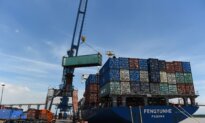
For now, President Donald Trump’s tariff regime has driven an increasing number of Chinese companies to avoid the full weight of those impediments by relocating elsewhere. Vietnam has been a major beneficiary of the trend.
Even as the outward movement of Chinese business has helped these producers continue to access the rich American market, the trend has brought Vietnam the benefits of development, training, and employment.
In the long run, however, the pattern has confronted the leadership in Hanoi with difficult options. If it allows the in-migration of Chinese business to proceed unchecked, it risks becoming something of an economic colony of China.
Resistance for the sake of organic domestic development has value but will deny the immediate benefits of the trend. If successful, it would make Vietnam into a competitor of China.
The roots of these developments and their associated dilemmas lie in Washington. Things began in Trump’s first term in office when, in 2018 and 2019, his administration imposed tariffs of up to 20 percent on Chinese goods entering the United States. In his second term, he upped the ante on China, first imposing tariffs of almost 60 percent on Chinese exports to America and then negotiating these down to a still-high average of slightly more than 45 percent.
To avoid these onerous burdens and being shut out of the American market, Chinese producers began early on to set up operations in third countries so that their production would enter the United States from somewhere other than China and thus at a lower tariff. With last year’s tariff hikes, the pattern has accelerated.
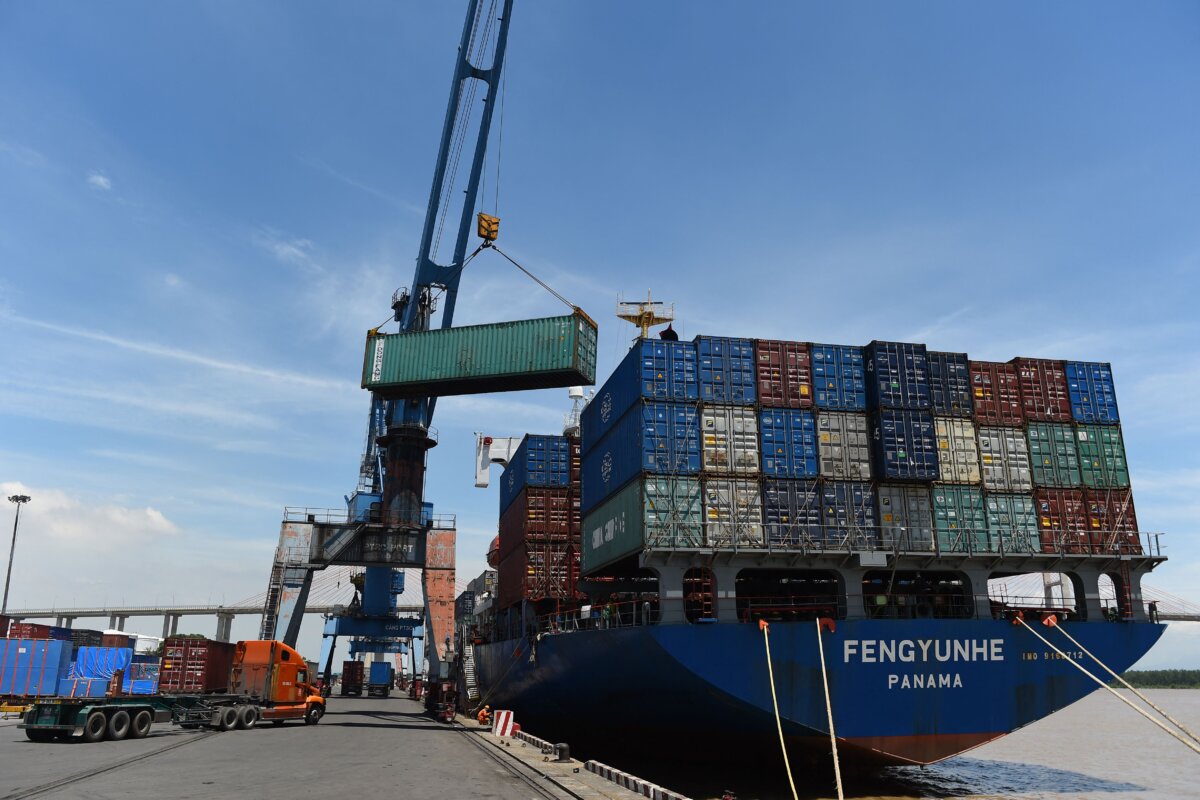
Vietnam has been a popular destination. The authorities there have been eager to cooperate with Chinese business migration; wages were lower than in China, and the distances were easier to transit than in Latin America, for instance. Vietnam’s welcome to Chinese and foreign investment is generally evident in the country’s willingness to provide production facilities.
The Vietnam-Singapore Industrial Park (VSIP) joint venture between Singapore’s Sembcorp and Vietnamese state-owned partners has, for instance, established some 26 industrial parks across 15 Vietnamese provinces and cities. In just this venture alone, Chinese tenants have increased from 9 percent of the total in 2021 to more than 15 percent in 2025. That percentage has doubtless increased this year, but no figures are available yet.
DEEP C Industrial Zones in Vietnam’s port city of Hai Phong reports Chinese tenants occupy one-fifth of its space, up from only 7 percent before Trump’s initial tariffs went into effect.
China’s penetration into Vietnam’s economy is already significant, accounting for some 18 percent of all export turnover and employing some 0.6 percent of the country’s total workforce, closer to 12 percent of those working in manufacturing.
That penetration would probably be deeper still if Vietnam’s workforce were better trained. Of late, the Vietnamese workforce has gained enough sophistication to offer something more than help with low-value-added, labor-intensive goods—shoes and clothing, for instance—but still, Chinese investors note what they call the country’s shallow “supply-chain depth.
Accordingly, all research and labor-intensive work remained in China, and most of the precision and sophisticated inputs are shipped to Vietnam from China or occasionally from South Korea or Taiwan. Indicative of this pattern is how Vietnam’s imports from China have soared, up 30 percent in 2025 alone. (There is no data yet for this year.) These arrangements suit the Chinese Communist Party’s obsession with control.
The present pattern, though it has brought Vietnam greater prosperity, nonetheless poses long-term concerns for Vietnamese authorities. They worry that continued migration along these lines will make Vietnam increasingly dependent on China, turning it into a kind of economic colony. They realize that sustainability depends on organic, domestic development.
They have acknowledged that the so-called flying geese model of development no longer works. This was the approach where Japan, South Korea, Taiwan, and Singapore focused on the United States and developed accordingly. This model, as is now apparent, worked only when global supply chains were less developed than they presently are.
Still, Vietnamese authorities harbor a hope that Vietnam can gain advantage the way China did from extensive Japanese investment there in the 1990s. That model, they know, depends on purely domestic efforts.
To this end, Vietnam has established an ambitious education and worker training program. Its aims, among other things, are to expand research and development (R&D) spending to 2 percent of gross domestic product (GDP) and to train 50,000 chip design engineers by 2030 and 100,000 by 2040.
It remains an open question whether such efforts will simply feed Chinese and other foreign operations or give Vietnam the organic domestic development it wants. If the Vietnamese succeed, they will change from the facilitator of Chinese interests they are today into a competitor.
Views expressed in this article are the opinions of the author and do not necessarily reflect the views of The Epoch Times.
 Friends Read Free
Copy
Facebook
Tweet
Friends Read Free
Copy
Facebook
Tweet