
Commentary
Confidence in the importance of higher education is at its lowest in 50 years.
A recent survey suggests that less than a third of Americans believe a college education is very important, the lowest number in nearly half a century, down from a high of 70 percent a little more than a decade ago.
Higher education has come under the microscope during President Donald Trump’s second term. His dispute with Harvard and other elite schools ended in massive fines for discriminatory practices grabbed headlines.
The government recently announced that students who chose majors that do not predict a post-degree income that matches or exceeds that of an employee with only a high school diploma would not be eligible for federal student loans.
As a credential that signals intelligence and competence to employers, the college degree has become a dubious distinction, as students now coast and cheat their way through degrees on the back of artificial intelligence. Even at the best institutions, students are no longer able to read a book cover to cover. Many professors have given up and no longer assign them.
Before plagiarism and semi-literacy were running riot through the academy, parents could expect children to lose their religion and love of country by going off to college, especially if they chose to pursue a course of study in the humanities. No longer taught the best that has been thought and said, the university has become an institution where resentment goes to be educated.
But the real headline grabber in recent days, no doubt owing its lurid subject matter, is the news of a civil lawsuit filed by a young woman who alleges she was raped by seven young men at Cornell, already euphemistically dubbed “the Cornell Seven.” While this story has divided the chattering classes in predictable ways, what is beyond dispute is that this sordid affair shines an uncomfortably bright light on the moral rot that has seeped onto the college campus.
Why would any parent want to send their child to an institution that saddled them with a mountain of debt, was no guarantor of a profitable career, rendered them illiterate, lazy, entitled, and introduced them to a seedy world of recreational substance abuse and debauchery?
Considering all that, it is impressive how many continue to value what higher education has to offer.
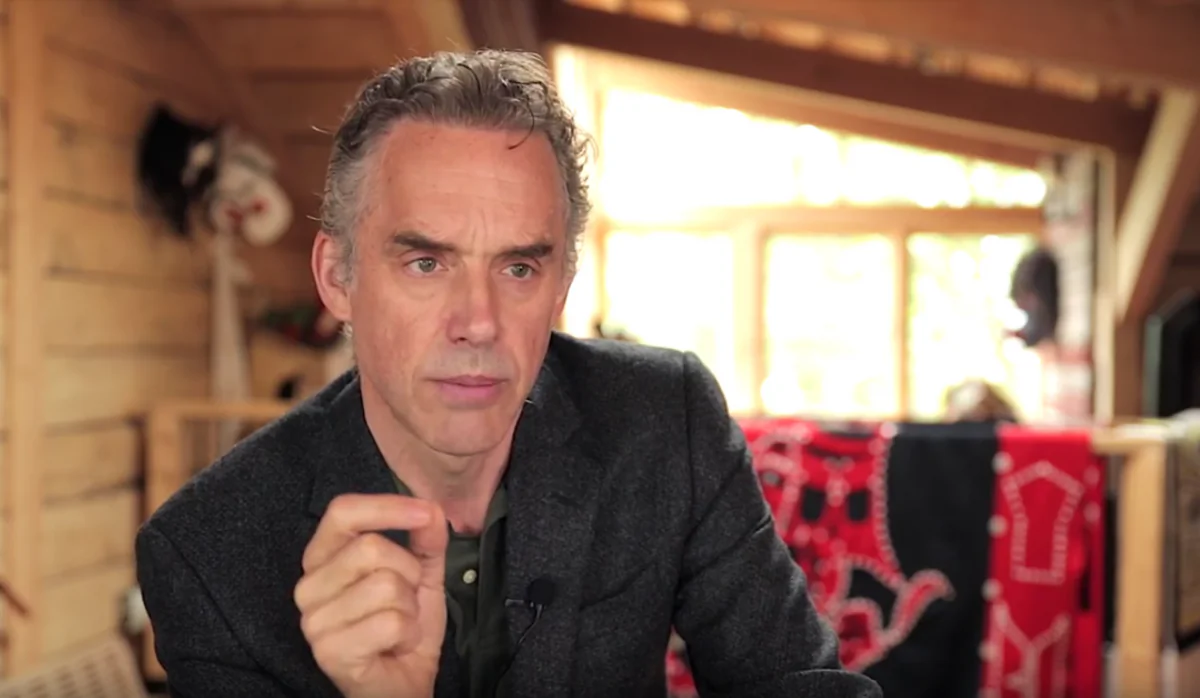
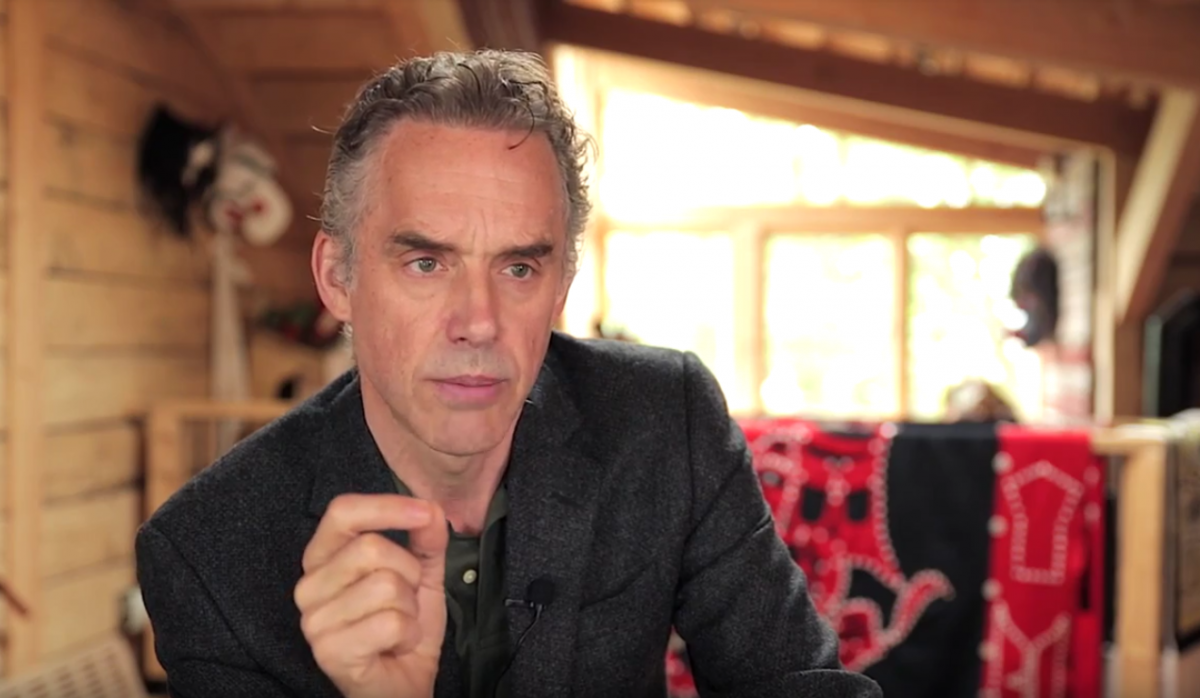
In what has been an undeniably low moment for universities generally and the humanities in particular, this week my mind returned to a more hopeful moment: a talk the inimitable Jordan Peterson gave at Harvard nearly a decade ago. I remember finding it inspirational, as a freshly minted Ph.D. hoping—against hope, it turns out—that the academy could be brought back to its senses by drafting behind true believers like Professor Peterson.
Peterson is perhaps best known as an outspoken critic of the shortcomings of the modern university. He is especially good at addressing the moral hazard of student loans, bloated staffing, and the culture of resentment that has insinuated itself into classrooms from below and is reinforced from above in the offices of unscrupulous administrators.
At the same time, you may also hear Peterson reflect on whether the $250,000 price tag to, say, meet your future husband or wife may well be worth the investment. In a world where, everywhere you turn, you hear from the young (and the not-so-young) how hard it is to meet people nowadays, perhaps pairing up early with someone with whom you have shared a formative experience and hold intellectual common ground is worth the cost.
Peterson himself was poorly treated by his own institution at the University of Toronto, after he spoke out on transgender legislation in Canada.
My own colleagues chased him out of Cambridge, after we had invited him to spend a term there as a visiting fellow. My private hope lying behind our invitation was that it might result in something like a chair in the Psychology of Religion and that his presence would reinvigorate the study of religion and theology in the UK and the world over, by offering the most significant public intellectual in the world—at the time lecturing on the Book of Exodus—a perch at one of history’s most storied institutions.
Having grown disillusioned with the bleak state of the academy and his battles to save it, Jordan felt compelled to found an alternative institution, the Peterson Academy, an online platform, rather than return to a traditional brick-and-mortar institution like McGill, Toronto, or Harvard, where he taught and was educated. One sympathizes.
Peterson, however, would not, for a minute, say that online universities can replace the opportunity to read great works in the flesh with teachers who know and love them intimately, and with peers who are there to learn and love them, too. The first thing out of his mouth when his interviewer asked for a bit of advice on how he and his fellow students should spend their time at Harvard was: “Read Great Books!”
When you listen to Peterson talk about the importance and privilege of a university education, you feel the passionate intensity of an inspiring teacher. More compelling than his passion, I think, is the power of the story he tells about what the academy could be for young people. College should be the beginning of something like a heroic quest, a place where students should—wait for it—“struggle with all [their] soul on behalf of the good!”
When students learn to read, write, talk, and think, they tap into a “divine faculty” that may grant them access to a “transcendent reality” beyond what we can detect. While he does not require students to affirm a transcendent reality lying behind the here and now, you get the sense that he hopes for this vision for them more than anyone could hope for anything. Even if I were a dyed-in-the-wool atheist, this is the kind of professor I would want teaching my sons and daughters.
When you hear Peterson talk about what he is better known for—expressing deep upset at the rise of “cultural neo-Marxism”—his passion for, and belief in, the power of genuine education lie behind it.
Colleges have done something diabolical, in his estimation, something treacherous; they have conspired to withhold a singular opportunity from our young people, not only the opportunity of their lifetime, but the achievement of many lifetimes, the “labor of thousands of years,” as he puts it.
The richly deserved criticisms and fate that have befallen the modern university have done nothing to diminish the truths Peterson told on that day in Harvard. However scarce it has become, a formation in the liberal arts is more urgent now than ever, as our mastery over the material world expands and our spiritual grip on ourselves loosens.
As a teacher, Peterson is the embodiment of the argument he is trying to make, a veritable juggernaut championing the noble cause of educating the young and a testament to what an education can achieve in the world for yourself and others.
If our colleges stand any chance of regaining the esteem they once enjoyed in the eyes of the majority of Americans, it will be because they have listened, marked, and inwardly digested the impassioned message of great teachers like Peterson, one forged in the crucible of love and knowledge.
Views expressed in this article are the opinions of the author and do not necessarily reflect the views of The Epoch Times.
 Friends Read Free
Copy
Facebook
Tweet
Friends Read Free
Copy
Facebook
Tweet