



Arthroscopic knee surgery has long been one of the most common orthopedic procedures in the United States.
This minimally invasive procedure treats a range of knee problems, including meniscus tears, damaged ligaments, and loose fragments. Recent findings have reshaped how doctors approach it, especially for conditions like knee osteoarthritis, where the procedure is now used more selectively than in the past.
 (Illustration by Ran/ The Epoch Times)
Before the surgery begins, a member of the anesthesia team will discuss the available options with you: local (numbs the knee), regional (numbs the body below the waist), or general anesthesia (puts you to sleep).
Once you are in the operating room and the anesthesia takes effect, the skin around the knee is cleaned to reduce the risk of infection, and the leg is covered with sterile surgical drapes, leaving the prepared area exposed. A positioning device may be used to stabilize and properly position the leg during the procedure.
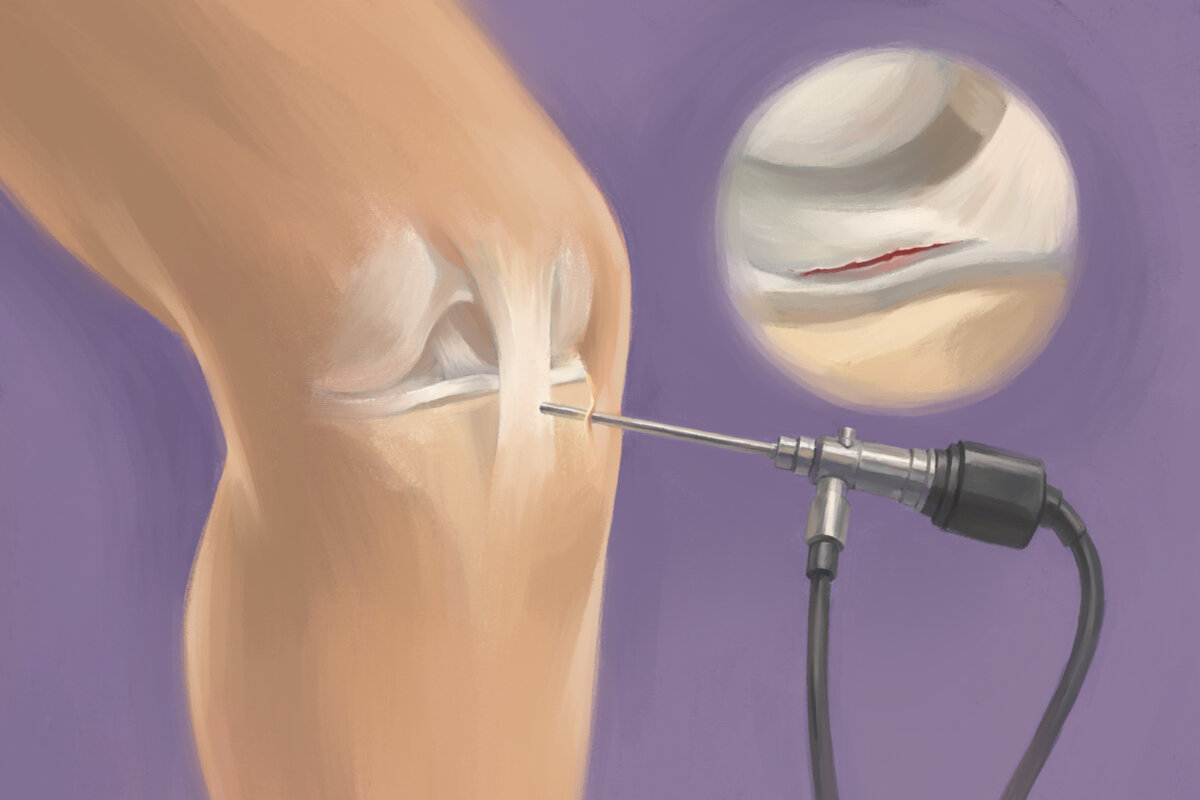
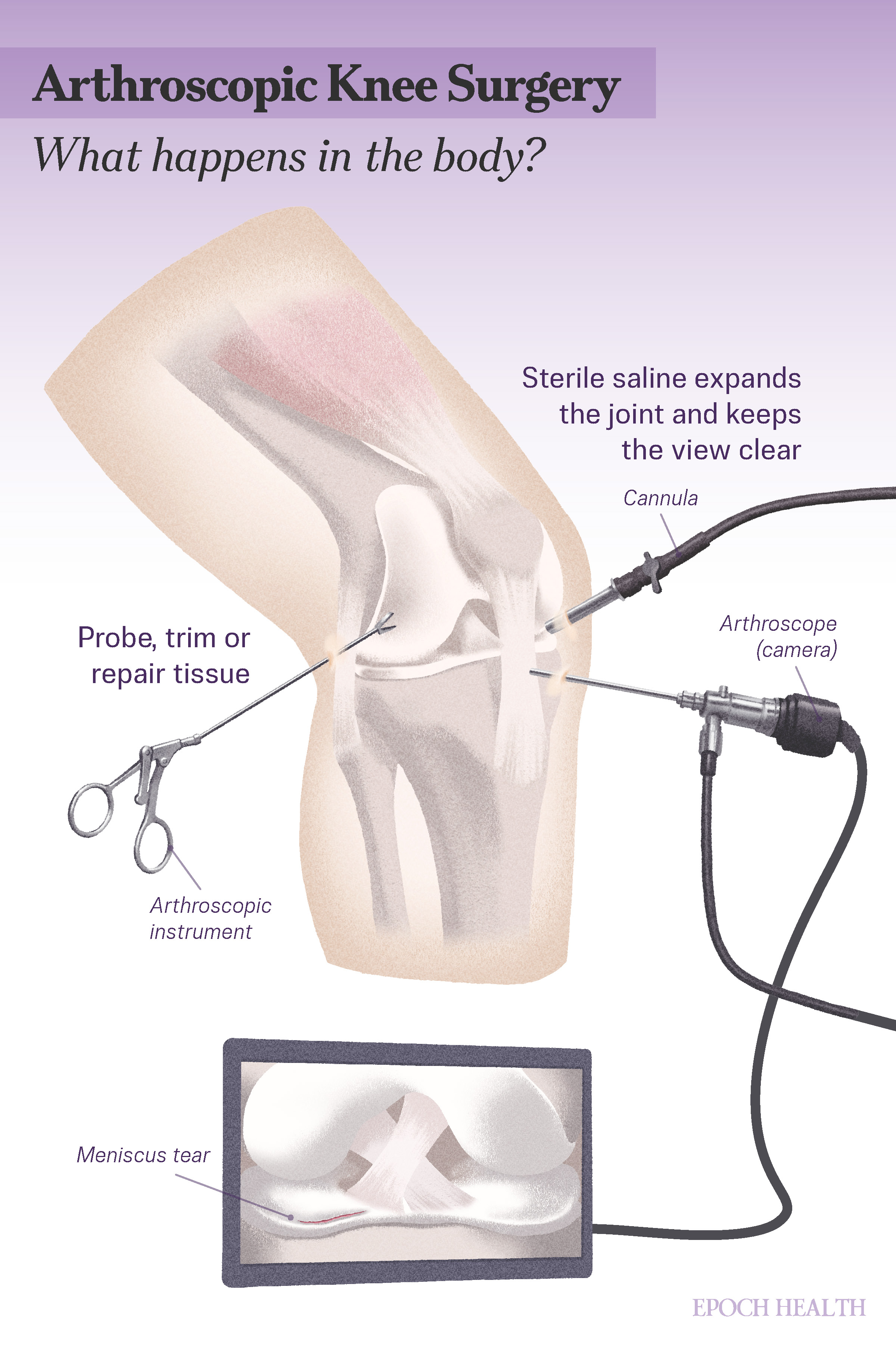
Let’s use arthroscopic meniscus repair as an example. During the procedure, an orthopedic surgeon first inserts an arthroscope—a thin, camera-equipped instrument—through a small incision in the knee. The arthroscope provides a magnified, real-time view of the inside of the knee joint, which is displayed on a video monitor. This allows the surgical team to carefully inspect the structures within the joint and assess the extent of the meniscus tear.
The surgeon may make several additional small incisions, called “portals,” around the knee to allow specialized surgical instruments to enter the joint. The surgeon can use these instruments to probe, trim, or otherwise repair tissue as needed. When a meniscus requires repair, the damaged cartilage may be repositioned and secured with sutures or specialized anchors.
If the patient also has an ACL tear or another associated knee injury, the surgeon may address it during the same arthroscopic procedure when appropriate.
Throughout the procedure, sterile saline is continuously pumped into the joint to gently expand the knee and rinse away blood and cloudy fluid. This keeps the surgical field clear and allows the surgeon to continuously see the joint structures on the monitor. The fluid is drained as the procedure progresses and removed when the surgery is complete. The instruments are then withdrawn, the small incisions are closed, and the knee is dressed for recovery.
If a repair or reconstruction was performed, a knee brace may provide additional protection while the knee heals.
[shortcut_anchor id=”anchor_1791042541237″ label=”When Is It Needed”]When Is Knee Arthroscopy Needed?[/shortcut_anchor]Knee arthroscopy can diagnose and treat problems within the knee joint.
For Diagnosis: MRI and other imaging techniques can diagnose many knee conditions without surgery, so knee arthroscopy is rarely performed solely for diagnostic purposes. Knee arthroscopy is generally used when surgery is indicated, allowing the surgeon to directly examine the inside of the knee and, when appropriate, diagnose and treat problems during the same procedure. It may also be used when the diagnosis remains uncertain after other evaluations.
For Treatment: Knee arthroscopy can be used to treat certain conditions such as:
-
Meniscus Tears: The menisci are crescent-shaped pieces of cartilage that cushion and stabilize the knee. Over time, the menisci can wear down, becoming frayed and more susceptible to degenerative meniscal tears. Arthroscopy may be used to repair a torn meniscus or remove the damaged portion. Although meniscal tears remain a common indication for knee arthroscopy, the procedure is not routinely recommended for degenerative meniscal tears, and arthroscopic meniscal surgery has declined in response to evidence of limited benefit in degenerative disease.
-
ACL or PCL Injuries: The anterior cruciate ligament (ACL) and posterior cruciate ligament (PCL) are major ligaments that stabilize the knee. Arthroscopic knee surgery may be used to reconstruct a torn ligament.
-
Loose Bodies: Fragments of bone or cartilage floating within the joint can interfere with movement and may cause the knee to catch or lock. These can sometimes be removed arthroscopically.
-
Synovial Inflammation or Damage: The synovium, the thin tissue lining the inside of the knee joint that produces lubricating synovial fluid, may become inflamed or damaged, and knee arthroscopy allows the surgeon to examine and, when necessary, remove affected tissue.
-
Cartilage Defects: Certain cartilage defects may be treated with arthroscopic techniques to repair or restore the damaged area, including debridement to remove damaged tissue and procedures to repair or restore damaged cartilage.
-
Other Conditions: Knee arthroscopy may be used in selected cases involving patellar misalignment (abnormal tracking or positioning of the kneecap), bone fragments, Baker’s cyst (a fluid-filled swelling behind the knee), and certain knee fractures.
Where It Doesn’t Help: Routine arthroscopic lavage or debridement is generally not recommended for the treatment of knee osteoarthritis because it provides little to no meaningful improvement in pain or function. This is because osteoarthritis involves changes to the articular cartilage, underlying bone, and other tissues throughout the joint; simply rinsing out the joint or removing small amounts of damaged tissue does not address the underlying disease process or reliably relieve arthritis-related pain. However, knee arthroscopy may still be considered for people with osteoarthritis when another treatable knee problem is present.
Evaluation typically includes a medical history, physical examination, and imaging. X-rays may be used to assess fractures or osteoarthritis, while an MRI can provide more detail about the menisci, ligaments, and cartilage. These findings, along with the severity of symptoms and response to nonsurgical treatment, help determine whether arthroscopy is appropriate.
[shortcut_anchor id=”anchor_1791042552237″ label=”Effectiveness”]How Effective Is Knee Arthroscopy?[/shortcut_anchor]The procedure’s effectiveness varies a lot depending on the condition.
Acute Meniscal Tears: Acute meniscal tears are a common knee injury in young and active people, often occurring after a twisting or pivoting injury. Arthroscopic surgery may be an option for some people, especially when nonsurgical treatments haven’t provided enough relief or improvement. The goal of surgery is to preserve or repair as much viable meniscal tissue as possible. A 2021 meta-analysis found that the failure rate for traumatic, nondegenerative meniscal repairs was 19 percent four to six years after surgery. In other words, about 4 in 5 repairs had not met the studies’ criteria for failure at four to six years. The pooled failure rate rose from 12 percent in the first year to 19 percent at four to six years.
Degenerative Meniscal Tears: In the FIDELITY trial, arthroscopic partial meniscectomy for a degenerative meniscal tear offered no meaningful improvement at 10 years compared with diagnostic arthroscopy without meniscal removal. The meniscectomy group also had more symptoms, worse function, greater osteoarthritis progression, and a higher likelihood of subsequent knee surgery.
ACL Reconstruction: Arthroscopic ACL reconstruction can improve knee stability and may reduce the risk of subsequent meniscal surgery. It has largely replaced older open ACL reconstruction procedures. Most arthroscopic ACL reconstructions are successful, with a reported failure rate of about 3 percent to 11 percent.
Conservative treatments such as physical therapy, medication, and lifestyle changes are generally worth trying first when the condition does not significantly impair mobility or daily activities, as they avoid surgical risk and recovery time, though they do require time and consistency. A knee that is locked or cannot fully straighten, or an acute meniscal tear that may be repairable, warrants prompt orthopedic assessment; some of these patients may benefit from early surgery.
Dr. Nolan Horner, a fellowship-trained orthopedic surgeon, told The Epoch Times that “compared with traditional open surgery, it usually causes less initial pain and scarring and may allow a faster recovery, although the final outcomes are often comparable.”
Smaller incisions and reduced tissue exposure can lead to less blood loss and a lower risk of infection and other complications than open surgery.
Several years after surgery, people tend to be more satisfied when the procedure directly fixes a specific knee problem—such as a meniscus tear or a torn ligament that is causing instability or limiting activity, said Horner. Long-term satisfaction often depends on choosing the right patients for surgery and having realistic expectations about how much the surgery is likely to help.
[shortcut_anchor id=”anchor_1791042564053″ label=”Risks”]What Are the Disadvantages and Risks of Knee Arthroscopy?[/shortcut_anchor]Complications are uncommon and usually minor.
-
Post-Surgery Complications: Possible postoperative complications include infection, damage to the cartilage, meniscus, or ligaments, blood clots in the leg, injury to nearby blood vessels or nerves, knee stiffness, and blood accumulation within the knee.
-
Anesthesia Complications: Possible complications may include nausea or vomiting and, with general anesthesia, a sore throat; serious reactions are uncommon. Regional anesthesia has its own uncommon risks, which the anesthesia team can explain.
Osteoarthritis Risk: Some arthroscopic procedures, particularly those that remove meniscal tissue, may increase the risk of developing or worsening osteoarthritis, especially in people who already have degenerative changes in the knee. Removing meniscal tissue can reduce the knee’s ability to distribute and absorb loads evenly, which may increase stress on the cartilage and other joint surfaces over time.
[shortcut_anchor id=”anchor_1791046566320″ label=”Recovery”]What Actually Predicts a Good Recovery? [/shortcut_anchor]According to Horner, the type of procedure is one of the most important factors. He also points to the condition of the knee before surgery, the patient’s overall health, and how closely they follow their rehabilitation plan as important factors in recovery.
Two factors that can be easy to overlook are quadriceps strength and psychological readiness, Dr. Jorge Chahla, orthopedic surgeon and associate professor of orthopedic surgery at Rush University Medical Center, told The Epoch Times.
Good quadriceps strength gives the knee a stronger starting point for recovery, since surgery, pain, and swelling can temporarily weaken the muscle and make it harder to control the knee. Being psychologically prepared can also matter because recovery often requires consistent participation in rehabilitation. For example, fear of movement or reinjury, low confidence, or unrealistic expectations may make it harder to stay active and follow the rehabilitation plan, while realistic expectations and confidence can help patients engage with their recovery.
Sometimes, a second surgery is needed. For example, isolated meniscal repairs may require another operation in up to 15 percent of cases, while ACL revision rates are generally in the single digits, though young athletes returning to pivoting sports face a higher risk of a reinjury, said Chahla. “The most common reasons for a second operation are progression of existing arthritis, failure of the repair to heal, or failure to address the underlying cause of the original tear,” he said.
[shortcut_anchor id=”anchor_1791042576770″ label=”Preparation”]How Can You Prepare for Knee Arthroscopy?[/shortcut_anchor]If you are generally healthy, knee arthroscopy is usually performed as an outpatient procedure, meaning you can typically return home the same day.
2 Weeks Before Surgery:
-
Confirm which medications you should continue taking on the day of surgery. You may have to temporarily stop taking certain medications that increase the risk of bleeding, such as aspirin, ibuprofen, naproxen, or other blood thinners.
-
Tell your provider if you drink more than one or two alcoholic drinks per day, and consider quitting smoking, since it can slow wound and bone healing.
-
Inform your surgeon if you develop an illness before surgery, such as a cold, flu, fever, or herpes outbreak.
During the Week Before Surgery: Review which medications you should take on the day of surgery. Your medication instructions may change as your surgery date approaches, so follow the most recent guidance from your surgical or anesthesia team.
On the Day of Surgery: Follow your surgical or anesthesia team’s instructions about when to stop eating and drinking, which may be about six to 12 hours before the procedure. Take only the medications you have been instructed to take, using a small amount of water.
[shortcut_anchor id=”anchor_1791042607788″ label=”Care Tips”]What Are the Postoperative Care Tips After Knee Arthroscopy?[/shortcut_anchor]Here are some tips to help you recover:
-
Medications: Your doctor may prescribe short-term pain medication, including nonsteroidal anti-inflammatory drugs, local anesthetics, or opioids. Your doctor may also recommend aspirin to reduce the risk of blood clots after surgery.
-
Swelling and Pain: Keep your leg elevated during the first few days and use ice packs as directed to reduce swelling and pain.
-
Wound Care: Keep the surgical dressing and incisions clean and dry. If you have a bandage, cover it with plastic to keep it dry while showering.
-
Weight-Bearing: Use crutches or other walking aids as needed after surgery.
-
Rehabilitation and Exercise: Follow your rehabilitation plan and perform regular knee exercises to restore range of motion and strengthen the muscles around the knee.
A follow-up appointment will be scheduled to assess healing and discuss the surgical findings and recovery plan. Return to work varies by procedure and job demands, ranging from several weeks for desk jobs to several months for physically demanding work.
Driving is usually permitted one to three weeks after minor surgery, with a longer recovery period typically required after more extensive repairs or reconstructions.
“One thing I wish every patient understood is that there is no one-size-fits-all approach to knee pain,” Dr. Ryan M. Siwiec, a board-certified orthopedic surgeon, told The Epoch Times. He emphasized that the best approach depends on factors such as your overall health, previous treatments, lifestyle, and the level of function and activity you hope to regain.
“Surgery can sometimes be the best initial treatment,” Siwiec said, “but often we can start with more conservative options such as rest, ice, bracing, anti-inflammatories, injections, or physical therapy. In many cases, that step-by-step approach can help improve pain and function without surgery.”