

The death of a laboratory worker at a plague research institute in Siberia that prompted Russian health officials to implement controls drew a response from the U.S. State Department and federal health agency this week.
The death, in undisclosed circumstances, sparked public health fears across social media platforms. Russian government authorities declared the situation under control on Monday, and a top Kremlin spokesperson said people should not pay attention to “rumors and speculation.”
Russian Agency Says It Took Action
Russia’s health agency, Rospotrebnadzor, said in a statement that “a special set of measures” were imposed after a worker died at the Anti-Plague Research Institute of Siberia and the Far East near Irkutsk, according to the Interfax news agency.
Rospotrebnadzor said the worker had been diagnosed with pneumonia of unknown origin. Authorities have not confirmed whether the worker contracted plague, a bacterial infection that has a high fatality rate if left untreated.
“Due to the patient’s professional activities, upon receiving information, a comprehensive set of anti-epidemic measures was immediately and fully implemented in accordance with sanitary legislation,” Rospotrebnadzor said. “This included identifying the widest possible circle of people who had been in contact with the patient, inpatient medical observation, and daily laboratory testing.”
Igor Kobzev, the governor of the Irkutsk region, said in a post on social media that she died of “pneumonia of unknown etiology” and added that no new cases of staff at the research facility seeking medical attention had been identified.
The governor added that situation was under control and all known contacts of the deceased worker were identified, examined, and placed under medical supervision.
Russian Government Plays Down Fears
On Monday, longtime Kremlin spokesman Dmitry Peskov sought to tamp down what he termed rumors about the death of the worker and said Russians should listen to Rospotrebnadzor.
Speaking to state-run outlet TASS, Peskov said people should rely on information from Rospotrebnadzor “without listening to various rumors and speculation.”
“Rospotrebnadzor is home to highly qualified professionals in this field. Let’s listen to their official statements.”
Independent local news outlet Lyudi Baikala quoted sources it did not identify as saying the woman died from pneumonic plague and that several Irkutsk hospitals were placed under quarantine.
US Issues Response
Both the U.S. State Department and Centers for Disease Control and Prevention (CDC) indicated in statements on Monday that both agencies are monitoring reports of a possible plague outbreak in Russia.
“CDC is monitoring the situation closely with the State Department and our other interagency partners,” a spokesperson for the Department of Health and Human Services told The Epoch Times in an email.
U.S. Secretary of State Marco Rubio told reporters on Monday that authorities received information from Russian officials that a lab worker may have been infected.
“There’s concern that [it] could have spread, at least internally; you’ve seen them do quarantine of this and that nature,” he said. “There’s very limited travel between the U.S. and Russia, obviously.”
However, “if something like that gets out, it can quickly spread. So we’re watching and monitoring it closely. I don’t think it’s cause for alarm, but it is cause for focus and the cause to just keep an eye on it, and we’re doing that.”
What Is Plague?
Plague, caused by the Yersinia pestis bacteria, is a severe and potentially fatal infection that has led to multiple worldwide pandemics throughout human history—most notably during the European Middle Ages.
The most common form is bubonic plague, which is spread via the bite of an infected flea, causing painful and swollen lymph nodes referred to as buboes, according to U.S. health officials.
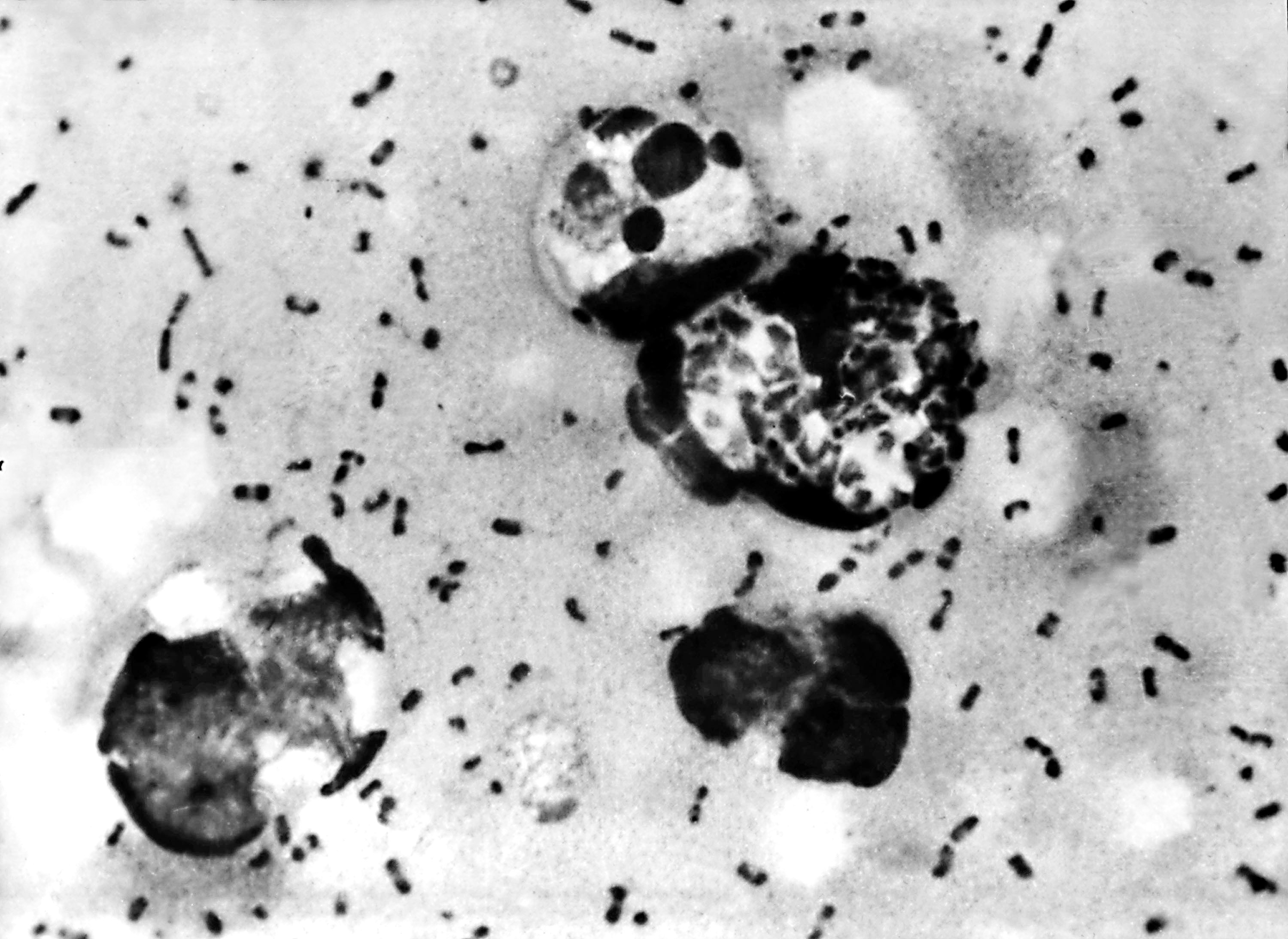 A bubonic plague smear, prepared from a lymph removed from an adenopathic lymph node, or bubo, of a plague patient, demonstrates the presence of the Yersinia pestis bacteria that causes the plague in this undated photo. (Centers for Disease Control and Prevention/Getty Images)
Another variant is pneumonic plague, which develops when the bacteria spreads to the lungs when a person inhales droplets coughed by another person or animal with pneumonic plague, or when the bacterial spreads to the lungs of a patient with untreated bubonic or septicemic plague, according to the CDC.
The health agency noted that pneumonic plague is the most serious form of the disease and is also the only variant that spreads person-to-person, with the incubation period being as short as one day.
In the United States, plague has been found in southwestern states including New Mexico and Arizona. Last week, the CDC sent a reminder to doctors in those states to be wary of potential infections after an Arizona man died from the pneumonic plague in 2025, likely due to being exposed to infected cats.
While all mammals can contract plague, severe forms of the disease are most commonly observed in rodents—prairie dogs, ground squirrels, and chipmunks. But felines such as domestic cats, mountain lions, bobcats, and others are also considered susceptible to the infection, according to U.S. officials.
 Friends Read Free
Copy
Facebook
Tweet
Friends Read Free
Copy
Facebook
Tweet