
Commentary
On the day a community is reeling—after a flood, a shooting, a sudden blackout—people reach for anything that feels like an explanation: a shaky clip, a screenshot, a “neighbor” posting from a brand-new account, a dramatic claim that authorities are hiding something. In those first hours, foreign influence operators do not need to convince millions. They only need to be early, loud, and everywhere, spreading doubt faster than facts.
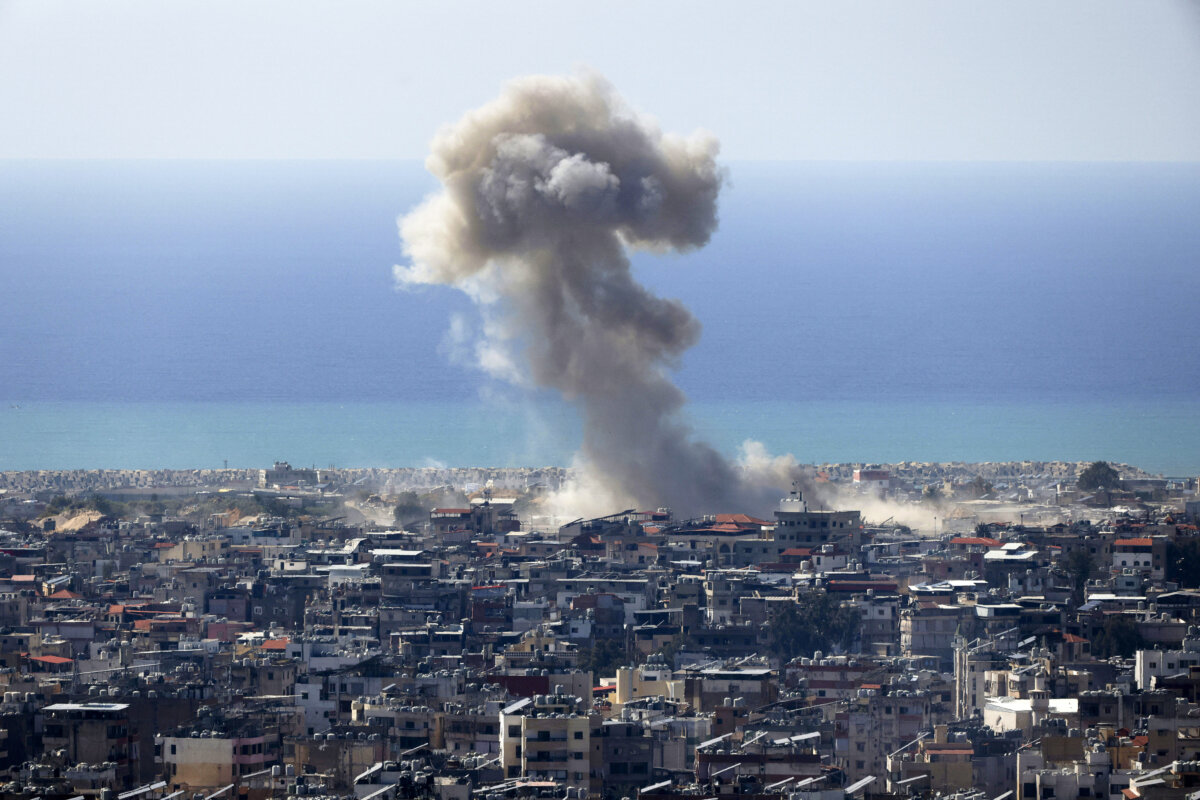
That dynamic is not limited to local disasters. It nests just as effectively in international shocks that spill into American politics, especially when the story intersects with raw domestic fault lines: war powers, civilian harm, “forever wars,” energy prices, protest politics, and distrust in institutions.
The U.S.–Iran crisis of late February and early March 2026 shows why.
Iran: A Case Study in How ‘Official Messaging’ Functions as a Wedge
Beijing’s public line on U.S. operations in Iran has been consistent: condemnation framed as a matter of legality and stability.
China’s foreign ministry has repeatedly voiced the opinion of the Chinese Communist Party (CCP) that U.S.–Israel strikes “have no U.N. Security Council authorization” and “violate international law,” warning about regional spillover and urging an end to military operations.
The foreign ministry separately described the killing of Iran’s supreme leader as a “grave violation” of sovereignty that “tramples” U.N. Charter principles.
On its face, that reads like standard diplomacy. But it also provides something more useful to covert influence operators: a ready-made narrative frame that can be repackaged into domestic American arguments, laundered through “local” voices, and amplified at scale during the first and arguably the most chaotic wave of information.
The playbook is not built around a single viral lie. It is built around scale, persistence, impersonation, and the ability to surge during crises.
Factory Model: Why Volume Matters More Than One ‘Perfect’ Post
We often expect disinformation to be one big falsehood that breaks through. In practice, it manifests as volume across numerous platforms, testing what sticks, then reinforcing progress and discarding messaging that fails to gain traction.
Google’s Threat Analysis Group described CCP-linked coordinated influence activity on YouTube at an industrial scale, terminating thousands of channels in a single quarter, with content in Chinese and English that touched on Chinese and U.S. foreign affairs. That matters when a campaign is in churn mode: set up thousands of channels, push content, lose them to enforcement, then replace them quickly. Takedowns become a cost of doing business, not a decisive defeat.
Crisis conditions are the ideal environment for this model. When a story is moving faster than verification, scale can crowd the feed with “plausible explanations,” leaving audiences with an impressionistic sense that “something doesn’t add up.” The objective is narrative pollution: overwhelm, confuse, polarize, and make certainty feel naive. Turn those perceptions on the government and see if it slows the pace.
Iran Case Study: How Beijing’s Message Maps Onto US Fractures
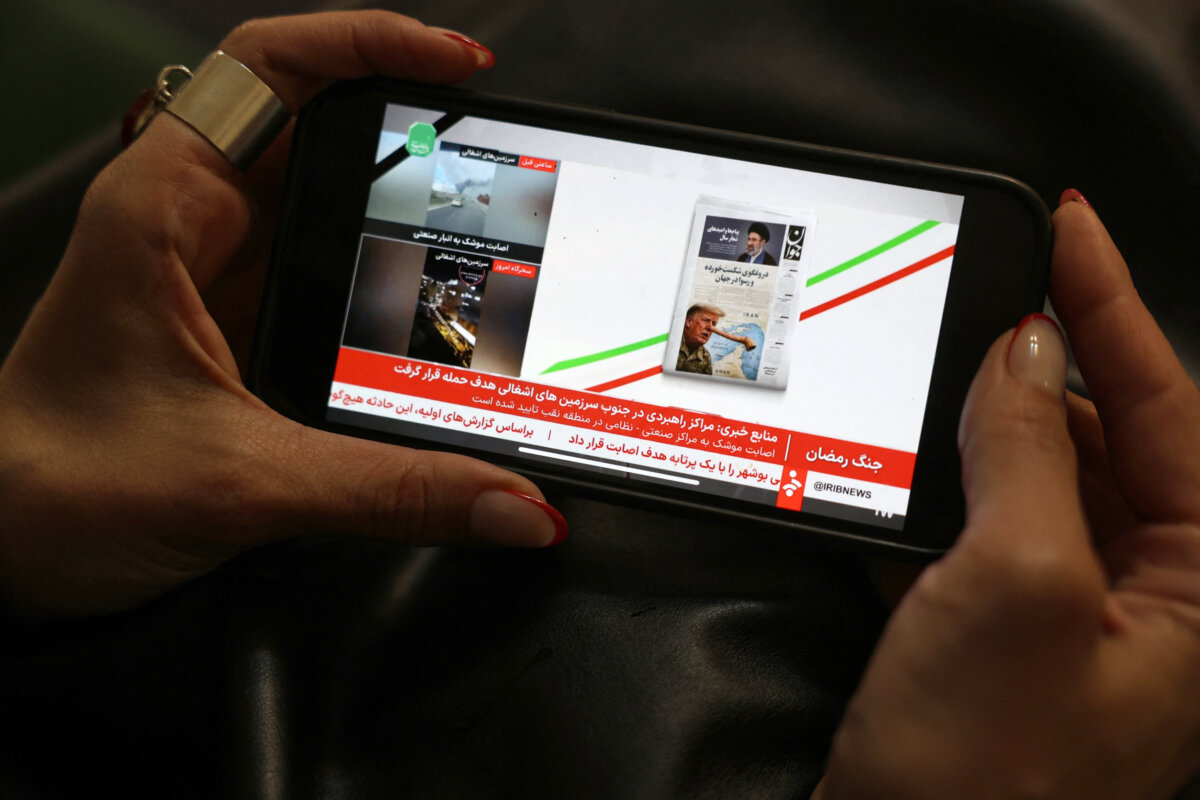
The People’s Republic of China’s official framing has a clear architecture: illegality (no U.N. Security Council authorization), violation of international law, and destabilization risk. China’s U.N. representative echoed the same pillars at the Security Council, stressing U.N. Charter principles, opposing “use or threat of force,” and emphasizing sovereignty and territorial integrity.
That “international law/U.N. Charter/sovereignty” structure is strategically flexible. It can be mirrored in multiple American subcultures that do not naturally share a worldview but do share a grievance. One person can sell it as anti-war constitutionalism. Another can sell it as a human rights and civilian protection issue. Another can sell it as anti-interventionist realism. The wrapper changes; the wedge effect stays.
State media of the People’s Republic of China then add the domestic accelerant: not simply “the strikes are wrong,” but “the strikes are tearing America apart.” Chinese state media outlet CGTN framed the operations as an “unauthorized war,” highlighting backlash on Capitol Hill and stressing a debate over whether “America First” is being sacrificed. CGTN also spotlighted U.S. protests and political criticism, emphasizing street-level rupture alongside elite division.
That is a classic CCP divisiveness payload. It does not require inventing a new controversy; instead, it attaches to an existing one—war powers and legitimacy—then pumps it through attention-maximizing channels.
CCP information warfare hits its mark because the underlying dispute is real: U.S. reporting in early March describes a renewed war-powers fight and protests following the strikes. A crisis does not need an external actor to become polarizing; it needs only an accelerant.
Impersonation: Borrowing Trust to Make the Wedge Feel ‘Native’
Scale is the engine. Impersonation is the turbocharger.
Graphika reported operators tied to the “Spamouflage” ecosystem posing as the Spain-based nonprofit Safeguard Defenders and pushing calls for Spain’s government to be overthrown amid outrage after deadly floods. The point is portability: In the fog after a disaster, impersonation can make fabricated messaging feel like it is coming from the right source at exactly the wrong time.
Iran provides the same opening. A “local veteran,” a “constitutional lawyer,” a “humanitarian nurse,” a “military spouse,” a “Jewish anti-war organizer,” a “Gulf Arab dissident,” or a “Persian diaspora student” persona can each cut along the established line—war illegitimacy, moral outrage, distrust of institutions—while audiences experience it as organic, community-rooted speech. The content does not need to be sophisticated if the fabricated identity performs credibility.
Deepfakes as Logistics: The Reply-Swarm, Not the Blockbuster
The popular fear of deepfakes is cinematic: a single perfect fake video that topples society overnight. The emerging reality is more mundane and more compatible with the factory model because it is repeatable.
Canada’s Rapid Response Mechanism described “Spamouflage” bots placing deepfake videos in replies on publicly visible accounts linked to government departments, media outlets, and political figures—at a tempo of roughly 100 to 200 deepfakes per day.
This reframes deepfakes away from spectacle and toward logistics: a scalable input seeded into comment sections to harass targets, confuse onlookers, and drag attention into outrage loops. No one is trying to confirm that the veteran, lawyer, or nurse is real. But those nondescript, unconfirmed personalities legitimize the message.
In an Iran crisis, the “reply-swarm” method is particularly potent because it targets high-visibility nodes: official statements, breaking-news posts, and influencer commentary. The goal is to contaminate the public square where people go first to understand what happened. When the early narrative space is flooded, later corrections arrive at firmly polarized camps.
Why AI Matters: Faster Iteration, Faster Polarization
Artificial intelligence (AI) did not invent influence operations. But it does compress labor, such as translation, rewriting, persona maintenance, and endless variations. Its speed allows campaigns to iterate faster and at lower cost. In crisis conditions, that compression advantage matters more than “genius propaganda.” It shortens the sequencing from event to narrative draft and persona tailoring. Then, amplification occurs faster and is measured and revised to keep the narrative stream most effective and better directed to target groups.
Beijing’s official messaging supplies the diplomatic skeleton: illegality, U.N. Charter, sovereignty, stability. State media outlets supply the domestic wedge: unauthorized war, protests, constitutional conflict, betrayal of stated political promises. Covert operators, in turn, have an established toolkit for turning those frames into divisive, high-tempo influence at scale: disposable infrastructure, impersonation, and repeatable synthetic media seeded into the places where Americans argue in public.
Outrage Is OK, but Verification Needs to Be in the Forefront
Platforms can and should enforce their rules. But enforcement is downstream. The upstream mechanism is cultural: verification as a civic reflex, especially during the first hours of crisis.
The next time a breaking story floods the feed, the most important questions may still be the simplest ones: Who is speaking, how old is the account, where did the video come from, and why is the message so precisely engineered to provoke a particular emotion? In the Iran crisis—and the next crisis after it—the first “local” voice in the timeline may be an assembly-line product.
Views expressed in this article are the opinions of the author and do not necessarily reflect the views of The Epoch Times.
 Friends Read Free
Copy
Facebook
Tweet
Friends Read Free
Copy
Facebook
Tweet