
Commentary
China has intensified its threat against Taiwan, the Philippines, and Japan through a submarine-launched ballistic missile test and expanded coast guard patrols east of Taiwan.
The Chinese Communist Party (CCP) published a legal opinion claiming ownership of the waters under discussion in the Japan–Philippines maritime talks. It also continued oceanographic survey operations by deploying research vessels in the same disputed waters.
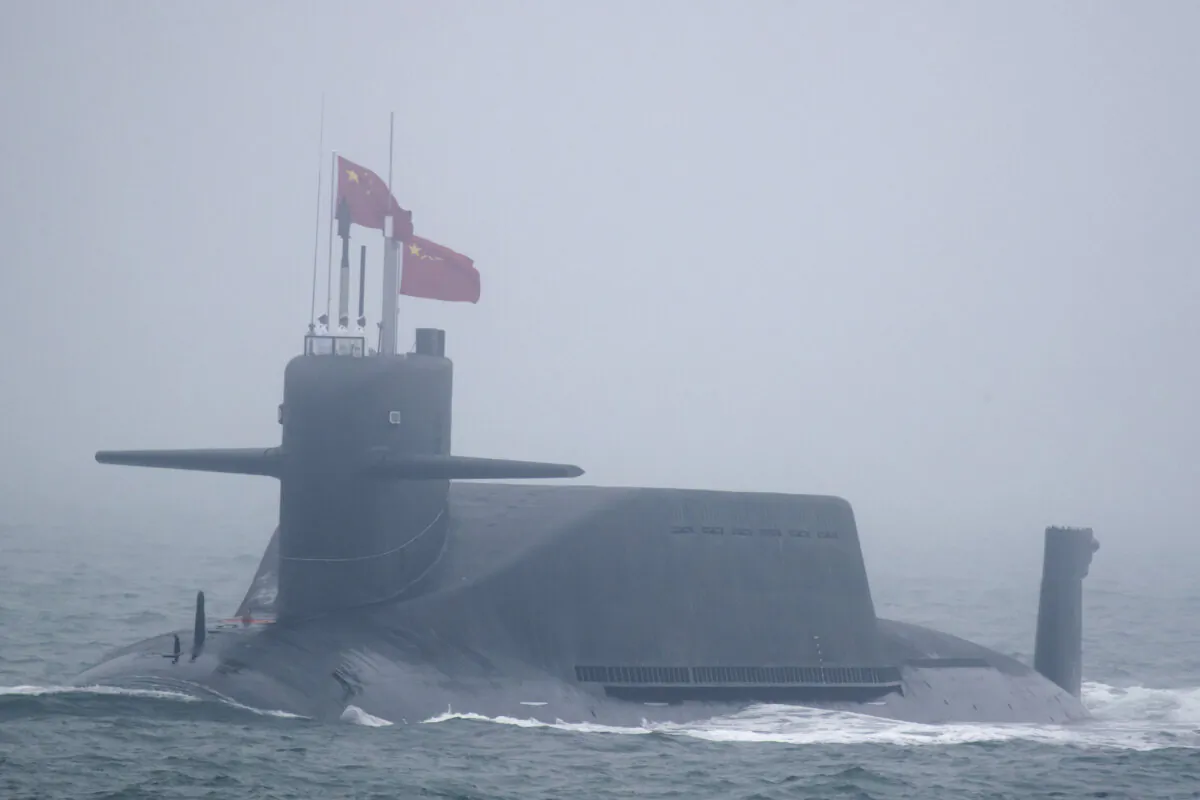
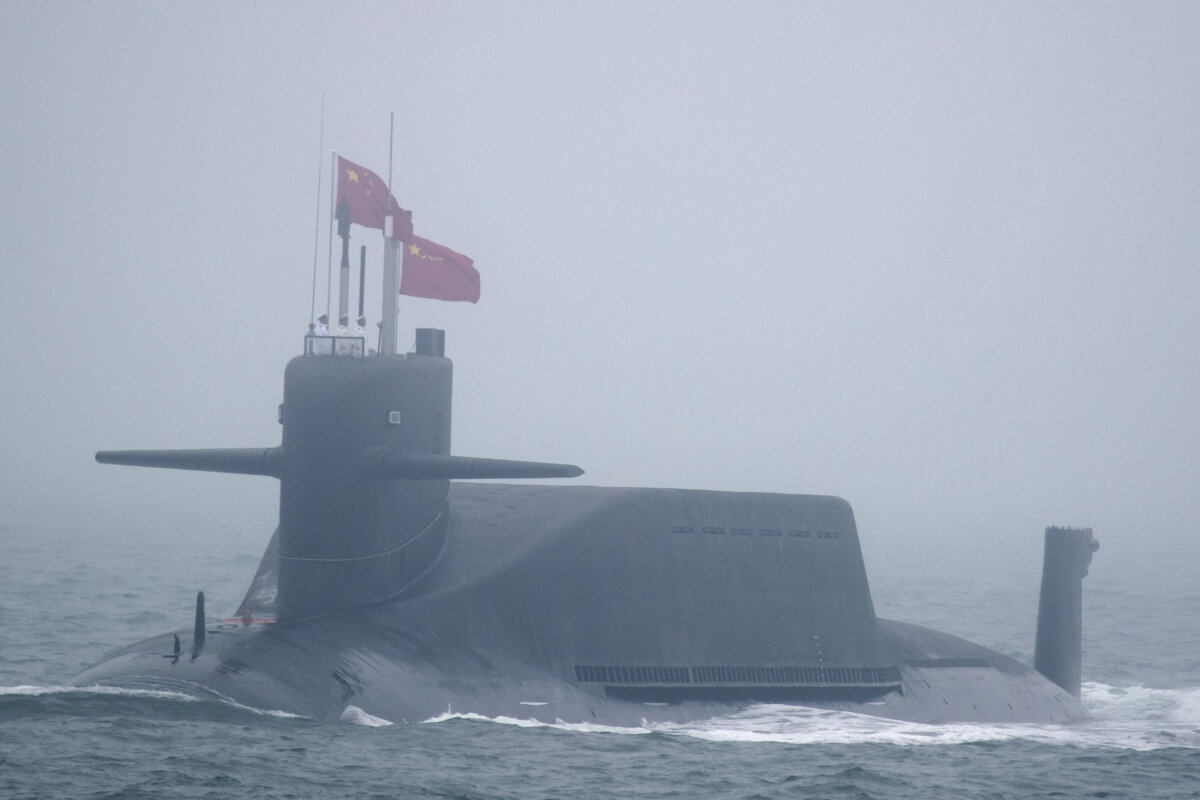
China’s People’s Liberation Army Navy (PLAN) fired a submarine-launched ballistic missile carrying a dummy warhead into the Pacific Ocean on July 6. The missile landed inside the South Pacific Nuclear Free Zone established by the 1986 Treaty of Rarotonga.
It was the PLAN’s first publicly acknowledged strategic submarine missile test in the region and its first strategic missile test of any kind since September 2024. Navy spokesperson Senior Capt. Wang Xuemeng called the test routine and said it targeted no specific country.
The maritime dispute originated on May 28, when Japan and the Philippines announced that they would begin formal talks to delimit the boundary of their exclusive economic zones and continental shelves in waters east of Taiwan. The Chinese Foreign Ministry rejected the talks as illegal, null, and void the following day.
The China Coast Guard conducted a five-day patrol in the disputed waters beginning on June 1, in cooperation with the Chinese Ministry of Transport and the Fujian and Guangdong maritime safety administrations, claiming to have inspected 198 ships. The Taiwanese Foreign Ministry rejected China’s claims that same day, and at least two China Coast Guard vessels have since maintained a continuous presence in waters that Taiwan claims as its eastern exclusive economic zone.
Separately, near Taiwan’s Pratas Island, China conducted three patrols in restricted waters on June 5, June 19, and June 27, above the average since patrols began in February 2025. A Chinese research vessel coordinated with the coast guard for the first time on June 5. On June 25, the Taiwanese National Security Council, Ministry of National Defense, and Coast Guard Administration conducted tabletop exercises simulating a PLA quarantine of the island.
On July 3, the Chinese Ministry of Natural Resources published a legal opinion arguing that Japan and the Philippines should negotiate their maritime boundary with China rather than each other, and warned other states against assisting the two countries in those talks.
The next day, China sent a second coast guard fleet into the same waters east of Taiwan that it had patrolled in June. Taipei called the move illegal and destabilizing. The China Coast Guard stated that it would strengthen these patrols to safeguard what it called its jurisdictional waters.
On July 5, Joseph Wu, secretary-general of the Taiwanese National Security Council, reported that Taiwan was tracking a record of more than 110 Chinese military and coast guard ships along the First Island Chain, the maritime corridor from Japan through Taiwan and the Philippines to Borneo, calling it a clear sign of Chinese expansionism.
Analysts at the Institute for the Study of War assessed that the CCP is using the Japan–Philippines dispute as a pretext to normalize a permanent paramilitary presence in these waters, separate from its existing patrol patterns near Kinmen and Pratas Island. They further assessed that the boarding and inspection procedures currently in place would apply directly to a future blockade of Taiwan.
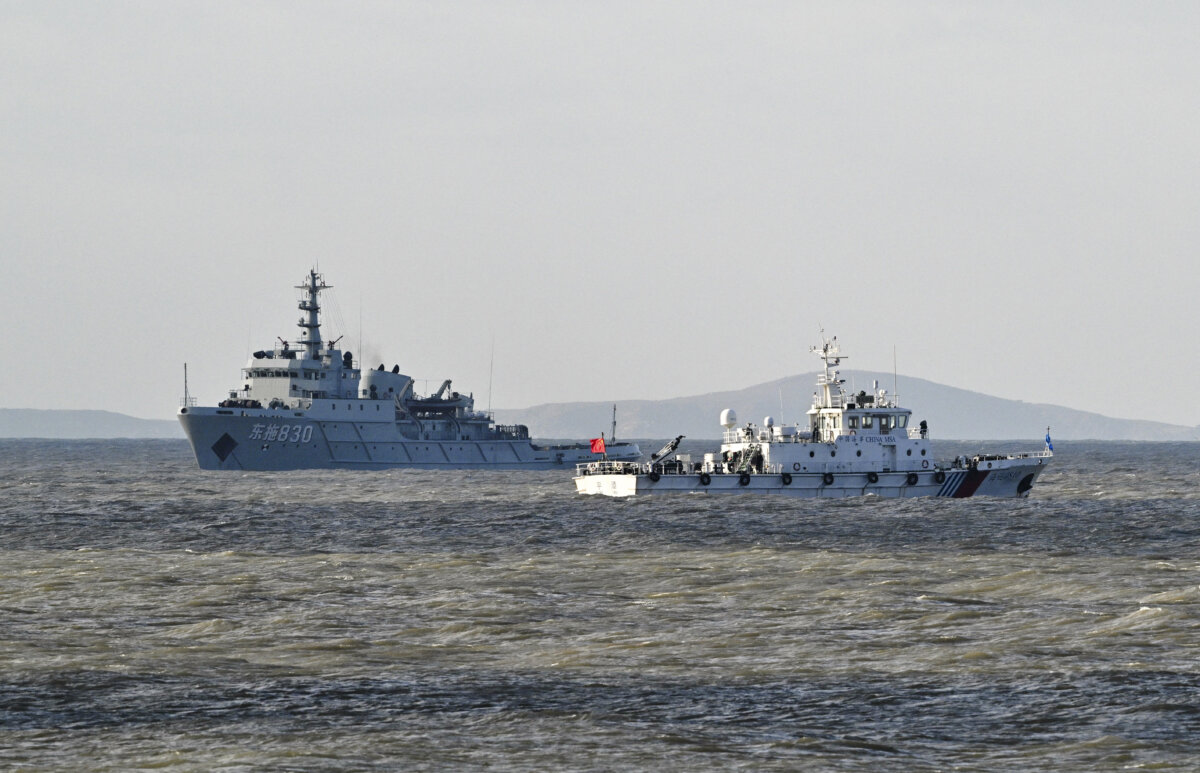
The Chinese state-affiliated social media account Yuyuan Tantian, which is tied to state broadcaster CCTV, suggested that the survey activity could become a regularized model of nearshore governance, similar to the coast guard’s existing Kinmen model. Some analysts noted that oceanographic and seabed data of this kind can have dual-use value for submarine operations, although no Chinese statement has confirmed that as the purpose of these surveys.
The current confrontation builds on a broader dispute that began in November 2025, when Japanese Prime Minister Sanae Takaichi told parliament that a Chinese attack on Taiwan could constitute a survival-threatening situation for Japan. Such a designation could permit the deployment of the Japanese Self-Defense Forces. Takaichi has refused to retract the statement.
China responded with a sustained pressure campaign. It issued a travel advisory, cut flights, suspended Japanese seafood imports, and restricted cultural exchanges. On Jan. 6, China banned dual-use exports to Japan, including rare earths and advanced electronics. Beijing also imposed sanctions on Japanese officials tied to Taiwan and, on April 30, called on the U.N. Security Council to treat Japan’s nuclear potential as an agenda item.
Japan answered by deploying upgraded Type-12 land-to-ship missiles capable of reaching mainland China, downgrading China’s standing in its 2026 Diplomatic Bluebook, and launching a panel to reassess defense spending beyond its current 2 percent of gross national product target.
On July 1, Takaichi traveled to India for talks with Prime Minister Narendra Modi on economic security and strategic cooperation, in what analysts describe as an effort to build a coalition of nations concerned about China’s regional influence.
These developments carry direct implications for the United States, which maintains treaty obligations to Japan and the Philippines and has warned against unilateral changes to the status quo across the Taiwan Strait. Earlier this year, the United States completed the final delivery of its order of 122 M1A2T Abrams tanks to Taiwan, while Taiwan’s first F-16 Block 70 fighter delivery is expected as early as September.
On June 8, the House Foreign Affairs Committee advanced the PORCUPINE Act, which shortens the congressional review period for arms sales to Taiwan from the standard timeline to 15 days and raises the monetary threshold that triggers review, aiming to accelerate future weapons deliveries.
The United States also conducted this month’s biennial Rim of the Pacific Exercise, known as RIMPAC, with 30 participating nations. The Philippine Coast Guard joined for the first time, while South Korea served as maritime component commander for the first time. During a July 6 U.S. State Department briefing, reporters linked those milestones to ongoing Chinese maritime pressure on the Philippines.
Views expressed in this article are the opinions of the author and do not necessarily reflect the views of The Epoch Times.
 Friends Read Free
Copy
Facebook
Tweet
Friends Read Free
Copy
Facebook
Tweet