
Commentary
Some 42 years ago, I found myself in a sparsely-decorated office in the Sir Leonard Tilley Building, part of a government complex in the southern part of Ottawa. I was there to receive my “indoctrination” for what I had been led to believe was a job as a multilingual analyst for the Department of National Defence. In actual fact, I was being read-in on the mandate of the Communications Security Establishment (CSE), Canada’s signals intelligence agency.
CSE had not even been acknowledged publicly by the Liberal government of the day, and was so hush-hush that I was warned against saying anything to anybody about what I did. I was even told that I could get up to 14 years in prison for contravening what was then the Official Secrets Act (now the Security of Information Act) for acknowledging where I worked.
How times have changed! Not only is CSE “out there” but regularly produces reports and advisories—unclassified, of course—for average Canadians on several matters, mostly revolving around cybersecurity (CSE hosts the Canadian Centre for Cyber Security). This is a great move and overdue. Canadians need to know what the threats are, and what better agency to advise them than the incredibly talented professionals at CSE (I worked with many such people in the pre-internet days).
CSE’s advisory role has come to the public’s attention most recently in a news report on a U.S.-published study (which had help from Canada and Australia) on efforts by Chinese hacking group Salt Typhoon to target telecommunications, government, transportation, lodging, and military infrastructure networks in all three nations.
This follows on CSE’s earlier warning that Salt Typhoon was most likely responsible for malicious cyber activities targeting Canadian telecommunications companies. Gee, where have we seen Chinese technology snooping before? China hacked into Nortel as far back as 2004, leading eventually to the demise of the then-leading global telecommunications company and dealing a huge blow to the sector in Canada.
CSE and its partners fear that Salt Typhoon’s hacking could allow the Beijing regime, through its intelligence services, to identify and track their targets’ communications and movements around the world. In other words, China is getting very good at stealing more than our technology: it is going after our secrets as well.
None of this should come as a surprise. We in Canada, thanks to agencies such as the Canadian Security Intelligence Service (where I worked from 2001–2015), have monitored and reported on nefarious Chinese regime activity in Canada for decades: illicit “police stations” set up to monitor dissidents, direct threats to members of the Chinese diaspora in what is known as transnational repression, and attempts to sway voters and get candidates sympathetic to China in sensitive positions, and other shenanigans. Intelligence agencies have been telling successive governments all about these issues for a very long time, only to have their advice ignored or, worse, labelled as racism.
At this juncture, we need more from our protectors, such as CSIS and CSE, and from the government in general. The former need to provide more open briefings for private sector companies in many areas, not just high tech. Governments at all levels—federal, provincial, and municipal—need to take these threats seriously and stop burying their heads in the sand.
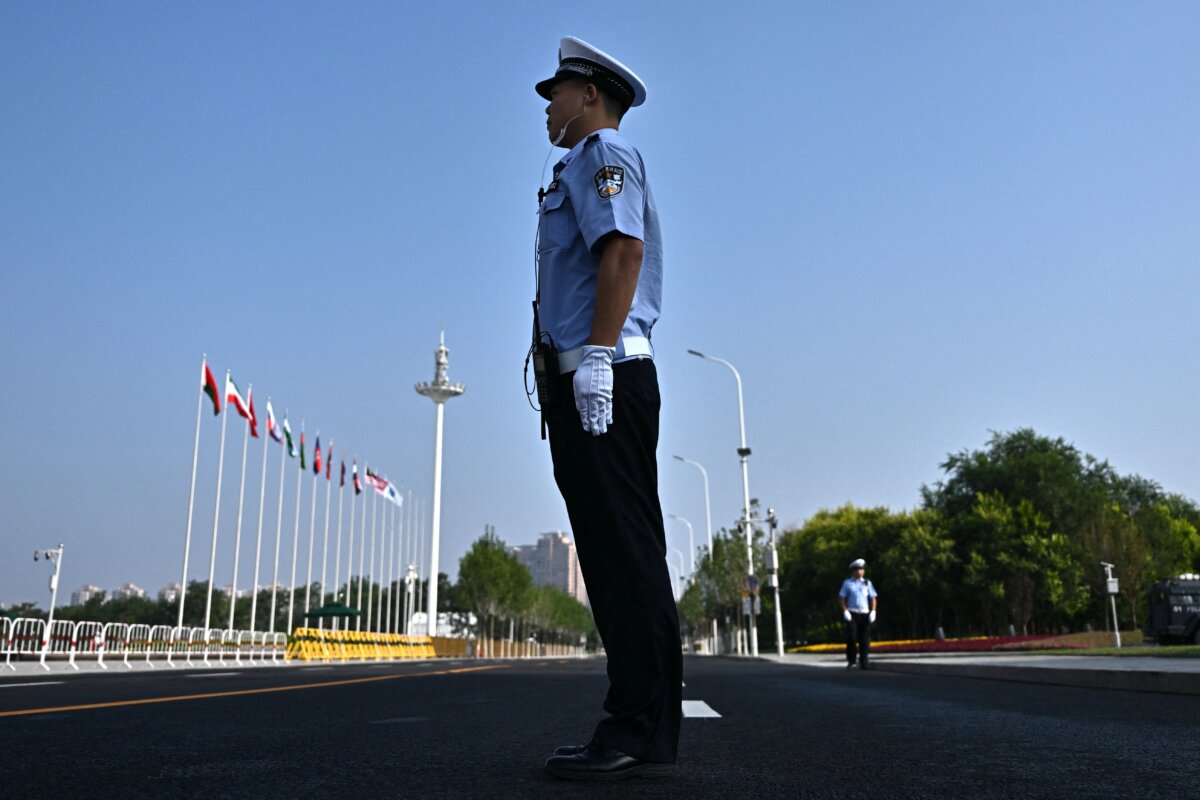
China is only getting bigger and stronger and its threat is on the rise, as we saw at the recent Shanghai Cooperation Organisation in Tianjin where the regime showed off advanced military hardware. Its ascent to greater influence is not that of a democracy, however, but rather that of an autocratic communist dictatorship which does not play by international rules. After all, Xi Jinping has vowed to make China the most powerful country on Earth by 2049.
The sooner Canada gets a handle on what the Chinese regime really stands for the better. We need to ensure that our protectors have the resources they need to safeguard our technology and infrastructure from theft and attacks. Beijing’s aggression is only going to get worse, and pandering to the aggressor is rarely if ever a good strategy. We are well past words and promises. We need action, and now!
Views expressed in this article are the opinions of the author and do not necessarily reflect the views of The Epoch Times.
 Friends Read Free
Copy
Facebook
Tweet
Friends Read Free
Copy
Facebook
Tweet