
Commentary
China’s recent five-year plan promises a number of measures to stimulate the country’s troubled economy.
One of them prominently mentioned is monetary ease aimed at lifting consumer spending, encouraging investment spending, and relieving the adverse pressures of the country’s long-running property crisis.
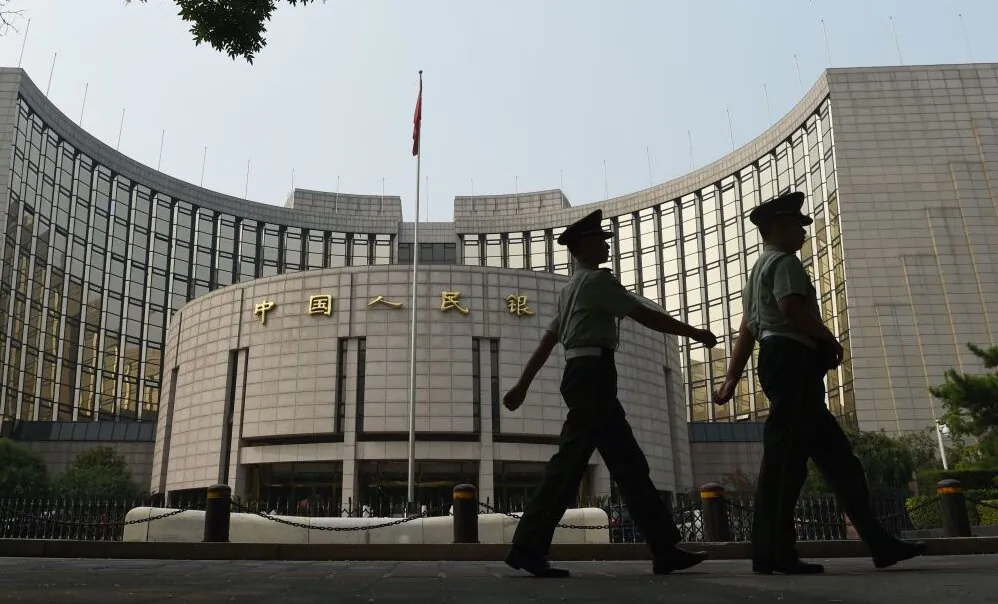
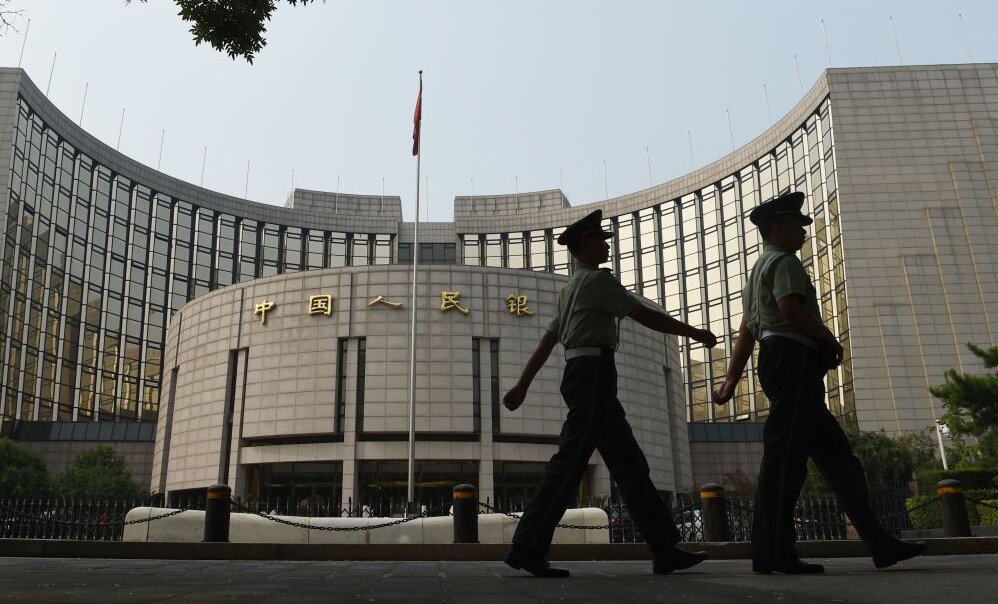
But if the actions of the People’s Bank of China (PBOC) are anything to go on, the monetary authorities have mislaid their copy of the plan. Monetary policy shows no sign of easing, despite the plan’s promise and the economy’s needs. China will pay a price for this intransigence.
At its meeting last month, PBOC decision-makers agreed to hold interest rates steady, with the key one-year loan prime rate (LPR) at 3 percent and the five-year LPR at 3.5 percent, where these rates have been for the past 11 months.
In early May, the bank also took steps to drain liquidity from China’s financial system. China needs much lower rates and more liquidity before monetary policy can be considered even neutral, much less easy.
One would have thought that the force of the five-year plan might have prompted PBOC decision-makers to at least make a gesture toward easing. An interest rate cut of one-eighth of a percentage point—something the central bank has done in the past—would have had little economic effect, for good or for ill, but would have at least made the bank’s leadership look like it was cooperating with the plan. PBOC leadership is evidently so reluctant to move that it could not even do something that might be described as purely cosmetic.
The PBOC has justified its reluctance to ease on two bases. One is that China’s economy accelerated into this new year from a much weaker final quarter of 2025. In the fourth quarter last year, China’s real gross domestic product (GDP) grew by about 4.5 percent from levels of the year before, but decision-makers at the bank noted that the first quarter of 2026 saw 5 percent real GDP growth. On that basis, the economy, they seem to believe, does not need support.
These decision-makers also noted the trouble in the Persian Gulf as raising both real economic and inflationary risks, warranting a wait-and-see approach to any policy decisions.
Although on the surface, these arguments for inaction seem reasonable, they fail to stand up when placed in the context of China’s broader economic picture. The overall economy might have seemed on target during the first quarter, but ample evidence suggests weakness in several key areas and a decelerating economy. And however the GDP measures come in, Beijing, the International Monetary Fund, and anyone who takes even a casual interest in Chinese economics are well aware of the poor showing in the consumer sector, as well as the lingering economic drag of the property crisis.
If the array of real economic news argues against the PBOC’s stance, the inflation picture is even more compelling. China has suffered severe deflationary pressure for several years. If the surge in oil prices stemming from the fighting in the Middle East has raised the most recent figures, it hardly points to a general rise in China’s price level.
Even with recent oil effects, producer prices, what Chinese statisticians call prices at the factory gate, are only up by 0.5 percent in March from year-ago levels, the most recent period for which data are available. Consumer prices show a 1 percent rise. This is hardly a reason to keep monetary policy tight.
On top of all this, it should be apparent that the PBOC is wrong to think that inaction is a way to avoid a policy stance that is either too tight or too easy. Consider the interaction of inflation and interest rates. Four years ago, the one-year LPR was about 3.9 percent, almost a full percentage point higher than it is today. But back then, producer price inflation in China was running at about 6 percent per year.
A borrower repaid his or her loan after a year with yuan that were worth 6 percent less in real terms. The real cost of the loan was negative 2 percent (the interest rate less the rate at which inflation decreased the real value of the yuan). This speaks to a very easy monetary posture. Now, with deflation or no inflation, borrowers repay loans with yuan that are actually more valuable in real terms at the end of a year. They pay the 3 percent targeted by the PBOC for the one-year LPR or more.
Real interest rates have effectively risen by nearly 5 full percentage points, in fact, from where they were four years ago. Monetary policy has tightened, not eased, as Beijing’s planners would like.
This kind of monetary restraint is probably not enough to shut down the economy. But neither does it help Beijing keep its promise of monetary ease, nor does it offer anything to help stimulate a Chinese economy that sorely needs it.
Views expressed in this article are the opinions of the author and do not necessarily reflect the views of The Epoch Times.
 Friends Read Free
Copy
Facebook
Tweet
Friends Read Free
Copy
Facebook
Tweet