
Commentary
The Chinese Ministry of National Defense officially announced on Jan. 24 that Zhang Youxia—a member of the Chinese Communist Party’s (CCP’s) Politburo and vice chairman of the Central Military Commission (CMC)—along with Liu Zhenli, a CMC member and chief of the CMC’s Joint Staff Department, were under investigation for “serious violations of discipline and law.”
This is the usual CCP wording used to announce a high-level corruption or political probe.
Independent commentator Cai Shenkun wrote on X that all of Zhang’s family members were also detained, indicating an especially aggressive takedown.
In the weeks leading up to this incident, Tian Xuebin—former secretary to ex-Premier Wen Jiabao (China’s premier from 2003 to 2013 and a key figure from the reformist era)—was placed under investigation. This suggests that CCP leader Xi Jinping’s camp was mounting a fierce counterattack against perceived rivals.
Adding to the drama, on Jan. 23—just one day before the official announcement—Liao Xilong suddenly died at the age of 85. Liao was Zhang’s former superior, a retired top general who served on the CMC in the early 2000s and headed the General Logistics Department of the People’s Liberation Army (PLA).
On Jan. 25, the official military newspaper PLA Daily published an article criticizing Zhang and Liu for “seriously trampling and undermining the CMC Chairman Responsibility System”—a mechanism that gives Xi, as CMC chairman, ultimate control over China’s armed forces—and for “seriously encouraging political and corruption problems that severely undermined the Party’s absolute leadership over the military.”
The wording reveals that the purge isn’t just about corruption—it’s framed as a direct challenge to Xi’s authority, essentially accusing Zhang of working in tandem with Party elder Wen and others to sideline Xi and seize real power.
The article further vows that investigating Zhang and Liu will “rectify political roots, eliminate ideological poisons, and purge organizational rot.” This strongly suggests a large-scale factional purge across the CCP and military, with a brutal backlash likely to follow. Overall, these events indicate that the CCP’s internal turmoil and potential collapse are accelerating.
Signs Pointed to Zhang’s Fall Long Before It Happened
There were clear warning signs of Zhang’s fall months earlier.
In late November 2025, while on an official visit to Russia, Zhang suddenly disappeared from public view for more than a week, triggering speculation in overseas Chinese media and analyst circles. Some rumors at the time even suggested that he might have been targeted in a coordinated move between Xi and Russian President Vladimir Putin. His eventual purge now gives those theories fresh weight as possible early clues.
Then, at the end of December 2025, during a routine but high-profile study session of the CCP Politburo, a formal event where top officials are expected to engage in self-criticism and demonstrate unity, Zhang delivered an unusually effusive display of loyalty to Xi, vowing to safeguard Xi’s core status and centralized leadership.
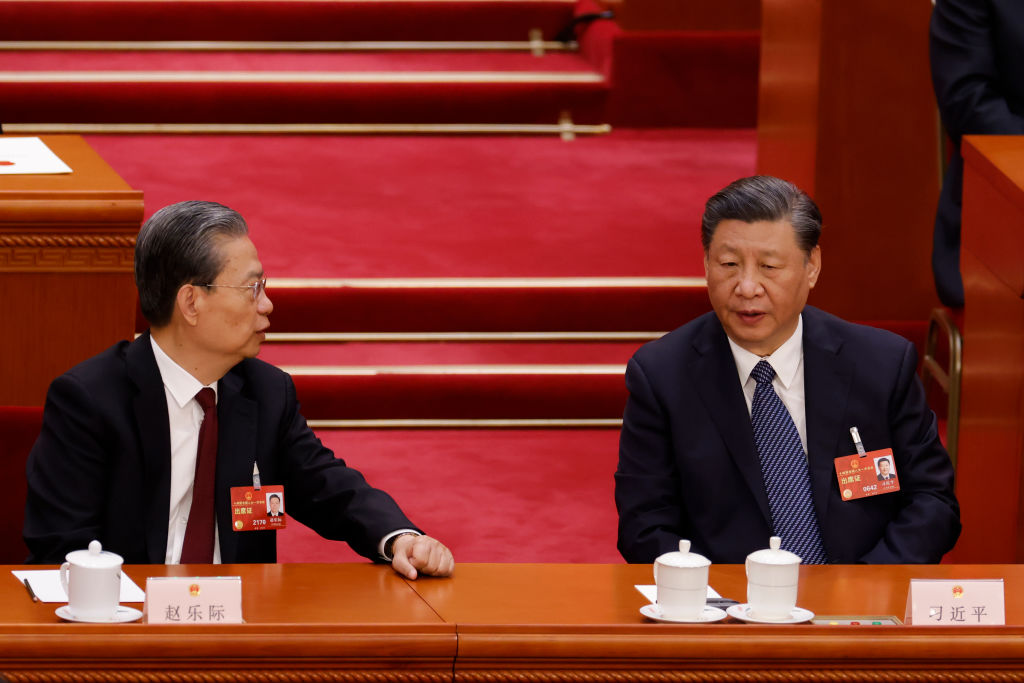
This scripted, over-the-top loyalty oath sharply contrasted with Zhang’s public stance over the past year, during which he consistently emphasized “collective leadership” within the military—an implicit challenge to Xi’s individual authority. The abrupt shift to enthusiastic praise for Xi suggests that Zhang’s influence was already weakening and that he was desperately attempting to safeguard his position.
In CCP politics, this pattern is all too familiar. Many high-ranking officials who are later purged make a public show of loyalty to the top leader just before the axe falls. When such declarations feel forced or overly fervent, it’s often a prelude to a storm. Zhang’s case fits the textbook script perfectly.
Life-or-Death Power Struggles
For more than a year, unconfirmed claims have circulated about intense, life-or-death power struggles between Xi and Zhang.
The speculation began during the CCP’s Third Plenum in July 2024, when Xi allegedly suffered a sudden stroke, leading to a temporary loss of control. There has been no official confirmation, and fact-checks dismissed many related photos as old or miscaptioned. Still, the dramatic personnel shake-ups that followed—especially in the military—lent credence to the idea that something major had shifted behind the scenes.
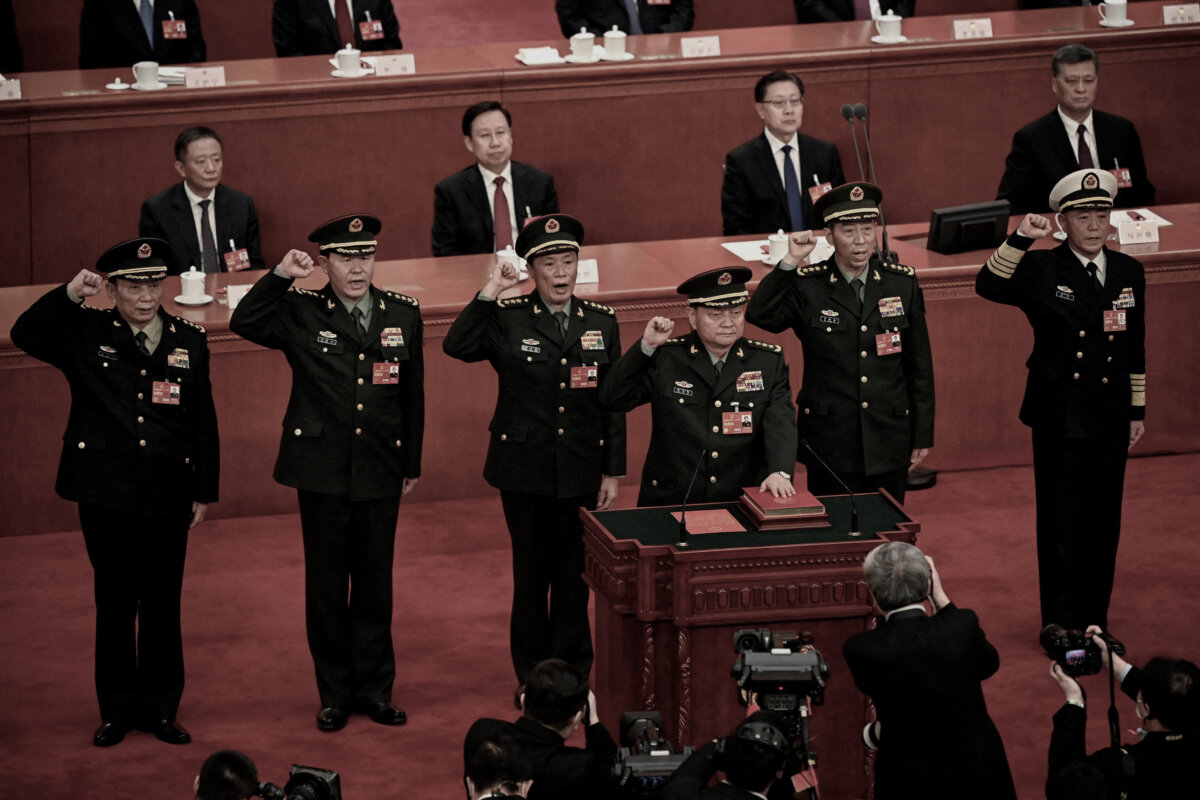
The most striking changes affected China’s armed forces. Zhang allegedly launched a sweeping purge of Xi’s loyalists, removing numerous senior generals and severing Xi’s key military support. A high point came in October 2025, when nine top Xi-aligned generals were simultaneously expelled from the Party and stripped of their military ranks—essentially signaling the systematic dismantling of Xi’s influence within the armed forces.
Xi’s camp never stopped fighting back. According to overseas Chinese dissidents, Xi personally ordered assassination attempts on Zhang by his loyal generals. According to Cai Xia, a former professor at the CCP’s Central Party School and a vocal Xi critic now living in exile in the United States, He Weidong and Miao Hua secretly built a division-level armed unit in Hebei’s Langfang area, a private force operating completely outside the normal People’s Liberation Army command structure, including war zones, military regions, or the Central Military Commission. This armed force allegedly tried to assassinate Zhang but failed. He and Miao were then caught and purged by Zhang.
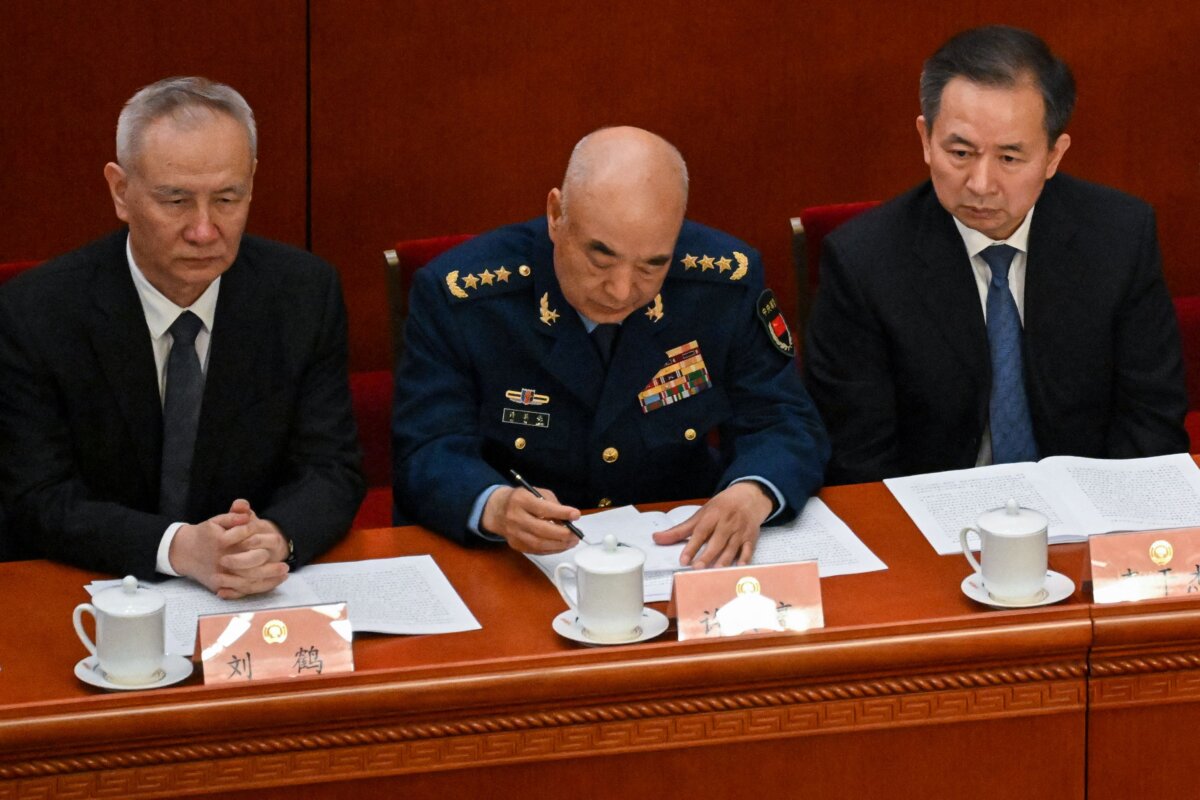
Another story concerns former Central Military Commission Vice Chairman Xu Qiliang, a retired Air Force general close to Xi. Pro-Beijing Lianhe Zaobao reported that Xu died of heart disease in June 2025 at the age of 75. Independent Chinese commentator Du Zheng doubted that Xu, noting Xu’s strong health as a former pilot and his access to top-tier medical care in retirement.
More recently, there were claims that Xi ordered Air Force Commander Chang Dingqiu to shoot down Zhang’s plane during Zhang’s visit to Russia late last year. Zhang allegedly changed his itinerary at the last minute and survived. Upon his return, he quickly moved against Chang. In mid-December 2025, reports emerged that Chang died of a sudden heart attack at just 58 while under detention and questioning by the military discipline commission. His Baidu encyclopedia biography was deleted as well, fueling further mystery.
What Happens Next for All Sides?
Zhang has long had deep roots in the PLA, with the Zhang family network entrenched across key units. Over the past year, many regional military commanders have been replaced with his trusted allies. Xi’s sudden move to detain him risks massive unrest in the armed forces.
Even if Xi fully neutralizes Zhang, he might soon realize the military is full of officers who play both sides. Xi could regain nominal control but end up a powerless figurehead, isolated with no real loyalists left.
A key figure in the military who allegedly betrayed Zhang is the newly promoted Central Military Commission Vice Chairman Zhang Shengmin, from Xi’s Shaanxi gang. Zhang Shengmin is now the only member of the 20th CMC leadership who remains untouched.
Notably, Xi is known to be superstitious about prophecies. Some ancient texts predict that people with a name containing the Chinese character for “bow” will rise up against him. Notably, Zhang Shengmin’s surname, like Zhang Youxia’s, also contains the character for “bow”—raising questions about whether he’ll be discarded once used.
Within the military, another important force is the regional commanders. Given Zhang Youxia’s wide-ranging ties within the military, Xi has taken steps to prevent any loss of internal control or the risk of a mutiny. According to Sheng Xue, a China expert and pro-democracy activist based in Canada, more than 5,000 military personnel in the Beijing area have been detained as part of these precautions. At the same time, Xi has imposed tight restrictions on personnel movement across the PLA’s major theater commands and on residential compounds for officers’ families. Travel is heavily limited, with departures allowed only in emergencies, such as serious illness.
As Xi’s heavy-handed purge continues in the military, will mid- and lower-level officers surrender quietly, or—if cornered—launch desperate counterattacks that could spark civil-war-like chaos?
The fate of Xi’s other political opponents who have allied with Zhang Youxia, including the CCP elders and technocrats, hangs in the balance under such a mega-purge.
Concluding Thoughts
Infighting within the CCP never really stops. The fragile balance of power is unsustainable, often devolving into a struggle over who is more ruthless, more cold-blooded, and more aligned with the CCP’s violent and evil nature.
Zhang Youxia’s downfall is as momentous as the 1971 Lin Biao incident, in which Mao Zedong’s designated successor allegedly attempted a coup and died in a plane crash.
In the CCP’s brutal and bloody conflicts, those who lose not only suffer the loss of careers and influence but also risk their lives and the safety of their families.
The high-stakes game at the top isn’t over yet. No matter who wins, the CCP is suffering significant losses, and its downfall may come quickly.
Views expressed in this article are the opinions of the author and do not necessarily reflect the views of The Epoch Times.
 Friends Read Free
Copy
Facebook
Tweet
Friends Read Free
Copy
Facebook
Tweet