
Commentary
The referendum in Alberta on Oct. 19 will be an unprecedented event in Canada.
Ten questions will be presented to voters on issues ranging from abolishing the Senate, to reducing government support for temporary migrants, to whether Alberta should begin the process for a binding vote on independence from the federation. Because of the unique nature of the exercise, however, Alberta’s elections authority has been under severe strain, and some of its actions have raised questions for some. Rather than putting the issue of Alberta’s place in the federation decisively to bed, the referendum may create more havoc and division.
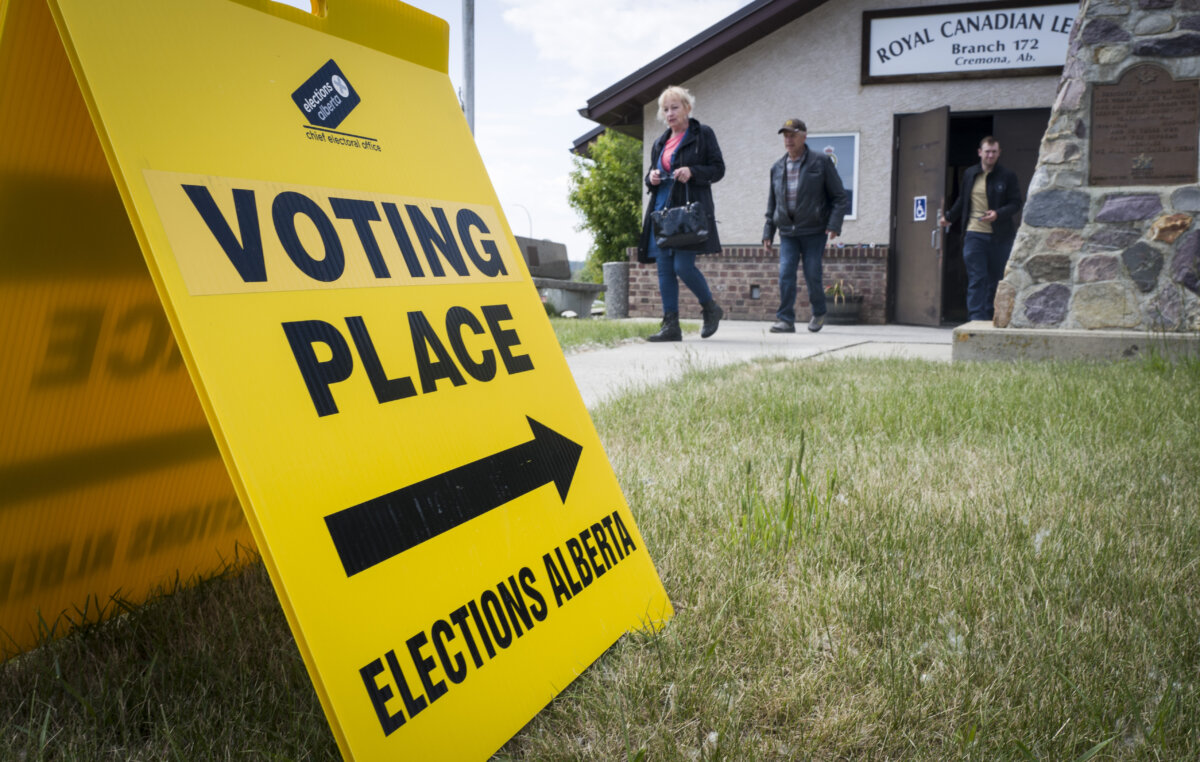
Elections Alberta has managed referendums before, but never with 10 questions on the ballot nor with such a hyper-engaged and divided electorate. The independence question has dominated Alberta discourse for months, and it’s expected that turnout for the vote could be as high as 85 percent. Elections Alberta is geared toward managing general elections, and it is having trouble dealing with a referendum of this scale.
A call has been put out to hire a minimum of 60,000 people to manage the affair. Filling roles requiring a high degree of trust and training for what will be a temporary job has been tough. Ballots are legally required to be hand-counted in Alberta within 48 hours of the vote, and with 45 million ballots being printed, the task presented is gargantuan. The agency has asked for help from other provinces in its quest for experienced help. If the ballot counting runs beyond the required 48 hours, it’s difficult to guess how the government would react. It wouldn’t be reasonable to declare the referendum invalid or lay charges on the management.
The ability to cast mail-in ballots has been expanded in response to anticipated high demand at polling stations. Previously, a person had to declare a reason for requesting a special ballot. That requirement has been waived, and people may request special ballots for any reason. This has led to nearly 300,000 special ballots having been requested, with many more requests expected. By comparison, in the Alberta general election of 2023, only 51,000 special ballots were ordered.
Special ballots began arriving at Alberta households this week, and already problems are emerging. Some ballot envelopes are missing ballots for some of the questions. Complicating things further, the form asks voters to declare they are unable to vote at advance voting, which takes place Oct. 13–17, or on the Oct. 19 referendum day, or face a fine. Elections Alberta says the language in the declaration is outdated and was printed in error. They say voters can cross out the wording before submitting the ballots. This doesn’t instill trust in the process.
How Elections Alberta has managed third-party advertisers (TPAs) has come into question as well. Unlike in general elections where political parties are the main contestants for votes, in the referendum campaigning is done by TPAs. The advertisers are heavily regulated with finance disclosure requirements along with spending maximums. Donors to these groups are to be registered and publicly disclosed if they contribute more than $250. They also can only contribute a maximum of $5,000 and must live in Alberta. Some have raised questions about what they perceive as selective application of the rules, as some groups aren’t subject to the rules. If campaign rules don’t appear evenly applied, the results are sure to be questioned.
For a democratic exercise like a referendum to be effective in resolving important and divisive issues, the process must be unquestionably fair. Some campaigners have claimed bias within Elections Alberta, but there hasn’t been any solid evidence of that. What appears more evident is that the agency is overwhelmed and there is a very real possibility that voting night will be marked by confusion and disorder. If people are turned away from voting due to extended lineups, or vote counting is unreasonably delayed due to the volume of mail-in ballots, the veracity of the referendum vote will surely be questioned. The integrity of Elections Alberta may be considered intact, but the competence of the organization could come into question.
While the independence vote is non-binding and at most will only lead to a future, formal vote on secession, it is symbolically massive. If Albertans vote by a large margin to continue the process to independence or to remain in the federation, it should bring some resolution to the debate. But if the margin is narrow and the process appears to have been poorly managed by Elections Alberta, elements of the losing side are certain to claim unfairness, and instability within the province will become more heavily entrenched. The last thing Canada needs right now is an electoral mistrial on a unity vote.
The clock is ticking fast, and Elections Alberta is scrambling. Hopefully the agency can get it together by Oct. 19, lest such an important vote be considered invalid by the electorate.
Views expressed in this article are the opinions of the author and do not necessarily reflect the views of The Epoch Times.
 Friends Read Free
Copy
Facebook
Tweet
Friends Read Free
Copy
Facebook
Tweet