
Commentary
Most people think pumpkin comes in two forms. There are the big orange balls you buy at the store to put on your porch. You carve them into a scary or goofy face as Halloween approaches. Then you throw it out.
The other thing we call pumpkin is in a can. You mix it with sweet milk and spices and pour it into a crust for a pie.
This is all too weird. Pumpkin is a vegetable, a squash. It is meant for eating. It is probably the greatest squash of all. It’s more flavorful, filling, rich, and delicious than peanut squash, spaghetti squash, acorn squash, or all those other varieties of green and yellow squash called zucchini.
Don’t get me wrong; those are all fine and need more attention and should be a staple of an Autumn diet. That said, they don’t hold a candle to the greatness of a pumpkin.
How did we end up raising so many pumpkins for carving? I’m going to map out a conjectural history and check it against the books later. My guess is that from Colonial times to the 19th century, farmers found out that they are easy to raise and can grow huge. As a measure of how plentiful they could become, they were first in line to become decorations or things to roll around and throw at horsemen. Just kidding, but you see what I mean.
Using a pumpkin for purposes other than eating was a sign of prosperity and that the Almighty had blessed this crop with plenty and volume. Hence, an alternative use of it would be as decor to mark the season.
Pause, while I check my intuition against actual research…
Okay, AI corrects me: “Your sketch is close on the agronomy and off on the meaning. Pumpkins were never mainly a prosperity signal; they were a cheap, reliable, slightly embarrassing crop that later got dressed up as harvest nostalgia and Halloween theater.” The book cited here is Cindy Ott’s “Pumpkin: The Curious History of an American Icon.”
Fine, I have some reading to do. I will say this. No one can put down the flavor of these wonderful vegetables. It’s glorious. A proviso however. It’s true that most of the large pumpkins you see at the store have been cultivated to be large with not that much actual meat, whereas pumpkin to eat (generally speaking) are smaller and have only a small space for packing seeds.
Sure, those eating pumpkins might be less frustrating to cook but in truth every last one of them are edible. Particularly the outside flesh. It cooks up beautifully and becomes tender and delicious. If you want to cook the seeds too, it’s possible, with some salt and a baking rack in the oven.
I’m startled to realize how few people even know that you can eat a pumpkin. Who am I kidding? I did not know this until this week when I tried it.
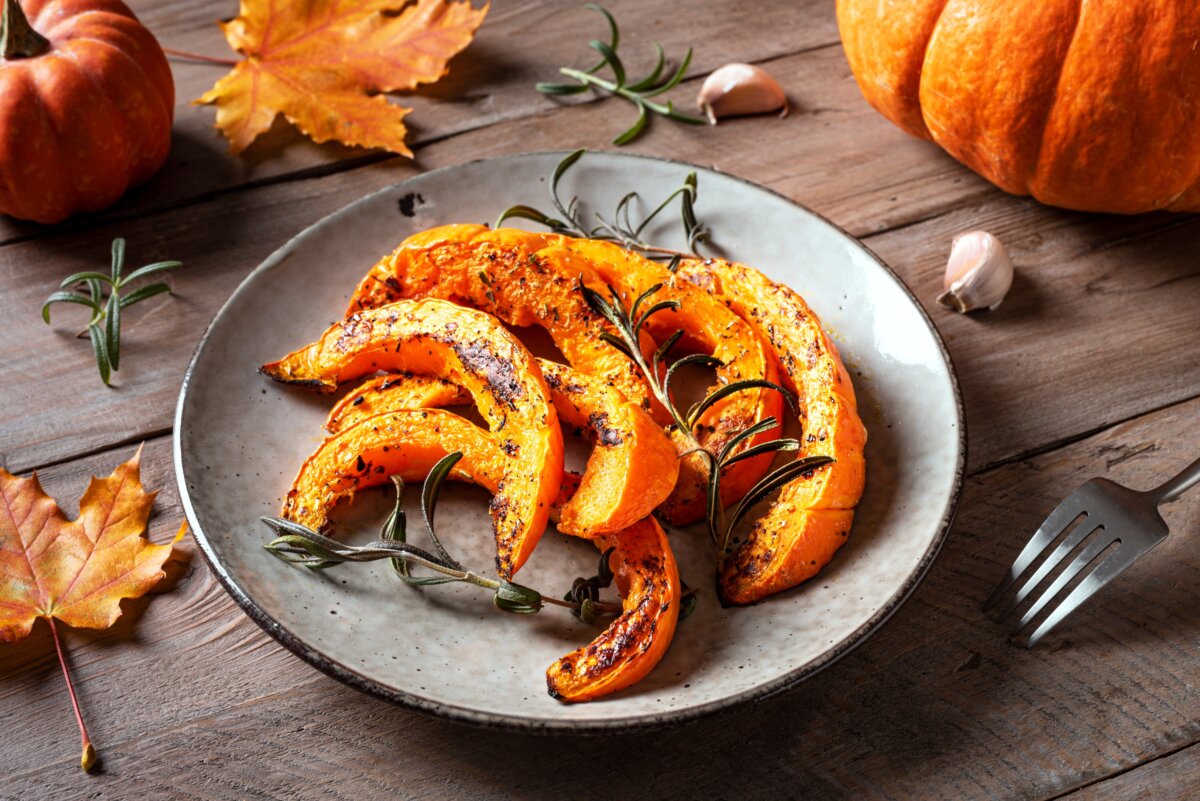
You slice your pumpkin down the middle and dig out the stuff on the inside. Then you cut it into reasonably sized chunks. I put a layer of water inside a baking pan with a rim and turned the pumpkin flesh down. I set the oven at 350 degrees and let it bake for a full hour or a bit more.
The result is nothing short of magic. You serve it with some salt and butter and you are done. Probably there are other spices you can add plus sugar (if you must). It easily slices with a knife and becomes a meaty side dish to a sausage or two or something else. That’s dinner. I could do this night after night except that I already ate what I have and need to buy more.
What if you need to make a pie and want to eschew the can? I’ve not tried this but it is surely very easy to mash this up as you would potatoes and go from there, complete with all the usual spices. Maybe you even keep the skins in there as one might do with mashed potatoes. It would only add to the flavor.
I’m betting that you could make the best pumpkin pie anyone has ever had through this means, and without taking recourse to the can opener.
The can, you see, is the enemy of understanding. It has robbed us of the knowledge that food comes from dirt and requires water, work, and patience. We have traded competence for convenience, and in doing so, we have lost something essential about what it means to feed ourselves.
The can tells us that pumpkin is a single-note ingredient, a brownish sludge destined for pie and pie alone. But the real thing, the orange flesh you pull steaming from the oven, is a revelation of possibilities. It’s also a reminder that all real food is farm-to-table with no real processing in between.
I have since learned that every culture that encountered the pumpkin has known what to do with it. The Italians make ravioli with it, stuffing pasta pockets with mashed pumpkin and sage, bathing them in brown butter. The Mexicans simmer it with chilis and cinnamon in calabaza en tacha, a dish that predates the conquistadors. The Japanese pickle it. The Koreans turn it into porridge.
Only in America, the land of its origin, did we decide that the best use for this magnificent squash was as a projectile for launching from catapults or as a mold for growing into the shape of Count Dracula’s face.
And yet, there is hope. I went back to the store yesterday, the same one where I bought my first experimental pumpkin. This time I knew what to look for. I bypassed the giants, the ones bred for size and thin walls, and found the smaller specimens. They are denser, heavier for their size.
Cooking a pumpkin teaches us a lesson about what food actually is, and I am a willing student. There is a whole world of food sitting right in front of us, disguised as decoration, and we have been too distracted to notice.
So here is my challenge. Buy a pumpkin this week, a small one, one that feels heavy in your hands. Take it home and do not reach for the knife to carve a face. Reach for the knife to cut it open and discover what you have been missing. Your porch will survive without the decoration. Your stomach will thank you for the upgrade.
Here is the way to inaugurate and celebrate the season. Good eating and good learning along the way.
Views expressed in this article are the opinions of the author and do not necessarily reflect the views of The Epoch Times.
 Friends Read Free
Copy
Facebook
Tweet
Friends Read Free
Copy
Facebook
Tweet