
Commentary
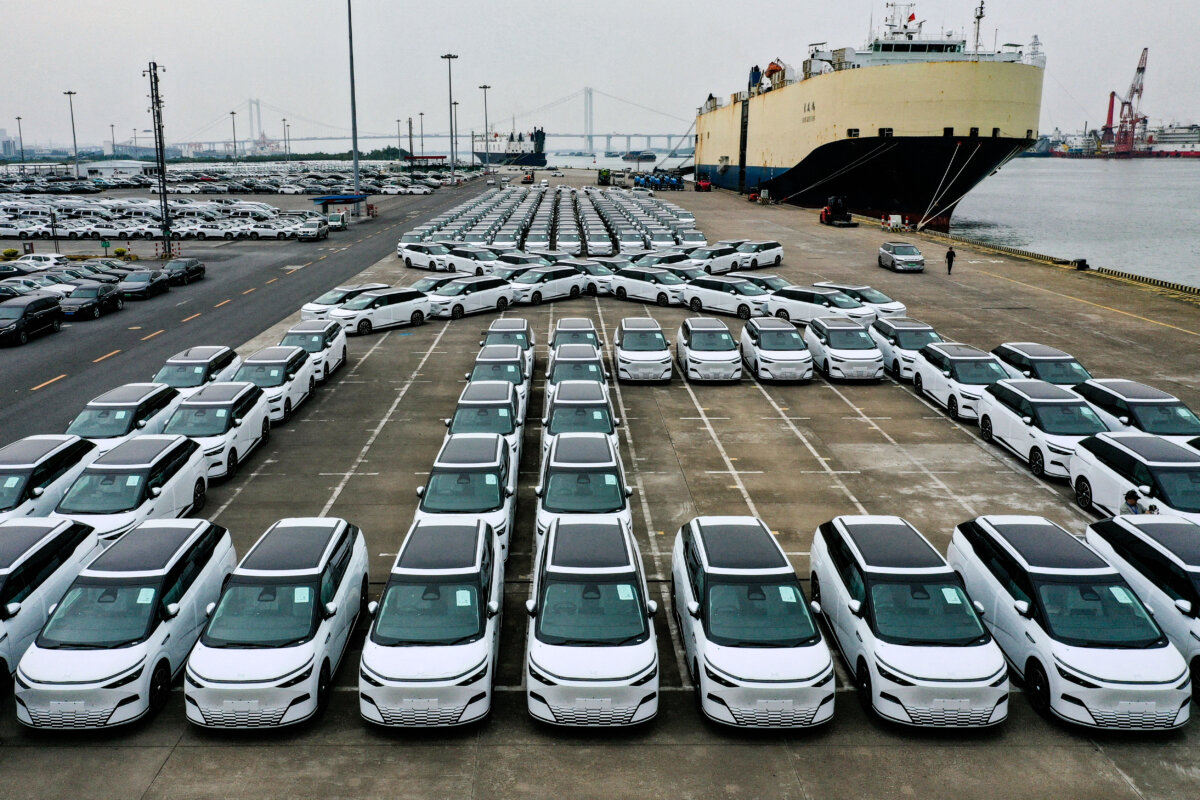
Prime Minister Mark Carney’s decision to reopen Canada’s market to Chinese electric vehicles is being sold as pragmatism: cheaper cars for Canadians today and, perhaps, Chinese investment tomorrow. Canada will initially allow 49,000 Chinese EVs annually at the normal 6.1 percent tariff, replacing the 100 percent surtax imposed in 2024. That quota will then grow by 6.5 percent every year.
Canada should reverse this policy. This is not really a debate about electric vehicles. It is about whether Canada intends to remain an advanced manufacturing nation or become a showroom for vehicles designed and manufactured somewhere else.
Canada’s automotive industry supports roughly 125,000 direct manufacturing jobs and an enormous ecosystem of parts suppliers, engineers, tool-and-die companies, steel and aluminum producers, software developers, and transportation businesses. These are precisely the productive, well-paying jobs Canada needs. Once an industrial ecosystem like this disappears, rebuilding it is extraordinarily difficult.
China built an impressive automotive industry, but it did not do so under normal free-market conditions. The Canadian government itself concluded in 2024 that Chinese EV production benefited from extensive state subsidies, non-market policies, and rapidly expanding excess capacity. Canadian workers can compete with anyone, but they should not be expected to compete with the financial resources of the Chinese state.
The greater danger is what happens behind the assembly line. An automobile contains thousands of components, and every imported vehicle represents batteries, electronics, steel, aluminum, software, engineering, and parts that could have been produced here. Allow imports to progressively replace domestic production and Canada risks losing not simply assembly plants, but an entire advanced manufacturing value chain.
Ottawa argues that 49,000 vehicles represent only a small share of Canada’s market. But the quota grows every year, while the promised payoff remains speculative. Canada is providing guaranteed market access today in the hope that Chinese manufacturers might invest here tomorrow.
There is also a national security issue that cannot simply be wished away. Modern automobiles are computers on wheels, equipped with cameras, microphones, GPS, cellular communications, and sophisticated software capable of collecting enormous quantities of data. Ottawa itself warned in 2024 that connected vehicles incorporating Chinese technology could pose significant privacy, data, and national security risks.
There is a better approach, and Canada has used its industrial leverage before. The 1965 Auto Pact operated on a powerful principle: access to the Canadian automobile market came with Canadian production and value-added expectations. We cannot simply recreate the Auto Pact under today’s trade rules, but we can rediscover its strategic logic.
If you want substantial access to Canadian consumers, then invest substantially in Canada. Build vehicles here, employ Canadians, purchase Canadian steel and aluminum, use Canadian critical minerals, develop Canadian suppliers, and conduct research and engineering here. Market access should reinforce our industrial base, not replace it.
Canada has virtually everything required to do this. We have critical minerals, abundant energy, steel, aluminum, engineering expertise, battery investments, artificial intelligence, skilled workers, established assembly plants, and privileged access to the enormous North American market. What we lack is an industrial strategy sufficiently ambitious to connect these advantages.
And this should not become an ideological crusade for one technology. Canada should manufacture the vehicles consumers actually want: EVs, hybrids, and advanced internal combustion vehicles. The objective should be Canadian production, Canadian technology, and Canadian jobs.
China understands that economic power comes from making things. Canada once understood that, too. Instead of importing China’s automotive future, we should build our own.
Views expressed in this article are the opinions of the author and do not necessarily reflect the views of The Epoch Times.
 Friends Read Free
Copy
Facebook
Tweet
Friends Read Free
Copy
Facebook
Tweet