


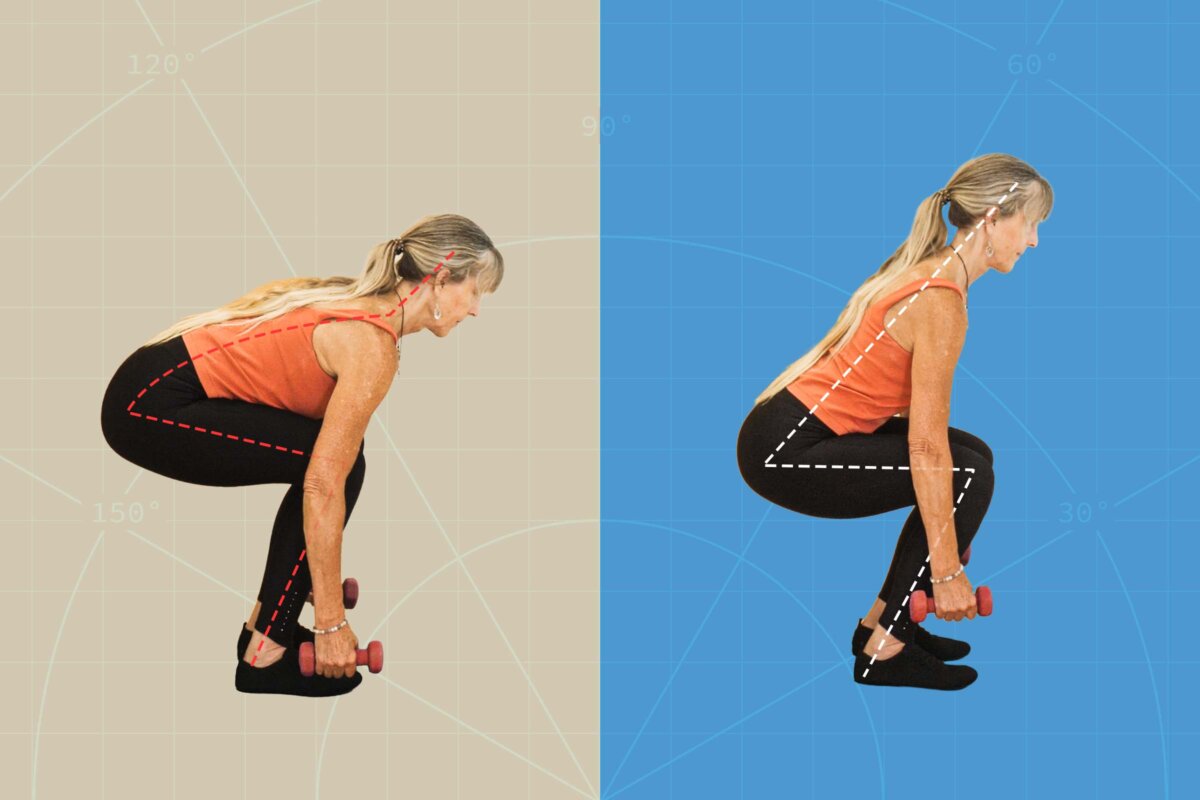
The classic squat exercise involves a height change guided solely by the legs via hip and knee flexion, and can travel all the way down to where your glutes touch your heels if you have enough flexibility. Because the squat engages large, powerful muscles connected to heavy lower-body bone structures, it is quite powerful, and repetitive squatting uses a considerable amount of energy. Squatting movements are a consistent part of basic human movement, and it pays to keep them strong.
Squats rely heavily on the gluteal and quadriceps muscles of the lower body. The gluteal muscles place tension between the upper femur and the pelvis, providing force to extend the hip. The quadriceps muscles lie along the front of your thighs and are chiefly involved in providing force for extending your knees.
The Benefits of a Properly Done Squat
I’ve always been a major fan of classic bodyweight exercises, and the squat, in my opinion, stands chief among them. It has many benefits and few drawbacks when performed correctly. Here are some of the benefits:
Convenience: The basic squat can be performed almost anywhere, almost any time, and by almost anybody. As opposed to exercises like the plank and push-up, there is no need to place your clean hands on the dirty ground to perform them, and where the push-up and plank are generally purely bodyweight exercises, the squat allows the use of even massive amounts of weight as part of the exercise.
Bone Health: Squats can help maintain bone density, especially as we age. Recent studies have indicated that squats, as part of a high-intensity resistance and impact training regimen, can help increase bone mineral density in men and women.
Heart Health: Leg strength and walking speed are increasingly recognized as functional vital signs for older people with heart disease. Studies have shown a strong link between leg strength and mortality in men with peripheral artery disease.
Decreased Risk of Falls: Meta-analysis studies have found a link between leg strength and falls. Clinically, it’s common knowledge among therapists in rehabilitation settings that weak legs place patients at a much greater risk of losing their balance and falling, and this is one of the first things we focus on at the outset of rehabilitation treatment cycles.
Enhanced Mobility: Alongside building leg strength, building muscle power—strength or force multiplied by velocity—can help counter the deficits in voluntary neuromuscular activation that some people develop as they age.
Postural Benefits: Weighted squats performed properly encourage strong core, shoulder, and back musculature, which in turn improves your ability to maintain proper posture.
6 Common Squat Mistakes
Here are six common mistakes that can reduce the exercise’s effectiveness and place unnecessary stress on your body.
This occurs when you don’t squat as low as you could, rather than being unable to due to disability or disease. Shallow squats don’t task your leg muscles hard enough and can limit how far you progress with the exercise.
2. Collapsing Knees
Don’t take this to mean that you crumble up on the floor. Instead, it refers to allowing your knees to move close together during the squat movement, which impairs the natural biomechanics of the exercise and makes it harder to perform and, yes, can even potentially cause injury.
3. Rounding Lower Back
Moving too far into the squat causes your lower back to tuck under, moving you into bad posture. Rounding the rest of your back is also poor form, as it places undue stress on your spine.
4. Leaning Too Far Forward
Leaning too far forward places overt stress on your lower back, even if you keep the rest of your back straight. The idea of a squat is to allow your upright body—including your spine—to bear as much of the weight in a natural position as possible. It’s also possible to under-engage your gluteal muscles when placing your weight too far forward on your feet, which forces your quadriceps muscles to absorb more of the load instead of sharing it with your gluteals.
5. Rising Hips Before Shoulders
Proper squats are performed with your core engaged, which allows your upper body to rise up in unison with your hips. Holding your trunk loose or allowing trunk flexion when rising can allow your hips to move several inches before your shoulders begin to rise, increasing the risk of injury and disrupting the proper movement mechanics of the exercise.
6. Lifting Heels
Placing too much weight forward also places you at risk of moving into a tiptoe posture where your heels lift off the ground. Squatting from a tiptoe position reduces overall safety and balance during the movement.
How to Do a Proper Squat
During a classic squat, your gluteal and quadriceps muscles lengthen. When you stand up, the muscles shorten as you contract them to overcome gravity. Your core muscles remain activated the entire time to keep your trunk upright.
Follow this simple guide to perform squats with good form:
Assume the Position
Before you begin moving, take a moment to position your feet, arms, and body for a stable, controlled squat.
-
The starting position for the standard squat is as simple as standing upright with your feet approximately hip-width apart and slightly rotated outward to decrease stress on your knees.
-
Keep your arms at your sides and, optionally, hold a 2-pound weight in each hand.
Squats Step-by-Step
Once you’re in position, move slowly and with control. These steps can help you maintain proper form throughout the squat.
-
Keeping your back straight and head up, slowly lower down into a squatting position until your knees and hips reach 90 degrees of flexion—this will help most people avoid involuntarily tucking their lower back at the bottom of the squat. Sit into the movement rather than leaning into it to keep the weight centered on your feet. Be sure not to rise onto your toes at any time.
-
Slowly rise using your legs, keeping your back straight, your trunk taut, and your head up. Move slowly enough through the movement that you don’t sway as you perform the exercise. You want to carefully control the movement, without feeling like it’s getting away from you.
-
Try to perform three sets of 12 repetitions, feeling free to modify the sets and repetitions to best suit your needs and abilities.
Variations
Now that we’ve examined the classic squat, let’s explore a couple of squat variations, conveniently listed in this article.
[series_posts_list][/series_posts_list]
Considerations
I always try to predict factors that may hinder you from performing the exercises. Many variables can get in the way, including old and new injuries, sicknesses, and diagnoses like arthritis and knee pain. Here are some ideas to make squats work better for you:
-
Perform the squats without using weights.
-
Move only as far down as you can before rising back up. You’ll get stronger over time.
-
Only perform as many squats (of any variety) as you comfortably can. Don’t push into pain, as that can potentially injure your muscles and joints.
-
Limit sets to a maximum of 12 squats at first, even if you feel you could do more, and rest well between sets. You can add a few repetitions each week to grow stronger, but don’t rush it. It’s much better to avoid injuries than to try to heal from them.
I hope you now have a better understanding of the classic squat. Good luck, and I hope these exercises work well for you.
About the Fitness Model: Aerowenn Hunter is a health editor for The Epoch Times. She is an accredited yoga therapist with more than three decades of teaching experience.
Views expressed in this article are the opinions of the author and do not necessarily reflect the views of The Epoch Times. Epoch Health welcomes professional discussion and friendly debate. To submit an opinion piece, please follow these guidelines and submit through our form here.