Commentary
I was crazy on birth control.
I know we aren’t supposed to use that word anymore, but I don’t know how else to describe it. I was emotionally volatile, profoundly insecure, and unpredictable. I could go from fine to devastated in seconds. I regularly found myself curled into the fetal position, sobbing hysterically over things that, looking back now, didn’t warrant anything close to that response.
The strangest part is that I didn’t know anything was wrong. I thought that was my personality.
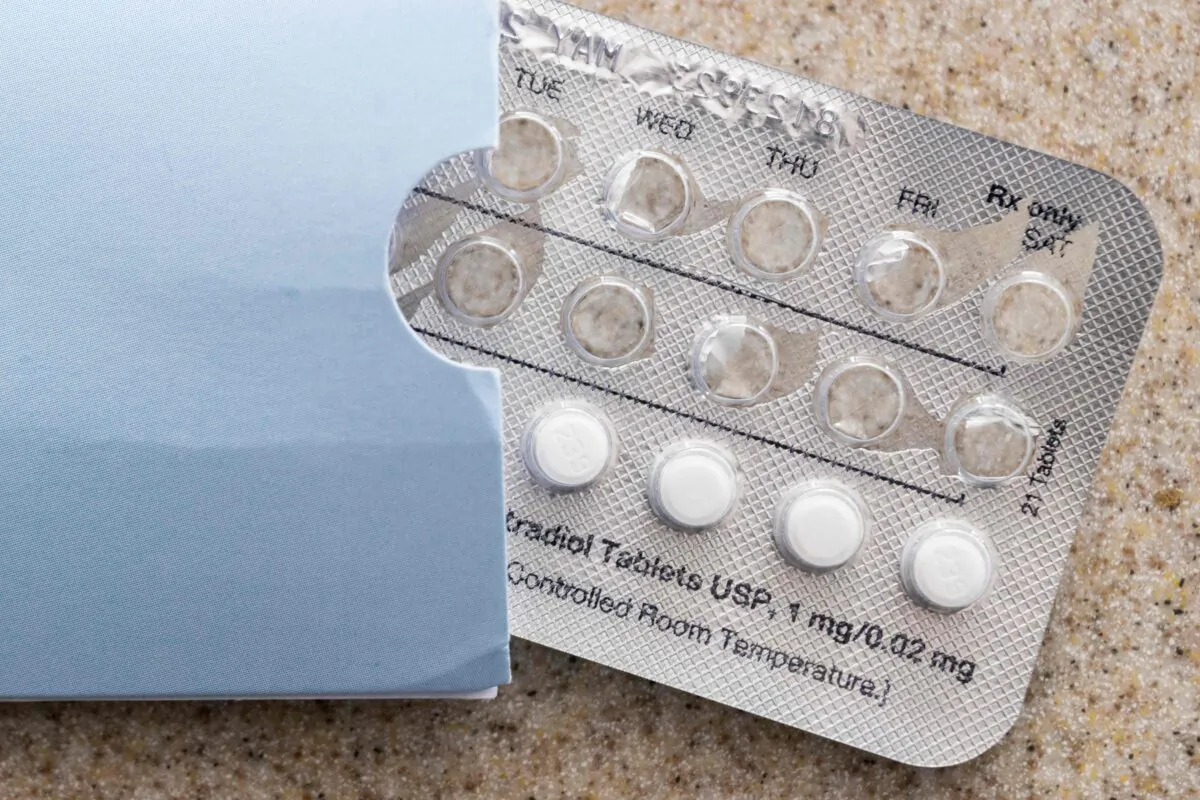
I started taking birth control pills when I was about 15, before I was sexually active. I had extremely painful menstrual cycles and what was eventually understood to be endometriosis. The pill wasn’t initially about preventing pregnancy. It was medicine for a problem that was making my life miserable.
But I was 15. I had no adult version of myself to compare myself with. From roughly 15 until my mid-20s, I was on hormonal birth control almost continuously—mostly pills and, for a period, Depo-Provera injections. When enormous waves of anger, sadness, frustration, and insecurity came over me, I didn’t wonder whether they could be connected to the medication I took every day. I thought this was simply who I was.
My feelings seemed too big for my body. An emotion would arrive and there wasn’t enough room inside me to contain it, so it erupted into the world. The people around me experienced the consequences.
One of my brothers, Cary, still keeps me a little at arm’s length. He lived with me during those years, and I think some part of him still relates to that volatile young woman. I also chose terrible men—not merely men who weren’t right for me, but men who were obviously never going to make good husbands or fathers. I once dated a man who stole Cary’s car.
I’m not claiming birth control made me date gangsters. Those choices belong to me. But when I look back at that young woman, I see someone profoundly insecure and emotionally unstable repeatedly attaching herself to equally unstable people.
In my mid-20s, I switched for a period to Depo-Provera, and things became worse. I didn’t recognize the pattern. Someone else did.
One day, as I was preparing to get another injection, my boyfriend at the time, Charlie, made an offhand comment: “Oh no. You’re going to get that shot and be crazy for the next several days.”
I don’t remember thinking much about it. He had apparently noticed something I hadn’t.
At about 26 or 27, I stopped hormonal birth control. And somewhere along the way, I met myself.
Today I am almost comically even-keeled. My husband jokes about it. He can make some grand romantic gesture or forget flowers on Valentine’s Day, and I’m basically the same person either way. That doesn’t mean I don’t feel deeply. I’ve experienced death, heartbreak, and tremendous stress. When my best friend died, I cried and grieved deeply—but I wasn’t swallowed by it.
That’s the difference I have trouble putting into words. As a young woman, feelings could become physically bigger than my ability to contain them. Now I can experience tremendous sadness while simultaneously knowing I am capable of carrying it.
My relationships became steadier. My confidence changed. I became significantly more successful in business. Of course, there are countless reasons people mature and their lives improve between 25 and 45, and I can’t run a controlled experiment on my own life. But years later, something happened that made me finally connect the timeline.
At a family gathering, Cary was laughing about how difficult I had been to live with when I was younger. My other brother, Ryland, said, “She’s not really like that anymore.”
Suddenly I saw it: Cary’s memories, Charlie’s observation about the injection, the decade on hormonal contraception and the person I became after stopping it.
What Does the Research Say?
My experience is an anecdote. It doesn’t prove birth control caused my emotional instability, much less that hormonal contraception affects every woman this way.
But there is evidence suggesting some women—and perhaps particularly adolescents—experience significant mood effects.
A major Danish study following more than 1 million women found an association between hormonal contraception and subsequent antidepressant use and depression diagnoses. The association was strongest among adolescents. Girls ages 15 to 19 taking combined oral contraceptives had roughly 1.8 times the rate of first antidepressant use compared with nonusers; for progestin-only pills it was roughly 2.2 times.
That’s association, not proof of causation. And other research complicates the picture. A systematic review of randomized trials involving thousands of women found that hormonal contraceptives did not, on average, worsen depressive symptoms compared with placebo.
Those two words matter: on average.
A medication can work beautifully for most people and terribly for someone else. The fact that the average woman doesn’t experience severe mood changes doesn’t mean the woman who does is imagining them.
Current prescribing information for Depo-Provera includes specific instructions concerning depression, telling clinicians to monitor patients with a history of depression and telling them not to re-administer it if depression recurs. Knowing now that this was the injectable I was receiving makes Charlie’s observation all the more striking to me.
When a Side Effect Feels Like Your Personality
This is what interests me most.
Imagine starting a medication at 35 and three months later finding yourself crying constantly, exploding at people, and experiencing emotions you’ve never experienced before. You have a reference point. You can say, “This isn’t me.”
But what happens when you’re 15?
I began taking hormones before I’d had an adult relationship, built a career, or experienced myself as an adult woman. I didn’t experience potential side effects as side effects. I experienced them as my character. I thought I was insecure, unstable, and explosive. It never occurred to me that a tiny pill I swallowed every morning might be part of the equation.
Today, I personally wouldn’t choose hormonal birth control. But I also understand that young women who don’t want children and don’t intend to remain celibate need reliable ways to avoid pregnancy.
What I wish we taught alongside contraception is fertility literacy. A woman isn’t equally fertile throughout her cycle. The biological fertile window is roughly six days surrounding ovulation because sperm can survive for several days, while the egg remains viable for only about a day. The complication is that the window can move from month to month, which is why simply looking at a calendar—or downloading an ordinary period app—isn’t reliable contraception.
Girls should understand ovulation, cervical mucus, basal body temperature, cycle variability, and the real-world failure rates of fertility-awareness methods. Then they can make informed decisions about their own bodies.
I don’t blame the doctor who originally prescribed me birth control. I was in terrible pain, and hormonal contraception remains a standard treatment for endometriosis-related pain. My suffering deserved treatment.
I just wish treating my uterus hadn’t meant nobody was watching what was happening to my mind.
I can’t go back and determine how much was adolescence, circumstance, bad relationships, normal maturation, or hormonal contraception. But I know that after I stopped taking birth control, the enormous emotions stopped swallowing me. The volatility and insecurity disappeared, and nearly two decades later, they haven’t returned.
Maybe the important question isn’t whether birth control makes women crazy. It’s whether we’re giving girls enough information to recognize when a medication may be changing them.
Because when you start taking it at 35, you may know enough to say, “This isn’t me.”
When you start at 15, you may spend the next decade believing it is.
Views expressed in this article are the opinions of the author and do not necessarily reflect the views of The Epoch Times.
 Friends Read Free
Copy
Facebook
Tweet
Friends Read Free
Copy
Facebook
Tweet