
This is a lightly edited transcript of an April 30 segment of the Victor Davis Hanson: In His Own Words podcast.
We’re approaching 60 days of the so-called Iran war, and we’re still getting these loud voices saying that President Donald Trump has failed, that the war’s not going well.
It’s completely nonempirical. It’s antithetical to the evidence.
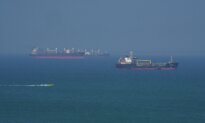
Here we are at 60 days, and Iran is losing about $500 million in input per day. It’s running out of storage space in a week or two for its daily output of oil, at which point it will either have to stop pumping or—if it doesn’t stop pumping—its wells will collapse.
Iran either has to stop pumping or has to build, as fast as it can, storage facilities, which will be known to us and which we can take out.
So it is at the brink economically. It has no military ability. The course of the war, how it ends, is entirely in the hands of the United States. It depends on whether you want an unconditional surrender and you want to pay an extra price—maybe another month or two—with economic strangulation, or you want to use airpower to take out bridges, and you can do that.
What I’m getting at is that it’s not a military problem such as Afghanistan and Helmand Province, or the Marines having to go into Fallujah in Iraq. It’s entirely a political problem. It’s not a military problem. The military problem has been solved. It’s just a question of how much political risk Trump wants to take to get an unconditional surrender and the removal of the regime.
He doesn’t need to do that. That was not one of his prewar agendas. The prewar agenda was to neutralize the nuclear proliferation of Iran, the missile and drone force, to attrite its military so it was not capable of conducting war, to stop the subsidies to its terrorist proxies, and to make sure that it no longer attacked Americans and our allies as it has for 47 years. These have mostly been met—not quite, but mostly.
So what are the ripples strategically? Well, just recently, the United Arab Emirates and perhaps Oman as well have announced that they don’t want to be in OPEC. Remember about OPEC: It was formed in 1973, and the whole purpose was to drive up the price of oil, and it did that by not pumping what it could pump.
So right now, each individual country has a quota, and that’s only about 70 percent or 80 percent of what they could pump if they were not in the cartel. That is what the United States is pumping right now—maximum. Russia will probably be pumping at maximum very soon. Venezuela will be pumping at maximum very soon.
But what you’re talking about is 2 million barrels, maybe, from the UAE alone. Maybe if Saudi Arabia gets out, it can pump another 20 percent. What I’m getting at is that the long-range strategic value of the Strait of Hormuz is going to decline because all of these countries, once they see one country getting out and taking advantage of these high prices, they will swarm to get out.
But once they get out and pump more oil—and they’re immediately capable of pumping more oil—the price will drop, and the Strait of Hormuz will not be so important. And that will not be good for Iran, if it has oil wells at all in two or three weeks.
The other thing to remember is China. Everybody says, “Well, China, China, China.”
China hasn’t come out well. It had threatened to go into Taiwan for all of the Biden administration. Year after year, it issued videos of bombing Japan, threatening to take out Taiwan, and lecturing people, saying, “Don’t tell us that we can’t take it.”
Pundits said China was emboldened by the Russians. I never understood that—Russia is in a Stalingrad-like quagmire.
Once those in the Chinese regime looked at this type of war—an air war in a gulf—they were thinking: “We have to transmit, what, 300,000 troops or so across 110 miles of open sea. And from what we can see from the Americans, the Israelis, these Western powers have enormous ability to flood the zone with drones, with missiles, sophisticated air defenses, submarine drones, surface drones. It could be a nightmare.”
And that’s not talking about Taiwan’s ability to defend itself as well. So in a cost-benefit analysis, I think that the message is that the United States can pretty much do what it wants militarily, and China will be somewhat deterred.
Remember that it has lost its hold in Venezuela and in Iran. It was basically, along with Russia, controlling the regime of former Venezuelan leader Nicolás Maduro, buying its sanctioned oil for a discount, selling it arms, trying to spread influence in Latin America—the Panama Canal was a good example.
And the same was true of Iran. China was buying sanctioned oil at a discount and then flooding Iran with sophisticated weapons and hoping that Iran would use those weapons to hamper or neuter Israel and attack U.S. installations, as it did in Syria and Iraq. And then China wanted Iran—which it did—to supply the Hamas, Hezbollah, and Houthi terrorist groups.
That’s going to be over with. Iran is broke. The people will not stand for giving, what, $50 million to $60 million per month to Arab terrorists just so they can cause havoc when the people are starving. Or the Iranian government won’t be so stupid as to do this when the people are impoverished.
And China has lost probably half a trillion dollars of a 50-year investment in its military, industrial, and nuclear industries. So China’s on the losing end.
Russia lost the Bashar al-Assad regime in Syria. It was kicked out of the Middle East. It has a temporary little blip because the price of oil is going up. But as I said, with the breakup of OPEC and the increased production in Venezuela and the United States, as soon as this thing calms down, the price of oil is going to crash, and Russia will be a big loser in this.
More importantly, it saw, again, a demonstration of U.S. airpower, and maybe, by extension, correlated it with NATO proficiency. So I think that it will try to get out of the war and get as much territory as it can along the existing battlefield today—maybe call it a demilitarized zone. But it’s running out of people and money. It has lost 1.5 million soldiers.
And so this war probably reminded Russia that it doesn’t have very many strategic options elsewhere, and that it can’t develop them as long as it is tied down in Ukraine.
Europe was a big, big, big loser. European countries had forged a relationship with Trump. They had agreed to a 2 percent investment of gross domestic product in defense, and had met that 2 percent investment, but were talking about 5 percent. NATO had called Trump “Daddy,” and then all of a sudden Trump assumed that NATO countries were normal allies.
So when he went in there, he didn’t want to disclose what he was going to do because he felt that the U.S. left and Congress, or the Europeans, would tell—and they would have revealed any type of surprise.
But more importantly, he felt that the Spanish, the Italians, the British, the French—all of them—would just say, “No comment” or “This is a United States effort; we support our NATO ally,” and then call him up and say: “Donald, we’re not going to talk about it but use our airspace, use our NATO bases, you pay for most of them. And this is what we’re gonna do but we’re gonna do it under the radar.”
No. Instead, they pandered to their Islamic constituencies, their left-wing constituencies. In Spain, even in Italy with Italian Prime Minister Giorgia Meloni, they said: “No bombers in Sicily. No planes in Spain. Can’t fly over France. Can’t use the Diego Garcia military base unless it’s for defensive purposes.”
What is a defensive strike? What does that mean? “We’ll let you have a missile battery if somebody tries to destroy our base—we’ll allow you to defend our base—but don’t take off anywhere and attack anybody.”
It was absolutely ridiculous. Europe came off really badly—really badly.
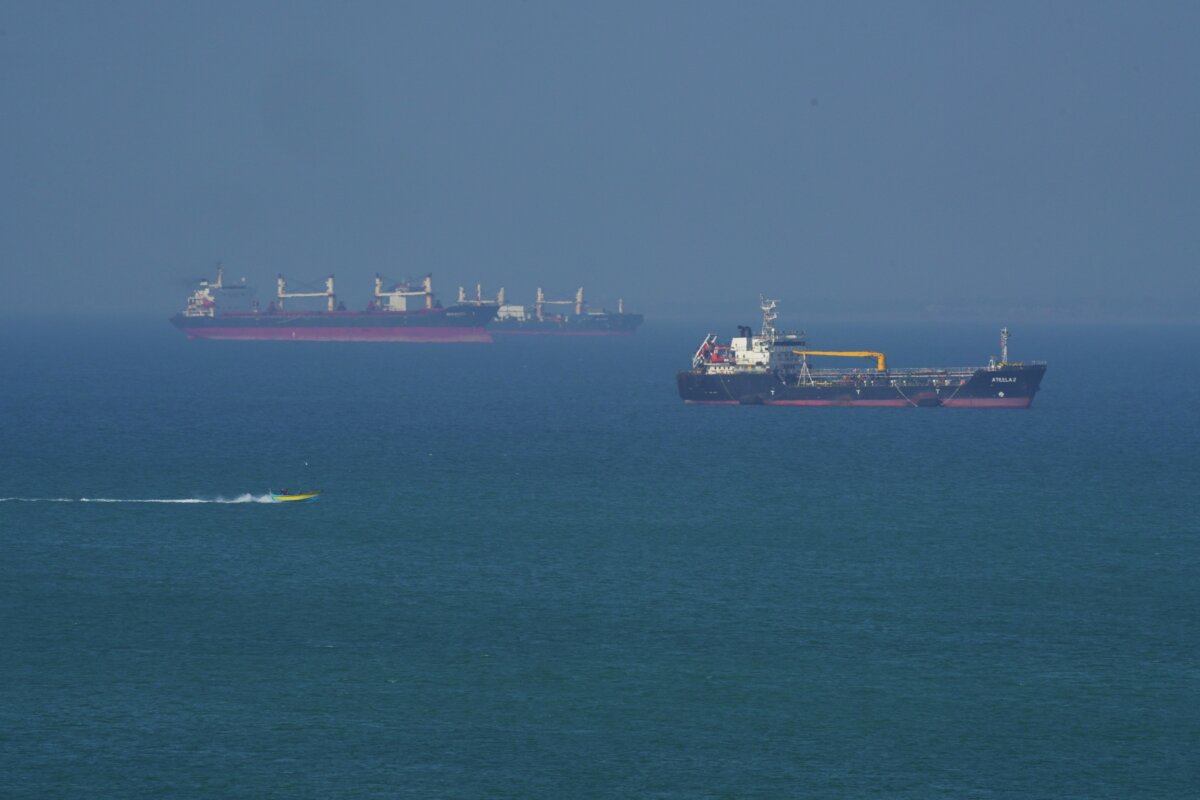
And then Europe made it worse when it said it was going to patrol the strait and then realized that the strait might be kinetic, and that it would have to use some force if we were to turn it over, and it doesn’t have that force. So it’s all talk, talk, talk, and it’s based on envy and anger at the United States.
And it’s a very dangerous game they’re playing because at some point the United States says: “We love you. Europe’s a great place. You’ve got problems—just settle them yourself. Maybe we’ll have a coalition of the willing, just like you did in Serbia.
“You went into Serbia—that wasn’t a NATO country. Kosovo—you weren’t protecting a NATO country. You went into Libya—those people weren’t in NATO. But you freelance all the time—in Chad, in the Falkland Islands—and we always help you. And then when we want to freelance, you’re reluctant.
“So go ahead, do what you want, but count us out.”
And finally, the American left kept saying that the war was lost, the war was lost, the war was lost. Trump blew it.
Don’t count him out. We have six months before the midterms. The price of oil could crash. A lot of the things Trump put into practice—with the One Big Beautiful Bill Act, deregulation, tax cuts, enormous amount of foreign investment—all of that has plenty of time to kick in in August or July and we could have a stronger economy than we do now, with cheap oil.
More importantly, he can say that in his regime, his realm, his tenure, he neutralized the threat from Venezuela. It’s not spreading communism throughout South America and Latin America, and he neutralized the Middle East in a way that all seven previous presidents had dreamed of and had never done.
Reprinted by permission from The Daily Signal, a publication of The Heritage Foundation.
Views expressed in this article are the opinions of the author and do not necessarily reflect the views of The Epoch Times.
 Friends Read Free
Copy
Facebook
Tweet
Friends Read Free
Copy
Facebook
Tweet