
Commentary
There I was bemoaning that I would likely never hear a live performance of Gustav Mahler’s Symphony No. 3. It’s too big, too long, too difficult, probably never to be revived outside a few concert halls in the world.
The symphony itself appeared at the height of Mahler’s creative power (which is to take nothing away from the other seven that he would compose after). The year was 1896, and the world and civilization was in bloom as never before. This epic symphony put it all together.
I’ve listened to it for many years, and never fail to be awestruck and inspired. I will likely never experience this in concert.
While feeling maudlin, I happened to look it up. To my astonishment, I found that this symphony is being performed by the Boston Philharmonic Orchestra with chorus and soloists, on April 11. There are still some tickets available, some very affordable. I acted as soon as I said this, and now I wake in the night with wild anticipation of the experience.
No recording or video can compare with the experience of a live performance. It’s not even close. Everything else is a distant substitute. Mahler is a challenge to perform regardless, but Symphony No. 3 is particularly taxing. It is his longest symphony, with six movements, coming in at 1 1/2 hours and requiring a boys’ choir, wildly virtuosic horns, two harps, and so much rehearsal time that it boggles the mind.
And yet soon I will be there, physically present as the absolute best of the old world is presented in full life. If you don’t know the piece, it is hard to describe. It is easily his most ebullient symphony, without much reflection on the theme of death that gradually took over his later composition. This one is a celebration of life. All of it. If this symphony took a different form, it would be the grandest cathedral, the best meal, the highest skyscraper, the best novel, the great love—you name it. It is everything.
Mahler in his life was known more as a conductor and less as a composer. Which is rather incredible, if you think about it, because his symphonies have stood the test of time and only grown ever more in fame. Indeed, one fun feature of going to a Mahler concert is meeting other Mahlerians, who can talk the Mahler talk all night. It’s interesting music this way: It draws obsessives like me and invades our brains sometimes to the exclusion of everything else. Not healthy, likely, but there it is.
Think about the times in which this music appeared on the scene. The darkness of the Great War was unimaginable and almost 20 years away. The wealth of the Western world was at a height never seen before, and so was the liberty of the people. Technology over the previous half-century had created miracles in communications, transportation, sound reproduction, and power.
Electrification, steel, internal combustion, and the telegraph remade cities. Telephones were rolling out in communities in the United States and Europe, and even flight seemed inevitable: In this year, the steam-powered Aerodrome No. 5 flew over the Potomac River. The cultural and intellectual consensus was that there would be no end to the progress of peace and prosperity for all of humanity.
This was the world that Mahler inhabited at the time. He was the master of his age. His competitor in music was Richard Wagner, who monopolized the opera, leaving the Beethovenian legacy of the symphony to Mahler alone. The symphony, in particular, also represented an intellectual height: an orchestra on stage alone without theater and without dancing. It seemed both abstract in some way but also the greatest challenge that art had to offer.
Mahler began his symphony with a remarkable homage to his predecessor in symphonic work, Johannes Brahms, who had ended his first symphony with a tremendously lovely melody that comes out of nowhere and dominates to the last note. Mahler picked up this same theme, put it in a minor key, and opened up his third with this song, in the voice of French horns announcing something unbearably important. It’s shocking on every listen.
Once the opening movement moves to a major key, we are off on the grand adventure that takes us through many iterations. Most famously, and memorably, the fifth movement is built from the sounds of a boys’ choir mimicking church bells and singing about the love and forgiveness of Christ. It’s utterly and completely delightful, and so inevitable that it’s a wonder that no one had composed such a thing before.
In the earliest performances, Mahler provided program notes for each movement. “Pan Awakes,” “What the Flowers in the Meadow Tell Me,” “What the Animals in the Forest Tell Me,” “What Man Tells Me,” “What the Angels Tell Me,” “What Love Tells Me.” Consistent with his growing sense that he should not pre-game the listening experience, he stripped all that out and just let the music speak for itself.
Even as I type, I can feel the excitement for this performance rising in my heart and soul. Yes, I’ll be sitting high and back, but it’s fine. Just to be there is what matters.
And there’s another thing: I’m thrilled to discover that such performances are still possible. But posting about this on social media, someone said that this was the last season for the Boston Philharmonic Orchestra. It is effectively shutting down and becoming something else with the funds leftover from its endowment. Mahler’s Symphony No. 3 is the last hurrah of this great institution.
There we go: That’s when my heart sank because it confirmed my intuition that we are settling into an age that could be the final chapter on high art of this sort. There are many reasons for this. The music unions are too expensive, the symphonic orchestras are too top-heavy in management, the audiences are increasingly hard to come by, programming is often too woke and weird, and resources are just too scarce in general.
All of this provides an accounting for why this is happening, but it is not the whole story. The lockdowns of 2020 and following shuttered every concert hall in the country for up to a year. And many reopened only with mandatory masking and vaccination. That clearly did not work. Moreover, it demoralized donors and audiences. Nothing has fully recovered for any arts venue from those days.
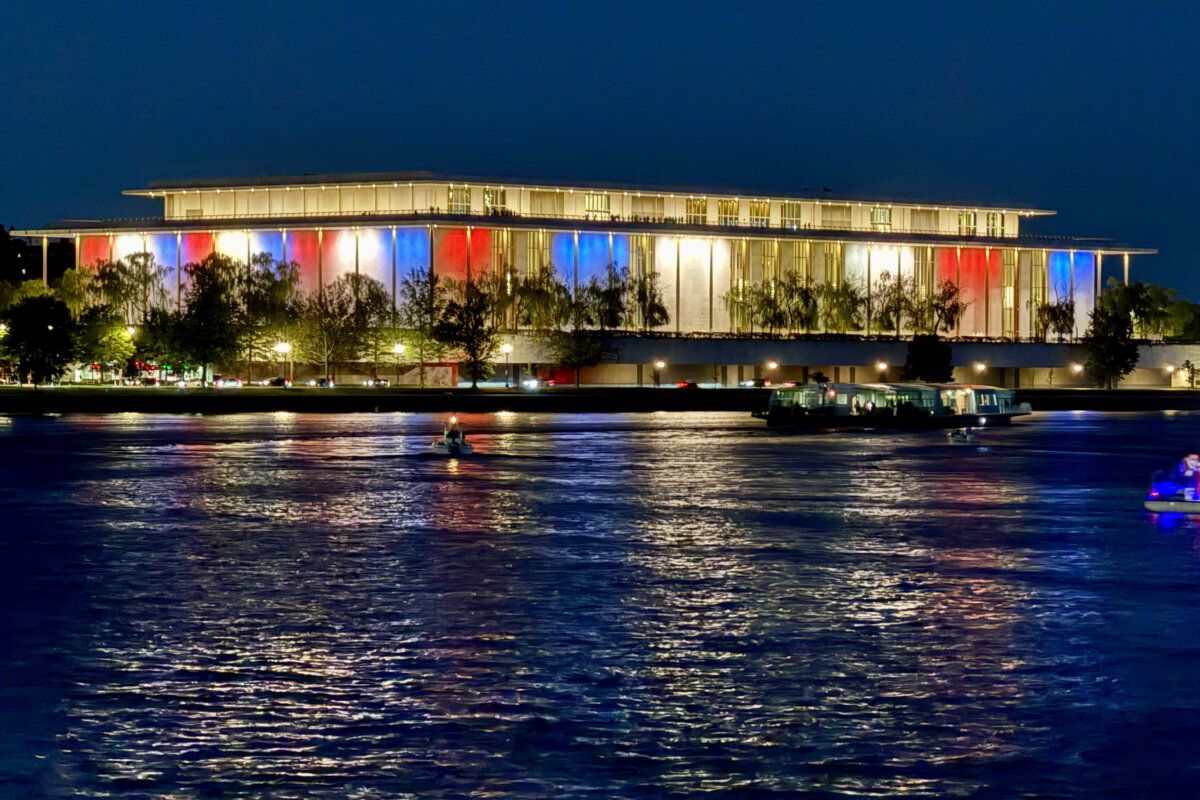
The various closures, including the Kennedy Center in Washington, are not good signs. You have heard it said that civilizations should be judged by their high art. When brutalism and economic depression come, art is the first to go. Is that happening? I do not know, and I’m not going to think along these lines just yet.
I’m going to put myself in that seat at the concert hall and thrill at every note. After all, the civilization that it embodies ended once already in the Great War and came back again. We can do the same provided that we have models and ideals. Mahler certainly provides that.
Views expressed in this article are the opinions of the author and do not necessarily reflect the views of The Epoch Times.
 Friends Read Free
Copy
Facebook
Tweet
Friends Read Free
Copy
Facebook
Tweet