Commentary
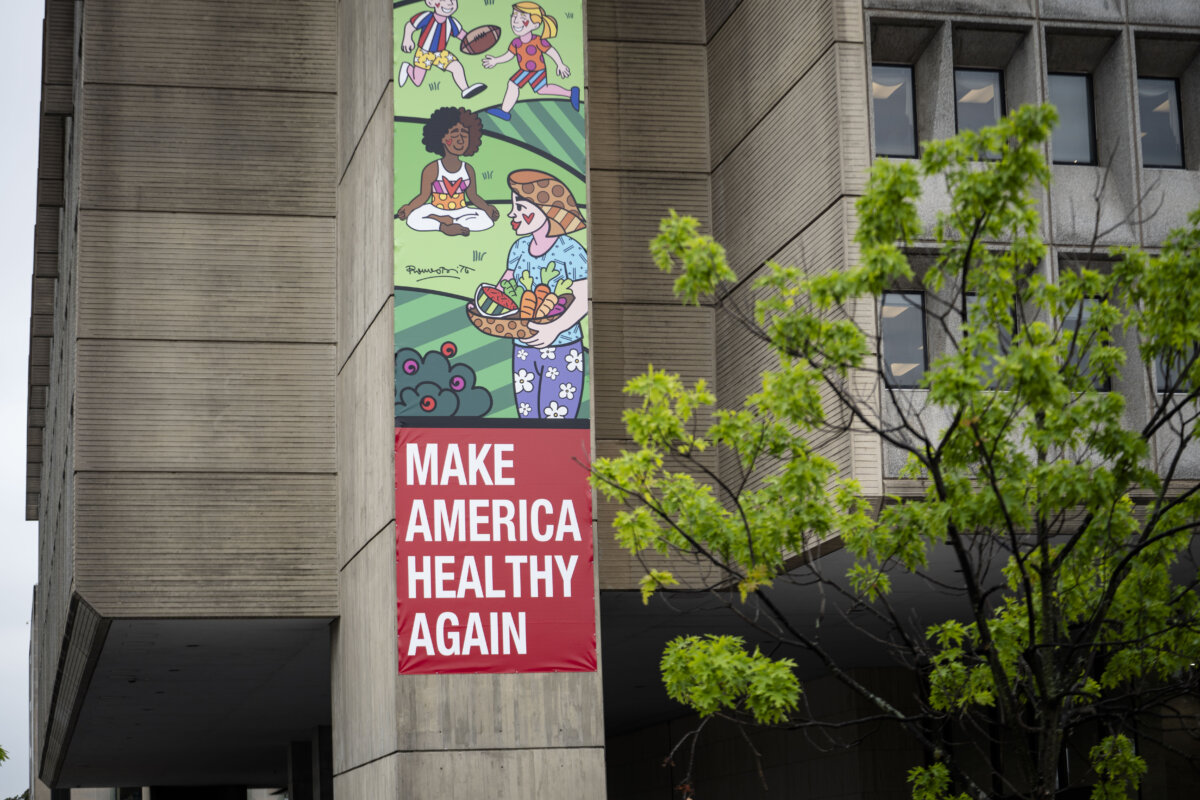
A theme keeps emerging in the mainstream coverage of what is called the MAHA movement, based on the slogan Make America Healthy Again. Reporters keep centering their coverage on the idea that there is an expiration date to this movement. Donald Trump will leave office and Robert F. Kennedy, Jr., will give up his position as Secretary of Health and Human Services.
Enthusiasm and leadership will fade. What’s called the grassroots will lose interest and the status quo will return. MAHA will go the way of so much before: Black Lives Matter, climate activism, veganism, the Tea Party, and most other political movements. They make noise, bang their drums, enact some marginal change, get tired, and the status quo returns with the same establishment in charge again.
This is the hope of many journalists, in any case.
I don’t believe it. Something is very different this time. MAHA represents much more than a political movement with the usual expiration date. It represents a foundational change in the culture undergirding the public mind itself.
It goes way beyond the usual categories of left and right and even rises above both. It reaches into people’s lives in a deep and intimate way: the food we eat, the cosmetics we use, the way we medicate ourselves, and the shots we give our children and accept ourselves. It also changes the way we see the structures of power.
These are not small shifts. They are the kinds of changes that affect an entire generation. Or two. Or three. Once you see the logic and evidence undergirding what is called MAHA, there is no going back. You live differently. You raise your kids and grandkids differently. You shop at different places. In short, your entire life undergoes a shift, one you pass on to the next generation.
This is organic, authentic, a genuine historical and paradigmatic shift. It is rooted in knowledge, conviction, and courage. No other mere political movement in my lifetime can say this.
The movement itself long predates the codification of the MAHA label. It began even in the 1970s when crunchy liberals started doubting the shift toward industrialized processed food and the dietary recommendations that reflected not health concerns but the profits of Big Agriculture.
It grew in the 1980s with the indemnification of the vaccine industry, which found itself with the ultimate privilege of manufacturing and distributing products without the check of direct liability for harms.
At this point, the movement was widely seen as being on the left. This was likely never true but rather reflected the narrowness of the ideological structures at the time. The right was mostly uninterested in these causes because they were distracted by their bias toward big business. The libertarians were uninterested because they were too busy fighting the war on drugs.
Nonetheless, the movement that had no real home in either camp kept growing with activism against the industrial poisoning of lakes and streams plus the rise of chemical fertilizers and pesticides, as well as farm consolidation. The organic food movement was born, again, outside left-right boundaries.
It was never really about ideology. It was about life, health, and children. That’s why the movement grew and persisted after the upheavals of the late 1980s, the 1990s, and into the new millennium. No one in power took them that seriously. They were there and notable but not well understood.
In the 21st century, many quietly wrote books and organized events, mostly out of the public spotlight.
The pandemic response from 2020 onward is what awakened this sleeping giant and massively added to its size. Suddenly millions, multitudes, were recruited toward grave skepticism of the medical establishment, the corporate establishment generally, and newly aware that we cannot count on those in power to protect our health. Just the reverse.
Many of these people came to resist the push to comply at every step. They gave up jobs, moved, defied media elites, and even refused doctors’ orders. They risked losing social status and financial flow—the two sources of pressure that cause most people to go along. What’s more, the resistors were proven correct.
The COVID response has proven to be a disaster for all the commanding heights. It profoundly affected all people where they lived. They shut the schools, churches, small businesses, and censored speech, all in preparation of distributing an untested shot and doing so even by force.
As I try to explain to reporters all the time, you cannot do this sort of thing to a population and expect them to forget easily. That experience changed the public mind in a fundamental way. Vast numbers are looking for ways to leave the system, finding new sources of food, medicine, medical care, education, news and information, and even places to live.
It’s that fundamental.
So, you see, the slogan MAHA doesn’t quite capture the fullness here, unless we are also talking about mental, intellectual, and spiritual health. Getting to the root of the matter, what’s actually at stake is the health of freedom itself. In that way, the slogan might have greater staying power than many anticipate. Even if it goes away, the ideas behind it will not.
Nor is it about the leadership of Robert F. Kennedy, Jr., alone. He was the perfect one to lead at the time, as the author of the major work on Anthony Fauci at the very height of Fauci’s power. That was brave. Kennedy deserves every bit of acclaim and he is the leader. That does not mean that everyone has to agree with everything he says nor does it mean that what he has built fades when he is gone.
More precisely, Kennedy himself did not build the momentum that caused this shift. He shepherded and encouraged it but the energy and action trace to the moms and dads of America in every class and region. Every intuition I have suggests that there is more fire and energy going on here than we can even imagine.
The phrase “leaderless revolution” comes to mind. Nor is this revolution about abstractions like so many. The revolutionary spirit here is intimately bound up with issues of health, well-being, and legacy—stuff that cannot be captured in slogans.
None of this suggests politics as usual. It’s not really about the appointees at agencies or the politicians we elect. The driving force are the local supper clubs, the many information email lists, the shared interests, and the desire to learn. That’s a key feature of what is happening here. This is a highly literate group.
At a time when vast swaths of broken and demoralized Americans have stopped reading, the MAHA base is reading more than ever. And not normal books from the mainstream. They are reading alternative histories of medicine, diet, government, media, and historical events like the Progressive Era, the aftermath of the Second World War, and more.
What thrills me most about going to events is discovering the huge diversity of personal history behind the people who are part of this. They all come from different places but have arrived at roughly the same place. They are unfailingly curious to learn more and have open hearts and minds to learn from others.
Is the MAHA coalition durable? In some ways, it is the wrong question because this is not a normal political movement that is easily subverted from within, placated, and bought out. We are talking here about millions of Americans who have stood up against conventional wisdom, already defied compulsion to comply, made fundamental changes in their lives, and feel a passionate desire to tell others about it. It’s growing and nowhere near going away.
Views expressed in this article are the opinions of the author and do not necessarily reflect the views of The Epoch Times.
 Friends Read Free
Copy
Facebook
Tweet
Friends Read Free
Copy
Facebook
Tweet