
Commentary
People might be rioting in the streets, bombs falling on innocents, and daily reports of disease and massive human suffering appearing in our inboxes and feeds. What can we do?
We can make bread.
Bread is the oldest symbol of what it means for human hands to create rather than destroy. When you make bread, you realize how the result of human action can exceed—and even defy—the sum of its parts. It feeds rather than demolishes, delights instead of demoralizes, reveals the new rather than wallows in the old.
Some things in life are not dispensable, no matter the dietary trends. Bread is among them. Man cannot live on bread alone, as the biblical phrase goes, but it also isn’t called the staff of life for nothing.
We should not contemplate life without bread any more than we should imagine living without wine. Once you accept the inevitability of bread, that it must be fresh from your own kitchen is proven by the comparative taste of the greatest store bread against that made by even a moderately good home baker. The results speak for themselves.
There are three general categories of bread: quick breads, breads from quick-rise yeast, and breads from a starter of your own. I’m leaving out the last category even if it is superior to the rest.
Caring for a great starter is like caring for a pet. There is so much to do—flour, water, sugar, temperature, time, just the right balance of everything—and so many ways it can go wrong. I’ve never mastered it myself so I’m leaving it to you to figure it out. Best of luck!
Let’s start with quick breads. These rely on baking powder and/or soda and involve flour, milk, eggs, and some other flavor from, say, bananas, nuts, blueberries, pumpkin, zucchini, or other things on hand. Technically cakes and cookies are quickbreads, too.
The swiftest way from here to there is banana bread. You will go from ingredients to in-the-oven in under ten minutes once you get the hang of it. It requires three very ripe bananas, one-third cup melted butter, a half cup of white or brown sugar, an egg, a teaspoon of vanilla, one and a half cups of flour, a teaspoon of baking soda, and salt. I also like to add walnuts.
Always mix wet and dry ingredients separately and then blend them together. Cook for an hour at 150 degrees in a loaf pan and let the whole thing cool. Do it enough and it becomes second nature. It’s always a treat and delight.
Other forms of quick breads take us back deep in American frontier cultures—biscuits, pancakes, and muffins. For biscuits, I favor the old (and out of print) “Better Homes” mix: 10 cups flour, 2 cups lard (yes, lard), one-third cup baking powder, one-quarter cup sugar, some salt.
Stir the flour, baking powder, sugar, and salt together. Cut in the lard with a pastry blender until the mix looks like coarse crumbs. The dough can be stored airtight for up to about 6 weeks at room temperature, or up to 6 months in the freezer (bring to room temperature before measuring). Spoon lightly into the cup and level it off.
To make biscuits, add 2 cups of this mix plus a half cup of milk. Stir just until combined, then knead gently for about 20 seconds, pat or roll to half an inch, cut with a mold or the top of a glass, and bake at 450°F for 12–15 minutes. For muffins: 3 cups basic biscuit mix; 3 tablespoons sugar; 1 egg, beaten; 1 cup milk, plus fruit or nuts or whatnot for whatever kind of muffin you are making. Heavier muffins require some additional baking soda.
I don’t know if other quick-bread people are the same way, but I’ve found the prospect of cooking with yeast the least-intimidating next step. In college, I had it all figured out. On Sundays, I would make six loaves of yeast bread, eat one, and give the rest away as tools of barter: for dry cleaning, auto repair, and even discounts on rent. Baking bread was how I paid the bills.
Yeast is all about giving life and avoiding death that comes from baking at the wrong temperature. We are fortunate, nowadays, to have electronic temperature checkers. Wrist-based temperature gauges are an infallible godsend for getting the yeast to 100 degrees and the milk-sugar-butter mixture to 110 before the addition of eggs cools it down a bit more. One mistake can kill the yeast, so the gadgetry is a help.
But eventually, you figure out the mystery of temperature. The water and/or milk should be neither tepid nor hot. It should be more than warm and less than hot. You should be able to stick your hand in it and it should feel a bit uncomfortable; you should not have to yank your hand out in self-protection.
What kind of bread are you making? This is the real glory: the ritual of the dough itself. Once you understand it, anything is possible. Baguettes? Sure. Cinnamon rolls? Yes. Pizza dough? Of course.
Or make just plain white bread, eat a slice for breakfast, lunch, and dinner, and fry up some French toast tomorrow morning. Somehow, just the smell of it provides comfort and security, a sense that all is right in the home, even if not in the world.
Here is a basic approach that will keep you busy the entire day but yield thrilling results. Put the hot water or milk in your largest mixing bowl, filling it up about one-fourth of the way. Dump a third of a small jar of yeast, and about a quarter cup of sugar or honey. You can watch it for a while and thrill at the emergent magic happening. It is coming to life!
Then you can add the butter or lard or oil—about a half cup or so. Then comes the flour, half the bag at first, and the rest as you go along. Next add the salt, about six tablespoons for a batch this large. It should be thick and soupy, so stir and stir. Start adding in more flour, and, when it gets really thick, dump it out on the counter. Then the kneading starts. No way can you master this in one try. It will take several bread-baking sessions to figure this out. (By the way, at this stage, you can start adding odd things like oatmeal, nuts, or other grains, or brown sugar, or anything else you want.)
In any case, you should knead for 10 to 15 minutes, until the dough is really integrated and whole, neither sticky like glue nor hard like a football. If you do this right—using the palm of your hand and flipping the dough as you go—it should end up like a spongy rubber ball. You should be able to handle it as a whole.
Next comes the rise. Clean out the same bowl and coat it with a thin layer of oil. Cover the dough and let it rise in an oven heated to about 100 degrees—just a bit warm but not at all hot. Forget about it for 1.5 hours. Come back and you will see: It is now gigantic!
Punch this beast down with your fist, and now you can start actually making your bread. This much dough should yield about five large loaves, or six to ten small loaves, or dozens of rolls, or hundreds of bread sticks. You can make a variety of yummy things. Just push the dough around and divide it all up. Add olives, chocolate, cheese, anything. Or just make it plain.
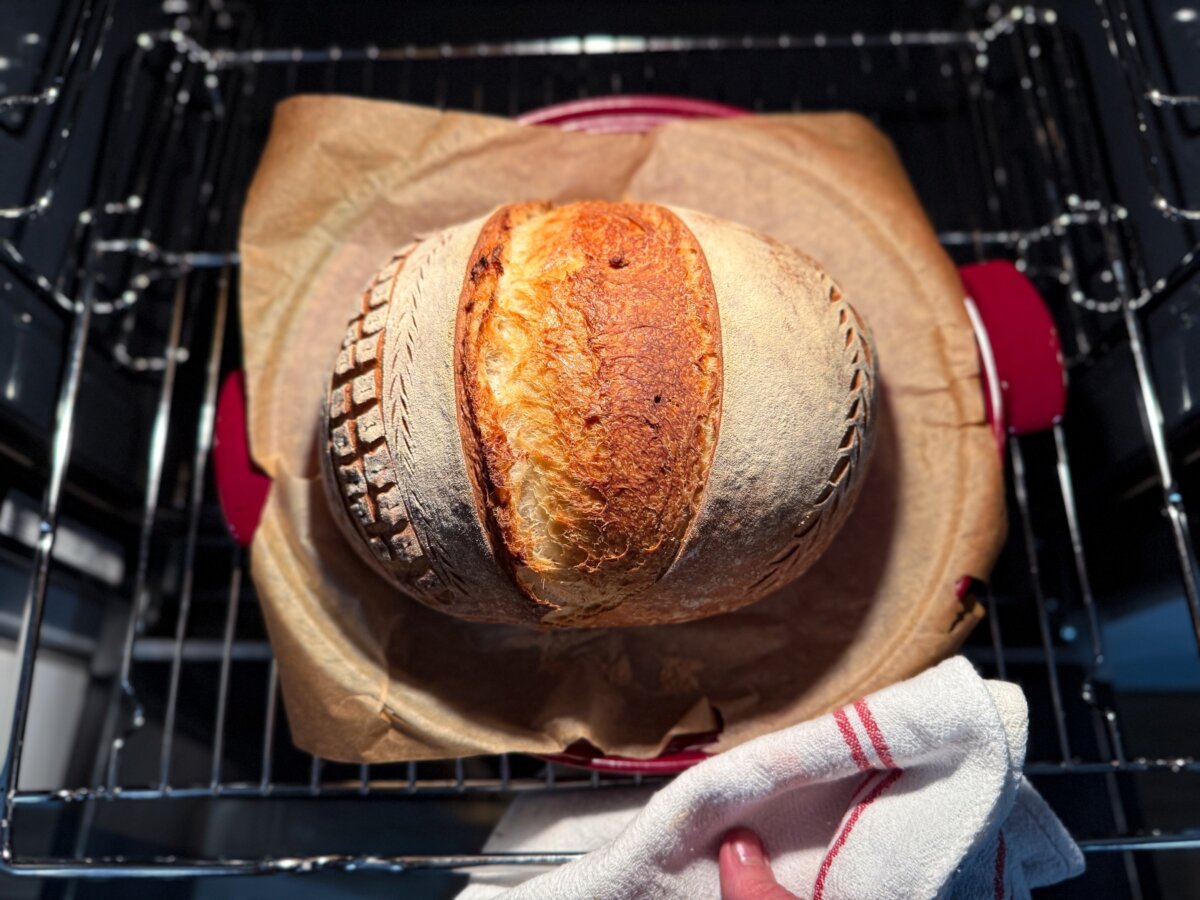
When you coat the top of your whatever you’re making, you generally have three choices: water for crispiness, egg for shininess, or flour for a rustic/artisanal look. It’s a good idea to try out one of these per loaf.
Leave the results sitting at room temperature for 45 minutes. Then pop them into a 400-degree oven and watch the magic happen. It’s beautiful. The house will fill up with amazing smells. You need roughly 25–35 minutes for loaves, or a bit longer for something larger. The results are crazy wonderful. You’ll see.
You might intend to give all of your loaves or rolls away but be forewarned: you might change your mind. You will want to eat it all. Resist! It’s time to share the love, share the creation, share the beauty. The world needs more bread, made by you for others.
What about using a bread-making machine, as is all the rage these days? As much as we love technology, as much as we favor time-saving devices, ideally bread should be the work of human hands. The mixing and kneading is the very essence of what breadmaking is all about. Turn the job over to a machine, and you drain the entire exercise of life and joy.
When you give some of your bread away (as you should), do you really want to say that you used a bread machine? You want to say that you made it, that you mixed and kneaded it, yourself. And why does this please people? Because it suggests integrity and truth, that you care enough to generate a new creation, and to do this for another as an act of generosity.
We have all seen those flour commercials that claim that this or that product gives you confidence in what you cook. Perhaps. But it’s not really the product that matters. It is the doing itself. When you make bread, you are given a sense of extraordinary accomplishment, as if you have conjured up something spectacular out of nothing. Because you have.
This sense spills over to life itself, granting you an overall confidence, a belief that whatever else is going on around you, you have within you the capacity to create glorious things, things that rise and grow and become something completely new and life-sustaining.
I’m sorry to say that quick-bread just doesn’t quite have these mystical properties. Neither, for that matter, do meats and vegetables. Bread alone among all foods seems to touch the very soul of man and contains within it the power to remake our spirits and bring us life.
Make one loaf, one pan of cinnamon rolls, one baguette, and you have a vision of yourself doing it every week, or every day. It seems possible. Anything seems possible.
Making bread all the time could become a part of the liturgy of life, and then—and then—you are complete. Though the politicians call for war, the stock market sinks, and the terrorists plot, as a baker of bread you are the bringer of life and health and happiness to yourself and your friends, improving, ever so slightly, the world of your own choosing.
Views expressed in this article are the opinions of the author and do not necessarily reflect the views of The Epoch Times.
 Friends Read Free
Copy
Facebook
Tweet
Friends Read Free
Copy
Facebook
Tweet