
Commentary
The federal government is appealing its Emergencies Act losses to the Supreme Court of Canada, in a Notice of Application that runs 503 pages.
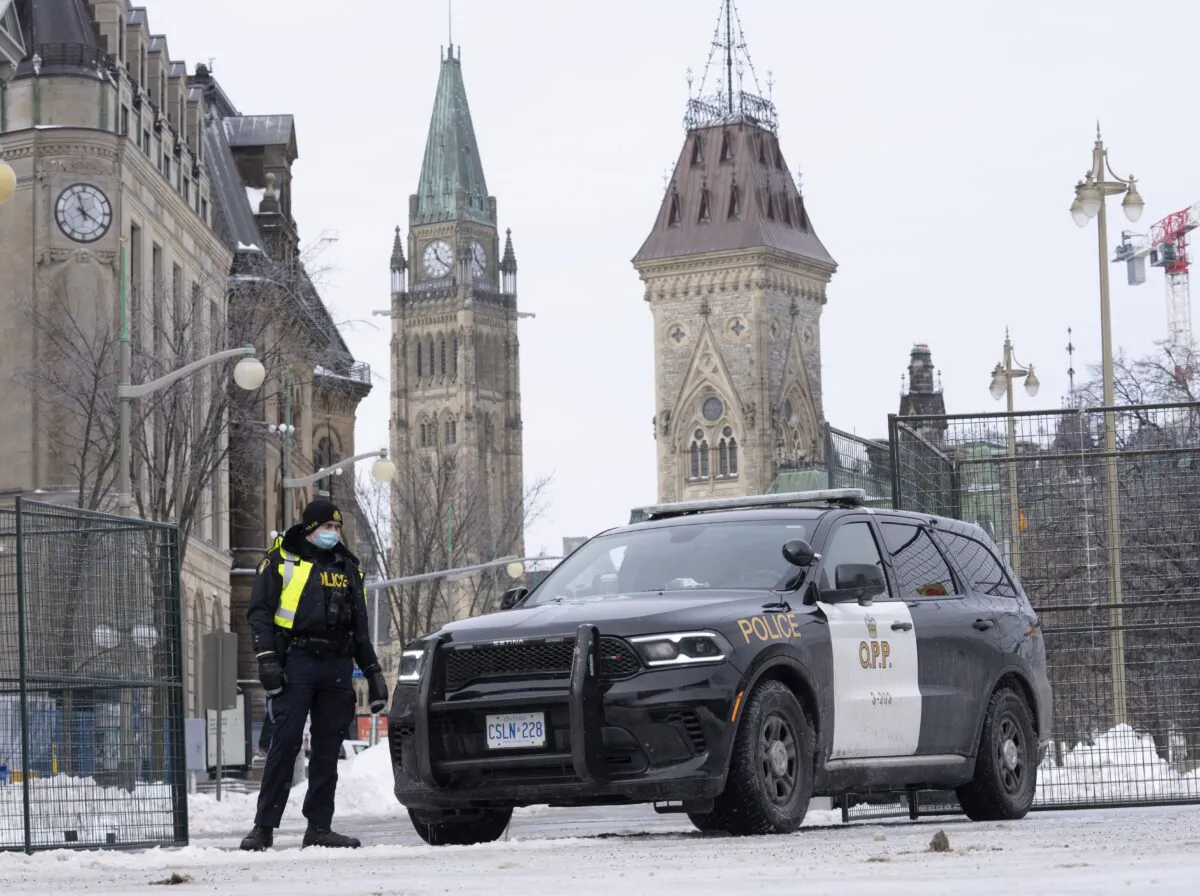
After declaring a “national emergency” on Feb. 14, 2022, the federal government unleashed police force on peaceful Freedom Convoy protesters in Ottawa, and froze hundreds of bank accounts of Canadians from coast to coast.
In 2024, the Federal Court (trial division) ruled that Prime Minister Justin Trudeau and his cabinet had acted illegally when invoking the Emergencies Act to crush the Freedom Convoy. The Emergencies Act establishes a high threshold for invoking emergency powers and violating civil liberties. The court ruled that that threshold had not been met; the Charter rights and freedoms of Canadians were violated without justification. In January 2026, the Federal Court of Appeal upheld the lower court ruling. On March 17, 2026, the federal government filed its appeal documents with the Supreme Court of Canada.
Under the Emergencies Act, a “national emergency” is “an urgent and critical situation of a temporary nature that cannot be effectively dealt with under any other law of Canada,” and that “seriously threatens the ability of the Government of Canada to preserve the sovereignty, security and territorial integrity of Canada” or that “seriously endangers the lives, health or safety of Canadians and is of such proportions or nature as to exceed the capacity or authority of a province to deal with it.” The lower courts, however, found that the protest in Ottawa did not qualify as a “national emergency” to justify the use of emergency powers.
In its Memorandum of Argument filed with the Supreme Court, the federal government argues that the Freedom Convoy “had occupied downtown Ottawa for weeks, with no end in sight” (emphasis added).
In fact, prior to the Emergencies Act invocation, the protesters had reached and signed an agreement with the City of Ottawa to move their trucks out of Ottawa’s four-block by five-block downtown area. Serge Arpin, then-chief of staff to the mayor of Ottawa, testified at the Public Order Emergency Commission that 102 trucks had moved out of downtown Ottawa by noon on Feb. 14, 2022. Most of these trucks left the city entirely, while some moved to the Parliament Buildings (Wellington Street) as per the signed agreement. The protesters were on schedule to remove 75 percent of the vehicles from downtown Ottawa and leave the city by Feb. 16. Remaining protest vehicles were to be confined to Wellington Street along Parliament Hill.
Also testifying under oath at the Public Order Emergency Commission was Ottawa’s then-General Manager of Emergency and Protective Services Kim Ayotte, who confirmed that the movement of vehicles onto Wellington Street “got stopped by police.” It was the police who blocked the movement of trucks out of the downtown core, after an agreement had been reached and signed.
The federal government’s assertion that there was “no end in sight,” used to justify the use of emergency powers against Canadians, is plainly false.
In its memorandum, the government devotes significant space to describing border blockades in Coutts, Alta., Windsor, Ont., and elsewhere. Yet all of these border blockades were resolved and discontinued prior to the Trudeau cabinet invoking the Emergencies Act on Feb. 14. The government suggests, without any evidence, that these border protests were somehow related to the Freedom Convoy in Ottawa. Worse, claims were falsely put forth that these border protests were still blocking international trade when the Emergencies Act was invoked on Feb. 14.
The Trudeau government, on Feb. 14, 2022, declared falsely that there were “continuing” blockades. Other pretexts were vague: there was some undefined “breakdown” in the availability of “essential goods, services, and resources”; there was some unspecified level of unidentified “violence” that could potentially increase. The next day, the government issued an Emergency Economic Measures Order whereby banks froze the accounts of hundreds of Canadians.
In its memorandum, the government describes the freezing of bank accounts as “information sharing,” and argues that these measures “worked” because 257 bank accounts were frozen. The government provides no explanation as to what Canadians were doing with their bank accounts that threatened national security or otherwise caused harm. The funds that Canadians had tried to donate to the Freedom Convoy, first through GoFundMe and then through GiveSendGo, did not reach the truckers in Ottawa. Moreover, if these funds had reached the truckers, no crime would have been committed. In a free and democratic society, citizens should be able to donate to the causes of their choice—even to a cause that is hated by the prime minister of the day.
The government also argues in its memorandum that its emergency measures “worked” because police arrested 196 protesters in Ottawa and charged 110 criminally. The truth is that police did not (and do not) require the invocation of the Emergencies Act to arrest people who commit crimes. Police in Ottawa were free (and in fact obligated) to arrest anyone who committed a crime, whether a local resident or an out-of-town protester. This is what made the use of the Emergencies Act all the more irrational: thousands of Canadians came to Ottawa to protest over the course of several weeks, and police did not see cars set on fire, shop windows smashed, or violence used against police or civilians.
The government states in its memorandum that “reports of harassment, assaults, and intimidation arose.” Yes, “reports” by hostile media, which consistently painted the truckers and other protesters as dangerous and violent extremists, racists, and criminals. It’s easy to smear a political opponent by writing about some unknown and unidentified “reports” that say that your opponent engaged in “harassment, assaults, and intimidation.”
The memorandum also asserts that “swastikas” (plural!) were “held or worn by some protesters,” without providing any evidence to support this drive-by smear. The identity of the sole individual who displayed a Nazi flag in Ottawa on one occasion is not known; this person may have been someone seeking to discredit the Freedom Convoy. Here again, the government depends heavily on hostile media, which faithfully propagated the narrative announced by Trudeau before the peaceful protesters had even arrived in Ottawa: the truckers were an anti-science “fringe minority” with “unacceptable views.”
The Supreme Court of Canada hears less than 10 percent of the appeals that are brought to it. The application for Leave to Appeal is reviewed by a three-judge panel, which then presents the entire court (all nine judges) with a recommendation as to whether to hear the appeal or not.
On that note, Chief Justice Richard Wagner should recuse himself entirely from these discussions. He publicly proclaimed his bias against the Freedom Convoy by accusing it of “hostage-taking” and promoting “anarchy,” based on a “certain ignorance” and a “bad understanding” of Canadian law. The Freedom Convoy’s “attacks” on the justice system and democratic institutions should be strongly condemned, according to Wagner. He has also suggested that the Freedom Convoy was motivated by and guilty of spreading “disinformation.”
Canadians should know by the end of this year, and hopefully sooner, whether the Supreme Court will hear the federal government’s appeal. If yes, then the actual appeal process will take another year or two.
John Carpay, B.A., LL.B. is President of the Justice Centre for Constitutional Freedoms (jccf.ca), which provided lawyers to Canadians who sought – and obtained – the Federal Court declaration that the Trudeau government illegally invoked the Emergencies Act and that it had violated the constitutional rights and freedoms of protesters.
Views expressed in this article are the opinions of the author and do not necessarily reflect the views of The Epoch Times.
 Friends Read Free
Copy
Facebook
Tweet
Friends Read Free
Copy
Facebook
Tweet