
Commentary
Canadian debt is very much on my mind. Well duh, with next week’s federal budget depending on bond traders being so fuddled by splitting total borrowing into Borrowing A (Good) and Borrowing B (Bad), that they can’t add A and B and get Borrowing C (Scary). But actually, my concern is private borrowing because, if the budget doesn’t work out well, are we ready to weather the storm? Heck no. And we don’t care.
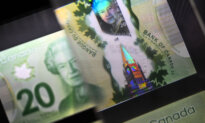
Blacklock’s Reporter just noted a Financial Consumer Agency report that almost a third of us are carrying credit card debt at interest rates of 19 percent or worse. And an important reason why is, “About half, 49 percent, have had to use credit cards, overdraft or borrow from savings for daily expenses.” In fact, we lead the G7 in household debt as a share of GDP and have for years because… we’re living beyond our means, and loving it.
So what happens if the economy turns even more sour? Suppose our government, revealing haplessly that it’s not serious about controlling deficits and debts, merely causes interest rates to rise, about the most benign imaginable outcome? Unless, say, you’re rolling over credit card debt. And what if you lose your job, or someone close to you does, or inflation surges?
Last week I complained in these pages about “a large ominous pattern where the privileged who dominate Western societies relentlessly erase our past and undermine our culture, yet, strangely, believe nothing much will really change including prosperity, security, or social cohesion.” A key part being assuming no amount of borrowing, regulation, taxation, legal uncertainty, etc., will even make the goose that lays the golden eggs feel unwell. And as so often, they’re being this irresponsible with at least our passive acquiescence and often active encouragement.
If politicians have been insouciant about running up debt and running down the economy for decades, it is in large part because of voters at least as blasé. And with less cause since governments can at least try to tax their way out of a crisis, though it may not work very well if much of the populace is already hiding from the bailiff. We can’t.
Or can we? We the people, or many of us, believe in the government magic money tree from which, if the economy crashes, politicians will pluck and toss about bundles of thousands. So full spend ahead.
I have before attempted to quote an old “Cathy” cartoon where she dumps a shoebox of disorganized receipts on her accountant with a punchline roughly: “We wanted government of the people, for the people and by the people. We didn’t want government like the people.” But I can’t find it online or in my arguably obsessive files. Speaking of government like the people.
Including in the United States, where those frugal cheese-paring free-market-fanatic Republicans just vacantly watched the national debt pass $38 trillion. Nobody really cares because, whatever verbiage lawmakers spew, they don’t do anything. And they’ve gotten away with it so long they’ve evidently decided it doesn’t matter if you’re so insolvent you’re not sure how many zeroes are involved.
Back in Canada, you naturally get “World ends, women and minorities hardest hit,” as that FCA survey says: “A majority of Canadians, 60 percent, report having trouble keeping up or sometimes struggling with bills. This is more pronounced among women, younger and middle-aged adults, those with lower education and income, Indigenous people and individuals with disabilities.” Presumably, when Mark Carney says we will have to make sacrifices due to his wonderful budget, he doesn’t mean them. But what a politician thinks will happen and what really happens are not always the same.
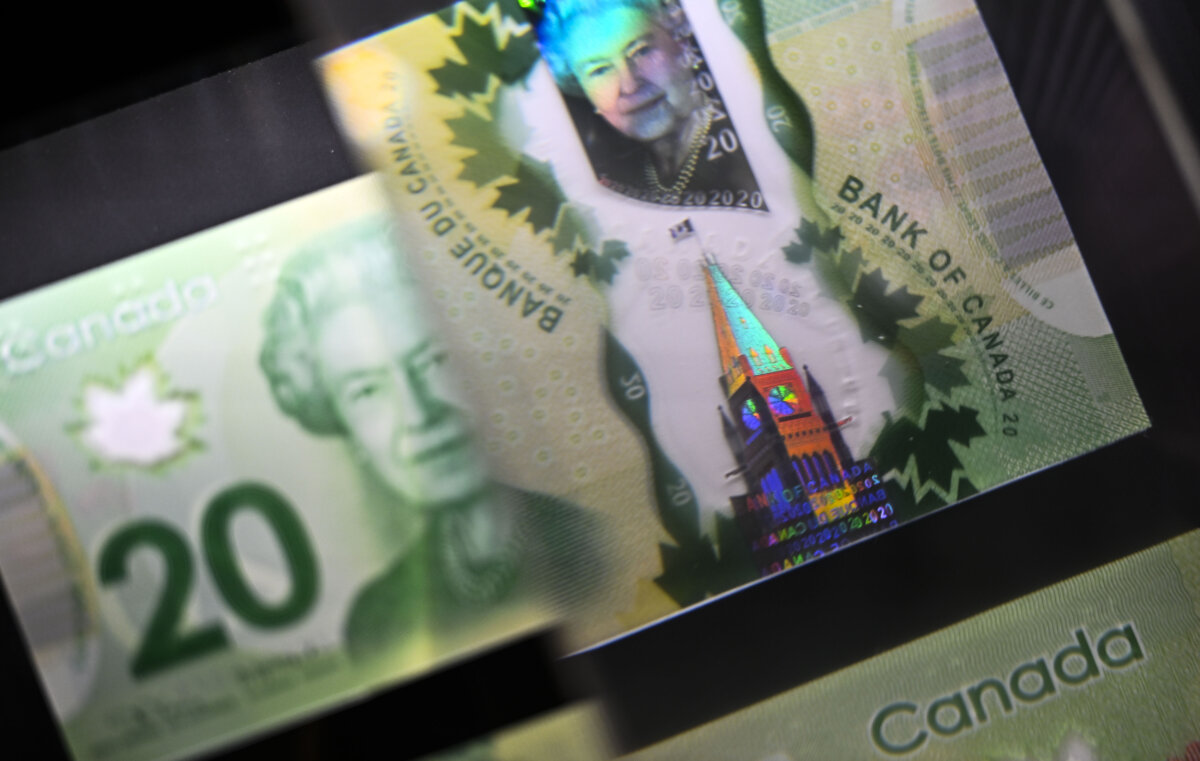
As is scarily true of citizens. According to that survey, “About one third, 34 percent, report their monthly household spending is more than their income. About half of Canadians, 47 percent, agree they have too much debt.” But meh, since money will fall from the sky. Or the Peace Tower. Unless it doesn’t, since apparently we’re going to get massive runaway investment but parsimonious spending.
Ho hum zzzz spend borrow. As we’ve done for decades, while ignoring warning signs and telling ourselves silly stories. The Canadian Union of Public Employees just had the gall to warn, “The hidden cost of balanced budgets: Rising household debt,” claiming that “Since the mid-1990s, policy at all levels of government across Canada has been shaped by the guiding principle of reducing government debt.”
Riiight. Apart from the bit where most provinces are bathing in red ink, our federal debt doubled in the last decade to over a trillion bucks, and we re-elected the party that did it while continuing our own borrowing spree.
So we’re not worried that the party might suddenly end. But what if it does and the cupboard is bare?
Views expressed in this article are the opinions of the author and do not necessarily reflect the views of The Epoch Times.
 Friends Read Free
Copy
Facebook
Tweet
Friends Read Free
Copy
Facebook
Tweet