Commentary
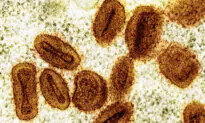
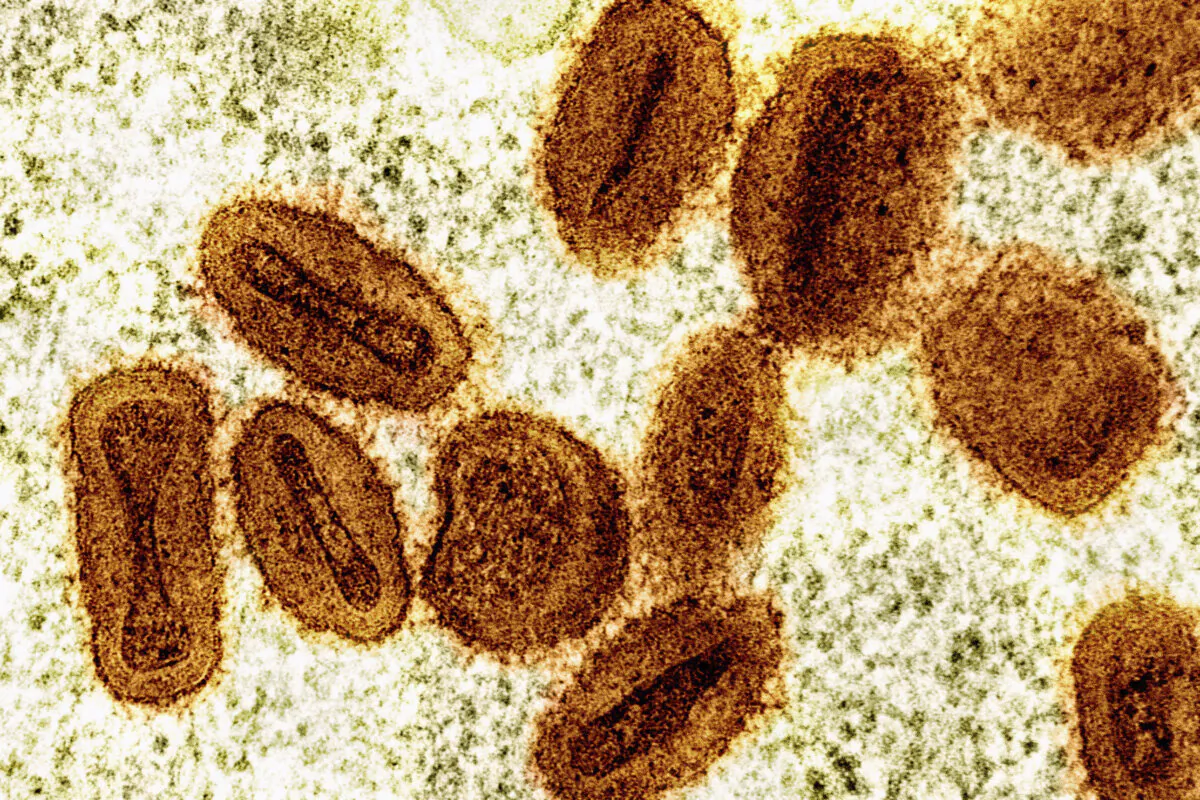
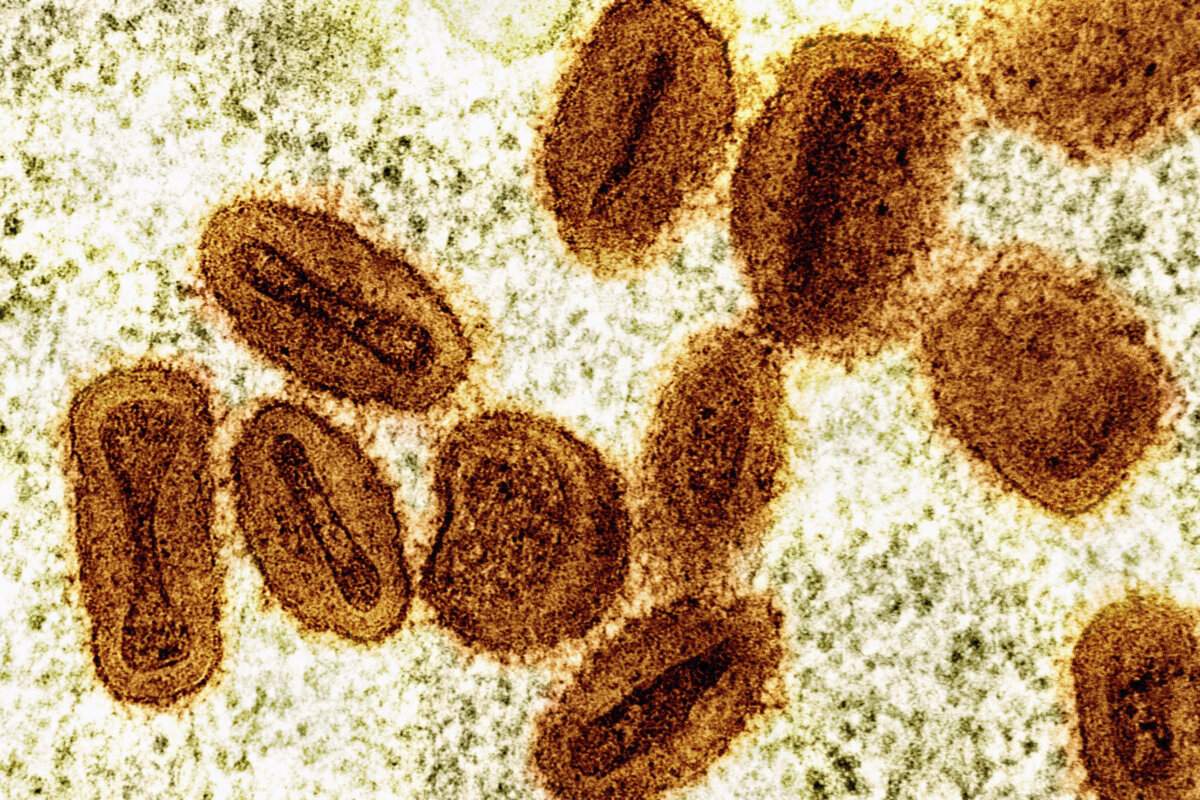
Two National Institutes of Health (NIH) researchers were charged on June 2 with conspiracy to smuggle monkeypox into the United States and making false statements to federal law enforcement, the latest in a documented pattern of China-linked biological smuggling attempts stretching back to at least 2018.
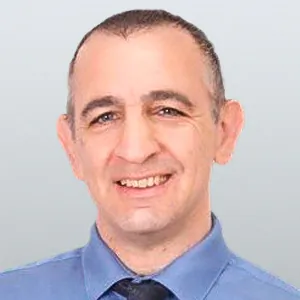
Vincent Munster, 53, a Dutch national and chief of the Virus Ecology Section at the NIH’s Rocky Mountain Laboratory in Hamilton, Montana, and Claude Kwe, 38, a Cameroonian research fellow in his section, arrived at Detroit Metropolitan Airport on Jan. 25, returning from Brazzaville, Republic of Congo, where an mpox outbreak was ongoing. When Customs and Border Protection (CBP) officers questioned them about a large black plastic case, they said it contained diagnostic and testing equipment. Inspection revealed 113 vials in Styrofoam coolers.
FBI testing of 20 of those vials found that 17 contained deactivated mpox, one contained chickenpox, and two contained only human DNA. Munster told investigators that any necessary documents were in his laptop.
“But you don’t need them,” he told the investigators. “I do this all the time.”
Neither researcher possessed the paperwork required by law to transport the pathogens from Africa. Mpox is regulated under 42 CFR Part 73 as a “select agent” posing a severe threat to public safety.
While Munster is Dutch and Kwe Cameroonian, Munster’s research ties to China’s Wuhan Institute of Virology (WIV) and its affiliated network are documented in congressional records.
Sen. Rand Paul’s (R-Ky.) April 2024 letters to 15 federal agencies revealed that Munster was listed as a partner in the DEFUSE proposal, the EcoHealth Alliance grant to DARPA that proposed engineering chimeric bat coronaviruses with furin cleavage sites, with the WIV as a named partner. Paul said that the disclosure “appears to contradict” prior testimony by Dr. Anthony Fauci that the NIH was unaware of the proposal.
Munster also co-authored a January 2020 NEJM article on “a novel coronavirus emerging in China” that made no mention of the Wuhan lab or gain-of-function research conducted there.
In 2021, Munster told Nature that there was nothing suspicious about a novel coronavirus appearing in the same city as a lab conducting coronavirus research.
“Nine out of ten times, when there’s a new outbreak, you’ll find a lab that will be working on these kinds of viruses nearby,” he said.
The Chinese Communist Party’s (CCP) ties to the WIV are a matter of public record. The WIV operates under the Chinese Academy of Sciences, a State Council institution under direct central government authority. A House Foreign Affairs Committee report documented that WIV Director General Wang Yanyi joined a CCP-controlled minority party in 2010 and, in 2018, the same year she became director general, was elected deputy director of the Wuhan Municipal Party Committee.
Until early 2020, the BSL-4 laboratory was managed by Yuan Zhiming, who served as president of the CCP Committee within the Wuhan Branch of the Chinese Academy of Sciences. According to the report, local CCP officials ran the WIV itself and directly managed the BSL-4 laboratory.
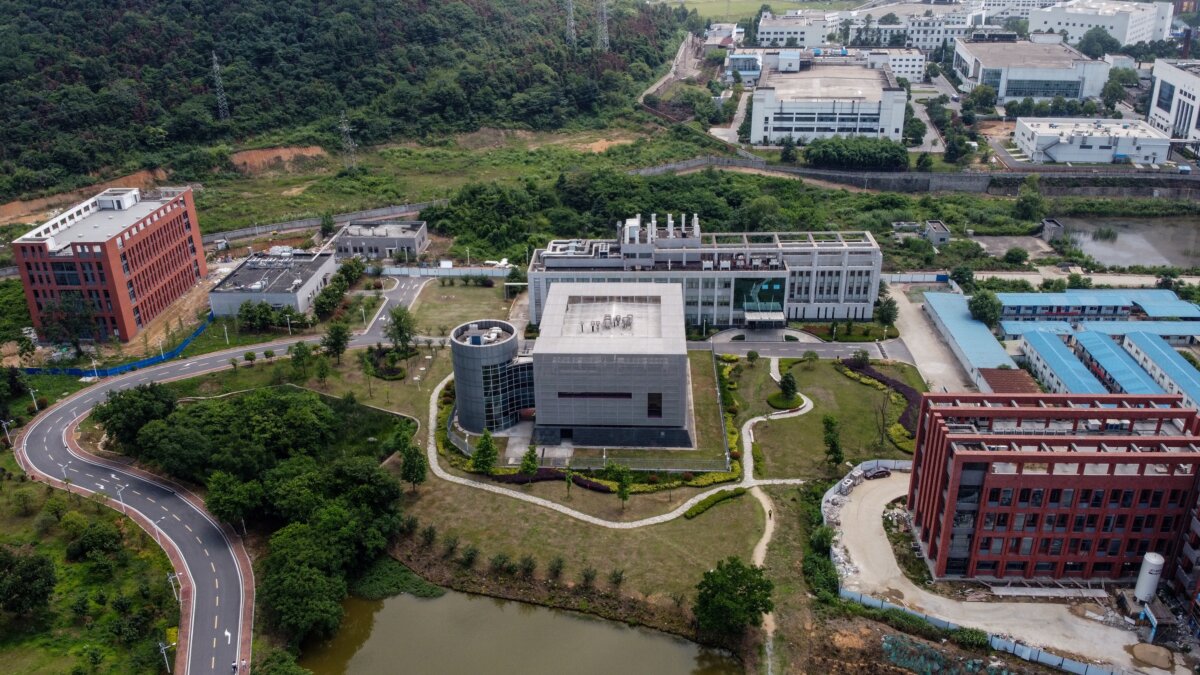
The U.S. State Department determined that the WIV collaborated on publications and classified projects with China’s military and has engaged in classified research, including laboratory animal experiments, on behalf of the People’s Liberation Army (PLA) since at least 2017. Declassified State Department cables obtained by U.S. Right to Know cited “cyber evidence” of “PLA shadow labs at WIV,” PLA involvement in the lab’s construction, and “WIV personnel with possible PLA ties,” alongside a separate cable that addressed Beijing’s military-civil fusion policy as applied to biotech.
The House Permanent Select Committee on Intelligence found that the PLA’s Academy of Military Medical Sciences (AMMS) collaborated with WIV scientists. The Fifth Institute of AMMS, which China has publicly acknowledged as part of its defensive biological weapons program, maintained ties to WIV. The State Department assessed in 2005 that China operates an offensive biological weapons program, identifying the Fifth Institute as likely involved.
The committee’s 2022 unclassified report concluded that there are indications that SARS-CoV-2 may have been tied to China’s biological weapons research program and faulted the Intelligence Community for omitting from declassified reports key information about the relationship between the PLA’s Fifth Institute and the WIV.
The Munster–Kwe case is the latest in a series of China-linked biological smuggling incidents into the United States, most of them intercepted at Detroit Metropolitan Airport. The FBI’s Chemical and Biological Intelligence Unit documented at least three such attempts in 2018 and 2019, all of which were stopped by CBP at Detroit Metro.
In 2024 and 2025, federal prosecutors charged five Chinese nationals in separate cases. These included Youhuang Xiang, a former Indiana University researcher who smuggled E. coli DNA concealed in a package labeled as women’s underwear; Liu Zunyong and Jian Yunqing, who smuggled Fusarium graminearum, a fungus classified in scientific literature as a potential agroterrorism weapon, through Detroit Metro; and Han Chengxuan, a Wuhan doctoral student who mailed four packages of biological material to associates at the University of Michigan. Jian was a documented CCP member.
Congressional committees subsequently requested records relating to $9.6 million in NIH and National Science Foundation grants awarded to professors who supervised the charged individuals. U.S. Attorney Jerome Gorgon Jr., who prosecuted the initial Michigan cases and now the Munster–Kwe case, identified the former incidents as part of an “alarming pattern that threatens our security.”
“The American taxpayer should not be underwriting a PRC-based smuggling operation at one of our crucial public institutions,” he said.
Views expressed in this article are the opinions of the author and do not necessarily reflect the views of The Epoch Times.
 Friends Read Free
Copy
Facebook
Tweet
Friends Read Free
Copy
Facebook
Tweet