
Commentary
On Dec. 22, President Donald Trump announced plans to design and build a new class of large surface combatants—dubbed the “Trump-class battleships.”
These ships would serve as the centerpiece of his “Golden Fleet” initiative. Initial plans call for two ships (with the lead vessel named USS Defiant, displacing approximately 35,000 to 40,000 tons), with the potential to scale up to 20 to 25 vessels.
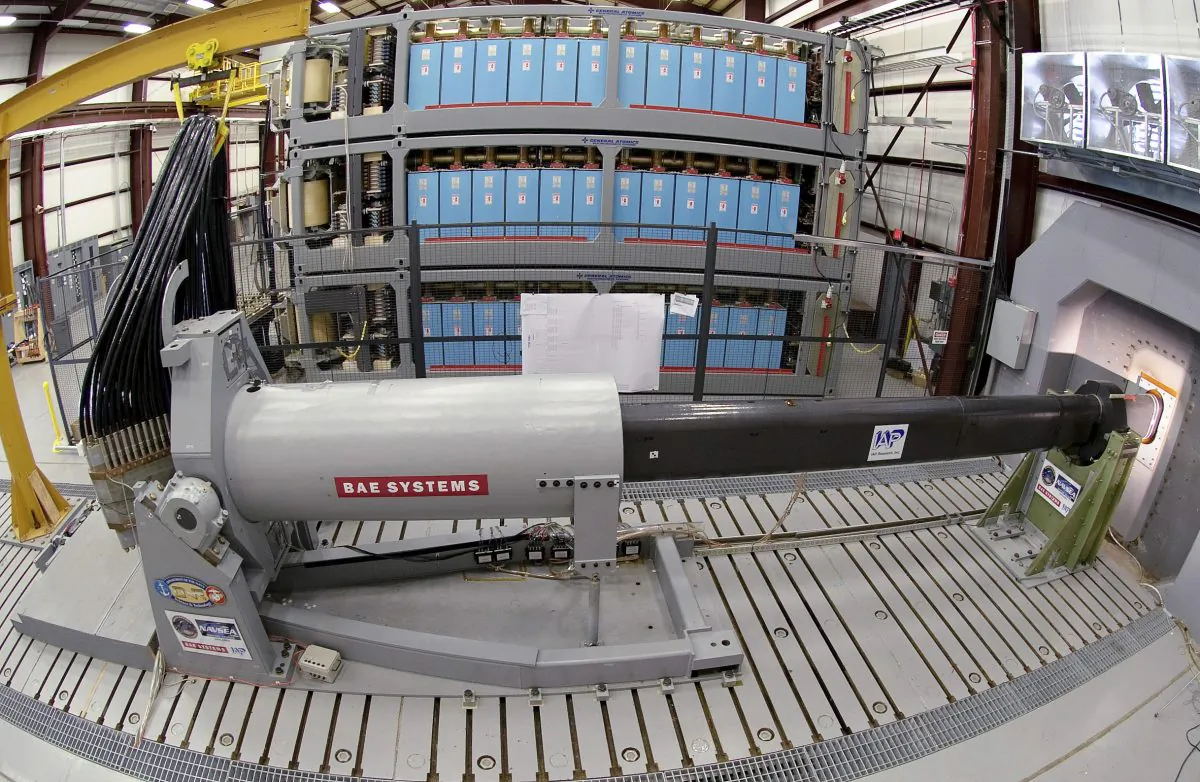
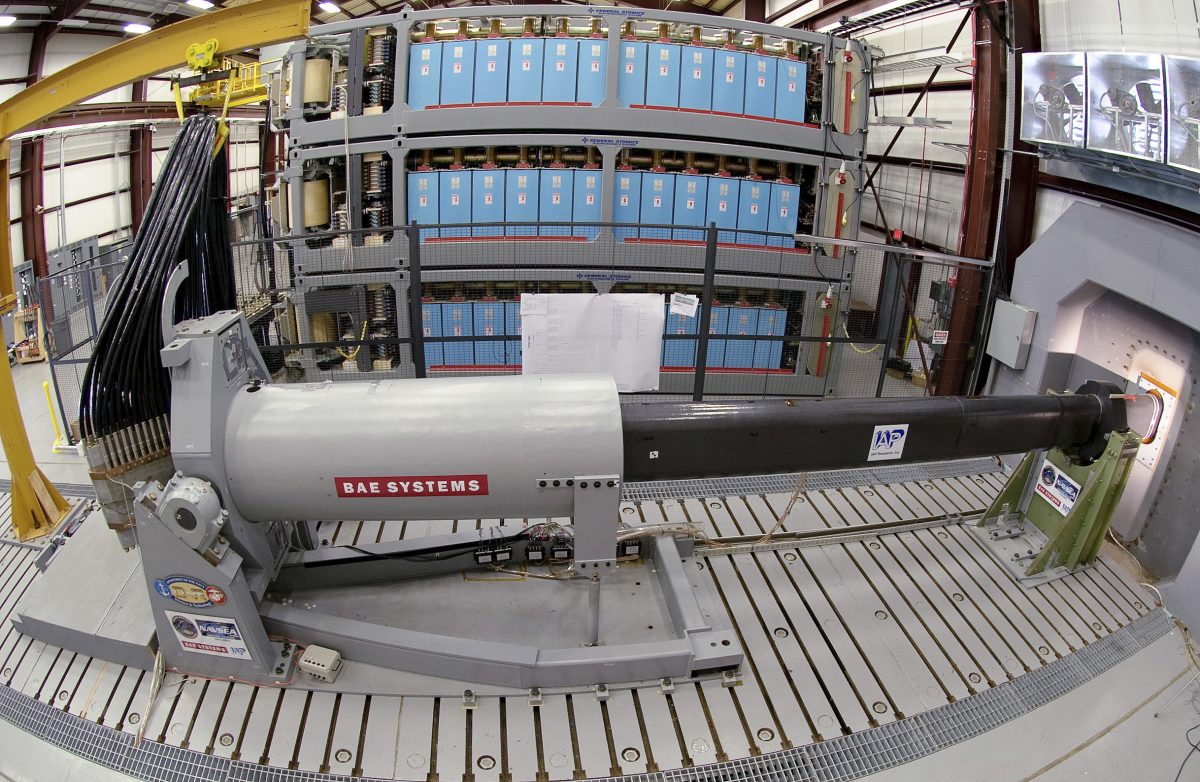
Renderings and U.S. Navy statements highlight advanced armaments: hypersonic missiles, nuclear-capable cruise missiles, directed-energy lasers, and—explicitly—a 32 megajoule (MJ) electromagnetic railgun as the ship’s primary weapon.
Railguns Sound Impressive, but …
Railguns promise muzzle velocities exceeding Mach 7 and ranges of more than 100 nautical miles using inexpensive kinetic projectiles. While this may sound promising, efforts to incorporate railguns into the Trump-class would likely delay construction and deployment indefinitely.
Even if the long-standing technical challenges were somehow overcome, a railgun would significantly diminish the ship’s overall lethality compared with mature, conventional options available today.
The Navy Has Already Tried
Between 2005 and 2021, the Navy spent more than $500 million attempting to develop an operational railgun. The program was canceled in 2021 after failing to produce a viable system.
Why the Railgun Program Failed
The railgun faced several insurmountable scientific and engineering hurdles:
- Massive electromagnetic forces quickly eroded the guns’ rails, limiting their lifespan to mere dozens of full-power shots.
- Acceleration exceeding 40,000 g destroyed on-board guidance systems.
- Gigawatt-scale power requirements demanded enormous capacitor banks, which degraded quickly and consumed impractical amounts of space and cooling.
- Repetitive firing rates were never achieved.
- Integration on power-constrained ships proved impossible.
- Hypersonic drag reduced terminal effectiveness, making kinetic-only rounds less destructive than conventional explosive shells.
By 2021, the Navy redirected funding to hypersonics and lasers, implicitly acknowledging that railguns were not the future.
Have Other Nations Succeeded?
China, Japan, and India continue exploring railgun technology, but none has produced a viable naval railgun. Some engineering advances have been made, but the core scientific challenges remain.
Comparative Performance: Railguns Versus Conventional Naval Guns
Even assuming the railgun’s technical hurdles were solved, its performance per ton of displacement is vastly inferior to existing alternatives.
- A modern Mk 45 5-inch naval gun mount weighs only 25 to 30 tons and delivers high rates of fire with explosive payloads.
- A 1940s-era Mk 7 16-inch gun, as found on Iowa-class battleships, weighed about 575 tons (including heavy armor and below-deck systems). It delivered 410 to 470 MJ of destructive energy per shot.
- By contrast, a 32 MJ railgun delivers approximately 20 MJ of retained kinetic energy after atmospheric drag, with no explosive payload.
Even if a railgun tripled the firing rate of a 16-inch gun, its total destructive power would remain dramatically lower because of the lack of explosive munitions and limited penetrating power.
Size and Weight: A Design Liability
The unarmored turret and railgun barrel (including rails, containment, and controls) weigh between 60 and 80 tons. Below-deck systems—power supply, capacitors, cooling, and ammunition handling—add another 300 to 400 tons.
By comparison:
- An Mk 45 mount totals roughly 30 tons.
- An Iowa-class triple turret averaged roughly 575 tons but delivered vastly superior firepower.
Range and Targeting Limitations
Despite claims of 100-plus-mile ranges, railgun projectiles lose energy rapidly because of drag. Worse still, they perform poorly at mid-range distances (five to 20 miles).
- Flat trajectories overshoot close-in targets.
- High-arching trajectories take several minutes to arrive, allowing adversaries to maneuver.
- Current railgun designs lack guidance systems that can survive launch conditions.
Conventional guns can fire both sub-caliber guided and explosive rounds with greater precision and retained energy at similar ranges.
Strategic Recommendation: Avoid the Railgun Trap
This is not necessarily an argument for reviving big-caliber guns. Rather, it is a call to avoid the illusion that railguns are a revolutionary leap forward.
Absent a scientific breakthrough, railguns remain impractical. Even with such a breakthrough, the system’s size and weight would severely reduce the ship’s effectiveness compared with a mix of small, medium, and large conventional guns—alongside newer technologies such as advanced light-gas guns.
Rather than waste billions of dollars chasing uncertain railgun technology, the Trump-class should prioritize mature systems capable of supporting missile defense, anti-drone swarms, shore bombardment, and surface warfare.
Doing so would greatly increase the likelihood of these ships being built, deployed, and delivering tangible battlefield advantages.
Views expressed in this article are the opinions of the author and do not necessarily reflect the views of The Epoch Times.
 Friends Read Free
Copy
Facebook
Tweet
Friends Read Free
Copy
Facebook
Tweet