Commentary
Sometime Tuesday morning, we realized Benjamin was missing.
Benjamin didn’t really run anymore. He used to, but those days were long behind him. He was old now and spent most of his time moving between the milking barn, the restaurant patio, and whichever piece of farm equipment his two favorite farmworkers, Miguel and Jonny, were driving.
So when we couldn’t find him, we started looking everywhere.
We opened tiny houses. We checked the walk-in coolers. We searched around the pig pens, barns, restaurant, and vehicles. We looked in places that made no sense simply because we had run out of places that did.
Benjamin came into our lives years ago in California.
His name was Bain, like “bane of my existence,” which I didn’t think was a particularly good name for a dog. So we changed it to Benjamin.
During the San Bernardino fires, I received a call from a dog rescue called Bella Vita. The local pound was overwhelmed. There were dozens of black dogs that needed to be removed to make room for animals belonging to families displaced by the fires. Dogs that weren’t picked up were at risk of being euthanized.
At the time, I was still deeply embedded in the vegan community, and calls for foster homes went out everywhere. My husband and I took Bain and another black German Shepherd mix.
It didn’t take long for my husband to decide Bain wasn’t a foster dog. He was our dog. And soon he was Benjamin.
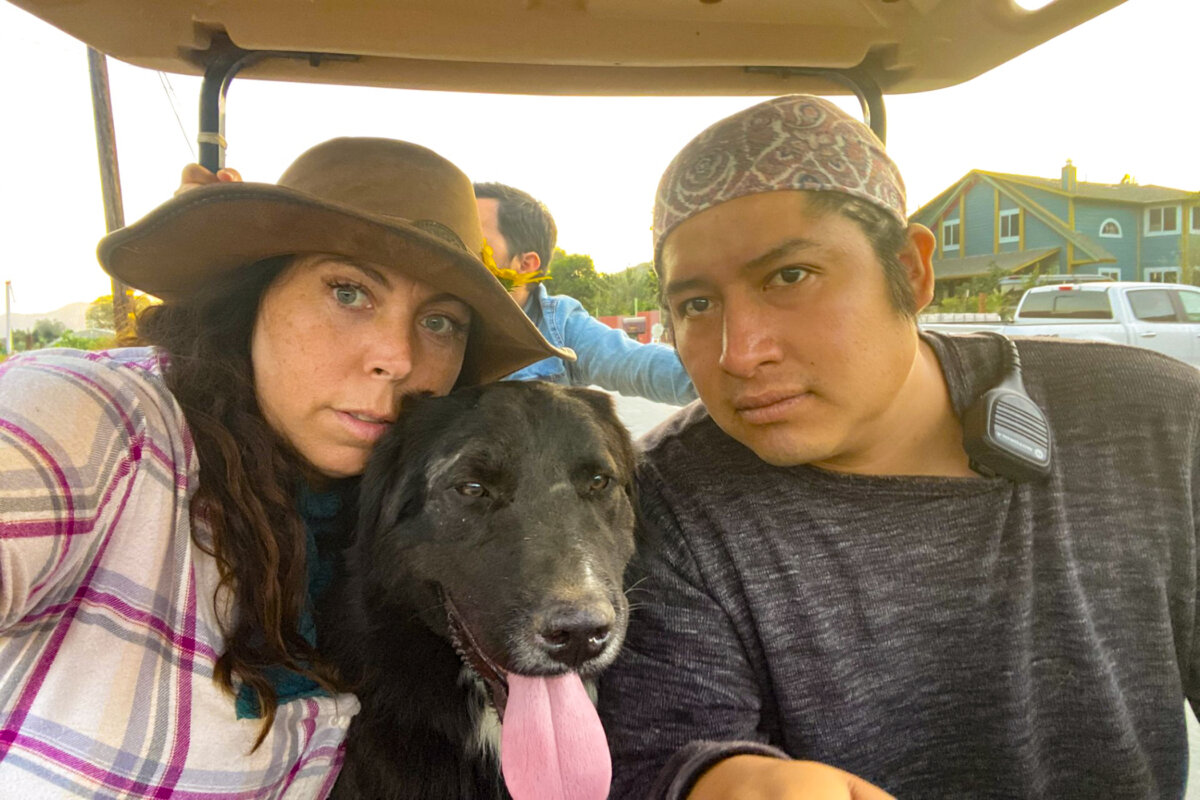
Benjamin adored my husband. He generally preferred men to women and had permanently sad-looking eyes. He loved having his head scratched and would make a low growling sound that could make a stranger think he might bite them. It actually meant he was extremely happy.
Eventually, Benjamin became a farm dog. He wasn’t always an easy one. At one point in California, he killed a neighbor’s cat rather viciously. The neighbors threatened to shoot him, so Benjamin moved to Texas ahead of us, where my uncle and our caretakers watched him until we arrived.
By the time he became an old Texas ranch dog, his days of running away and killing cats were behind him.
He had settled into his routines. Most mornings, he waited around the milking barn because he knew he would get the first milk we didn’t put into the machine. He followed Miguel and Jonny around the ranch and rode with them on tractors, mowers, Mules, and whatever other equipment they happened to be using.
Monday evening, we came home from Costco with a van full of groceries. We were unloading everything into the walk-in cooler at the restaurant, and Miguel drove his little car down from his RV to help us. He rarely used the car except on his days off.
Somewhere along the way, Benjamin climbed into Miguel’s car with Miguel and Jonny.
After helping us unload, the two men drove back toward their RV, stopping at the bunkhouse to visit with some of the other farmworkers along the way.
Benjamin was lying quietly on the floorboards behind them.
Neither man noticed him when they got out.
The next morning, we realized Benjamin was gone. I had no idea he had ever been in Miguel’s car, so it never occurred to me to look there.
Tuesday afternoon, Miguel went to his car to get something.
Benjamin was dead inside.
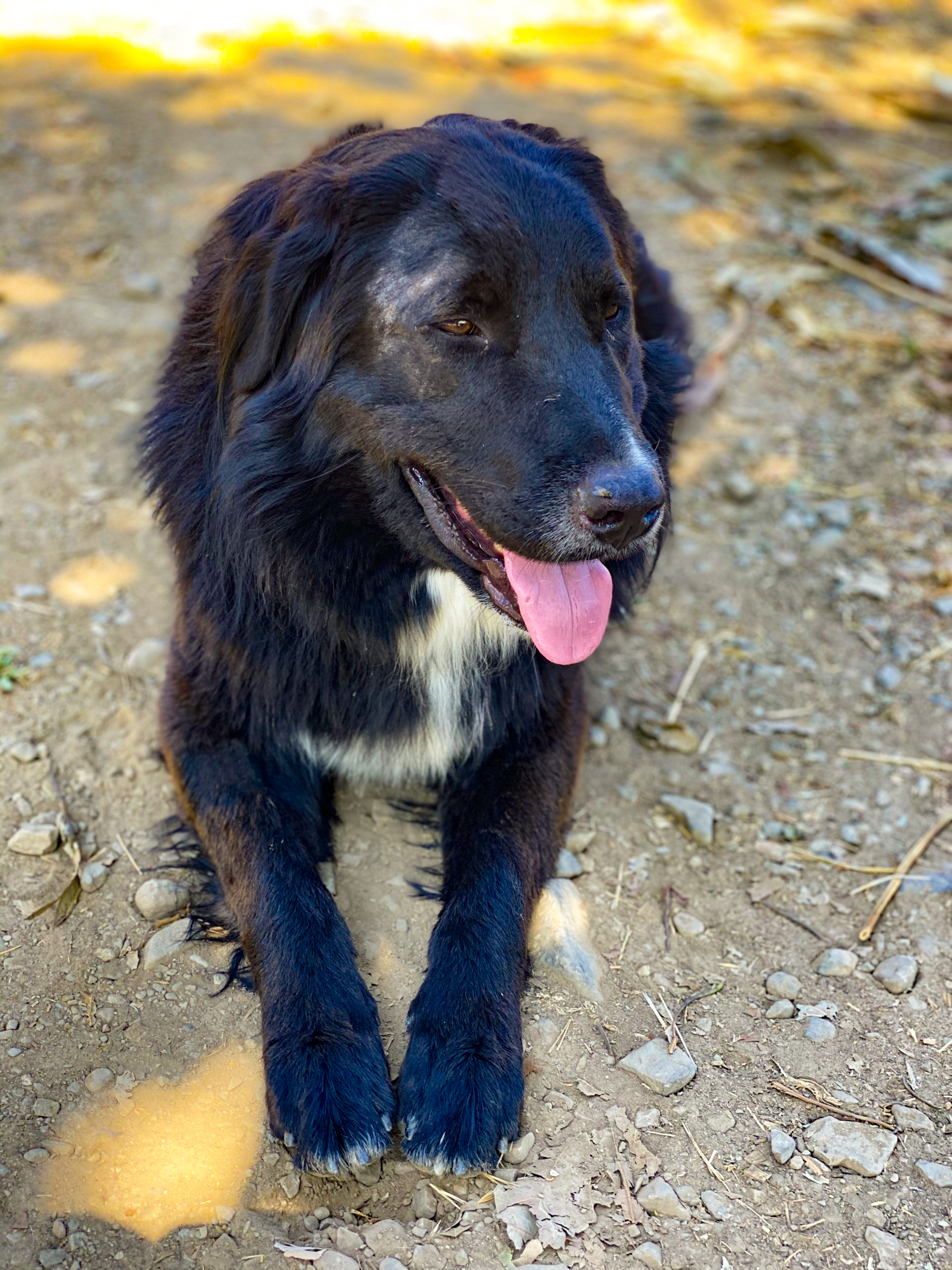 Mollie Engelhart and her family’s dog, Benjamin, died of hyperthermia. (Courtesy of Mollie Engelhart)
My husband called me.
I could hear Miguel talking in Spanish in the background while my husband translated what he was saying to me. I happened to be standing with Jonny, so as my husband told me what had happened, I translated it back into Spanish for him.
I watched the sadness come across Jonny’s face.
And then the guilt.
“Monday. Costco.”
In that moment, he remembered. He and Miguel had both been in the car with Benjamin. They had driven back together on Monday night. They had gotten out.
And neither had noticed that Benjamin hadn’t.
He had died of heat exposure.
It was horrifying precisely because it was so avoidable.
Miguel and Jonny were devastated. Both were concerned we would fire them. My husband didn’t even raise his voice. There was nothing he could say that could make either man feel worse than he already did.
Later, Miguel put on a mask, got the tractor, lifted Benjamin’s bloated body into the excavator bucket, and carried him out to be buried beneath the pecan trees.
It was a perfect, beautiful evening.
There was sadness across the entire farm. Miguel didn’t eat dinner that night. He didn’t eat breakfast the next morning. He was riddled with guilt over accidentally killing his friend. Jonny carried the same sadness and responsibility.
It would be easy to tell this story as one about blame. Someone should have checked. Someone should have noticed. Someone was responsible.
All of those things are true.
But I keep thinking about something else: one unconscious moment.
How many times have I had one? How many times have I driven away and suddenly wondered whether I shut a gate? How many times have I looked down at my phone when I should have been watching where I was going? How many times have I been thinking about work while one of my children was doing something that required my attention?
How many potentially terrible stories in my life became nothing more than “Oh my goodness, that could have been bad” because fate intervened?
We live in an extraordinarily distracting time. Our bodies can be standing beside the people we love while our minds are hundreds or thousands of miles away. We carry devices specifically engineered to interrupt us. Something is always demanding our attention, and increasingly the thing demanding it isn’t actually in front of us.
Benjamin was.
He was right there on the floor of the car.
There is responsibility in this story. But responsibility and condemnation are not the same thing.
Miguel and Jonny loved that dog. Punishing them cannot bring Benjamin back. I imagine both of them will check the back seat of a car for the rest of their lives without anyone ever reminding them.
I am sharing this so the rest of us can check, too.
Check the back seat. Check the gate. Look behind the tractor before backing up. Put down the phone. Look at your children. Notice the animal asleep at your feet. Be where your body is.
Some unconscious moments become funny stories because someone catches the mistake in time. Some disappear completely because we simply get lucky.
And occasionally, an ordinary moment of inattention ends with a grave beneath the pecan trees.
Benjamin’s death cannot be undone. But perhaps telling the truth about how easily it happened can keep one unconscious moment from becoming someone else’s tragedy.
Views expressed in this article are the opinions of the author and do not necessarily reflect the views of The Epoch Times.
 Friends Read Free
Copy
Facebook
Tweet
Friends Read Free
Copy
Facebook
Tweet