
Commentary
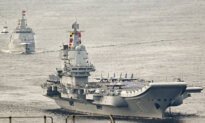
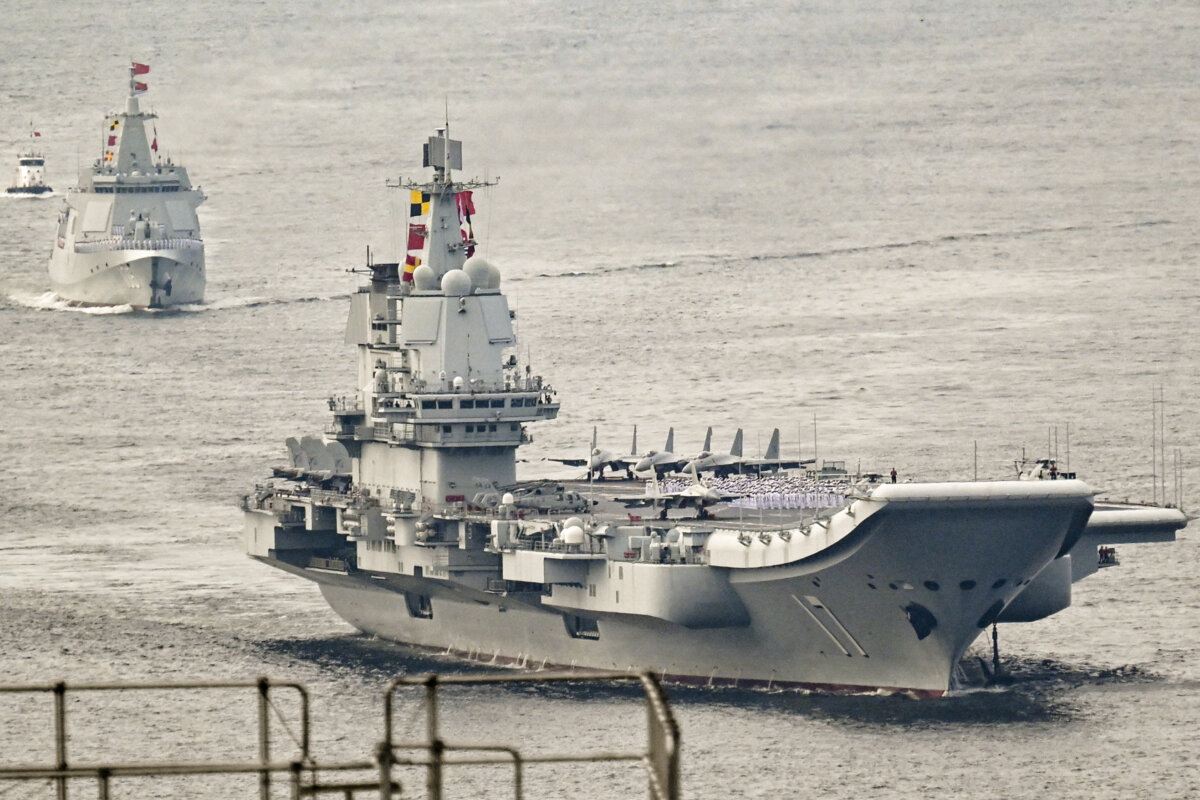
China’s third and newest aircraft carrier sailed through the Taiwan Strait recently, reinforcing concerns about the Chinese regime’s military buildup and intentions regarding Taiwan. Such moves by China highlight the urgency of the debate about Taiwan’s ability to defend itself and the U.S. commitment to its defense. The outcome of this debate will have repercussions around the world and for the rest of the century.
In looking at Chinese Communist Party (CCP) discussions, government messaging, and the details of China’s military buildup, it has become clear to the Taiwanese that the Chinese regime’s economic and political actions over the past two decades can be summed up as a methodical, long-term preparation for taking Taiwan.
In addition to aircraft carriers, the Chinese have been building amphibious landing craft and portable port facilities to successfully carry out an invasion. They have been making their economy more self-sufficient through the acquisition of key resources and technology. At the same time, they have worked hard to make themselves indispensable to the rest of the world through their near-monopoly over rare earth minerals and their formidable industrial capacity. Finally, they have been engaging in an intensive propaganda campaign in Taiwan to create a sense of the inevitability of occupation by China.
In meetings with Taiwanese foreign policy experts during my recent visit, virtually all of them said they anticipate an invasion or other aggressive action in the next one to three years. By recently playing its rare earth minerals card and alerting the world to the danger of its monopoly, China has set itself a window of approximately five years for military action until the world is able to find substitutes for Chinese suppliers.
The differences of opinion in Taiwan concern the way in which it should react to this situation. The current government, led by President William Lai of the Democratic Progressive Party, is working hard to prepare Taiwan’s military for an invasion. Although it recognizes that Taiwan will depend on using asymmetric weapons such as mines and drones to counter an invasion, it also understands that ships and plans are necessary right now in order to challenge Chinese incursions into Taiwanese waters and airspace.
However, the Kuomintang (KMT), which dominates the legislature, has proposed trying to find accommodations with the CCP in order to forestall or prevent an invasion. However, these voices recognize that such a strategy would, over the long term, still lead eventually either to a delayed invasion or to a coerced surrendering of Taiwan.
The KMT, having been a vociferously anti-communist party for most of the 20th century, has surprisingly changed its position in this century to become a crucial partner for the CCP. The KMT suggests that Taiwan should cooperate more with China, particularly on economic issues, and that a more conciliatory approach would be best for Taiwan’s economy. Since losing elections 20 years ago and becoming an opposition party after decades in power, the KMT has been using this economic message as a way to gain back votes.
Unfortunately, this approach is dangerous. Increasing economic dependence on China could turn Taiwan into the next Hong Kong, in which tight economic ties have led to political subjugation and the elimination of liberal democratic freedoms. Through its dominance in the legislature, the KMT has been opposing President Lai’s efforts and thereby hampering Taiwan’s project of increasing and revamping its military forces.
Militarily, politically, and economically, Taiwan is the key first step for the CCP to realize its stated goal of dominating the world. Chinese occupation of Taiwan would destroy the center of the first island chain, extending from South Korea and Japan to the Philippines, that restricts China’s ability to project its growing military power across the world. It would also encourage newly threatened countries to begin to ally more with China in their political orientation for economic development.
Aside from providing China with control over the Taiwanese semiconductor industry, which currently produces 90 percent of the world’s supply of the most advanced artificial intelligence chips, the Chinese takeover of Taiwan would also deprive the world of one of the key political antagonists to the CCP’s ambitions. Its deep understanding of China’s politics, economy, and culture makes Taiwan a crucial ally for all those countries seeking to protect their own sovereignty. The existence of Taiwan also poses a fundamental propaganda threat to the CCP’s model of authoritarian capitalism, and in this way underlines the urgency for the Chinese regime to subjugate it.
As the CCP understands, the most effective way of countering Chinese imperialism will be to preserve an independent Taiwan.
Views expressed in this article are the opinions of the author and do not necessarily reflect the views of The Epoch Times.
 Friends Read Free
Copy
Facebook
Tweet
Friends Read Free
Copy
Facebook
Tweet