
Commentary
Russia’s war is devastating Ukraine while Chinese components, technology, and supply chains help sustain Moscow’s missile, drone, and weapons production.
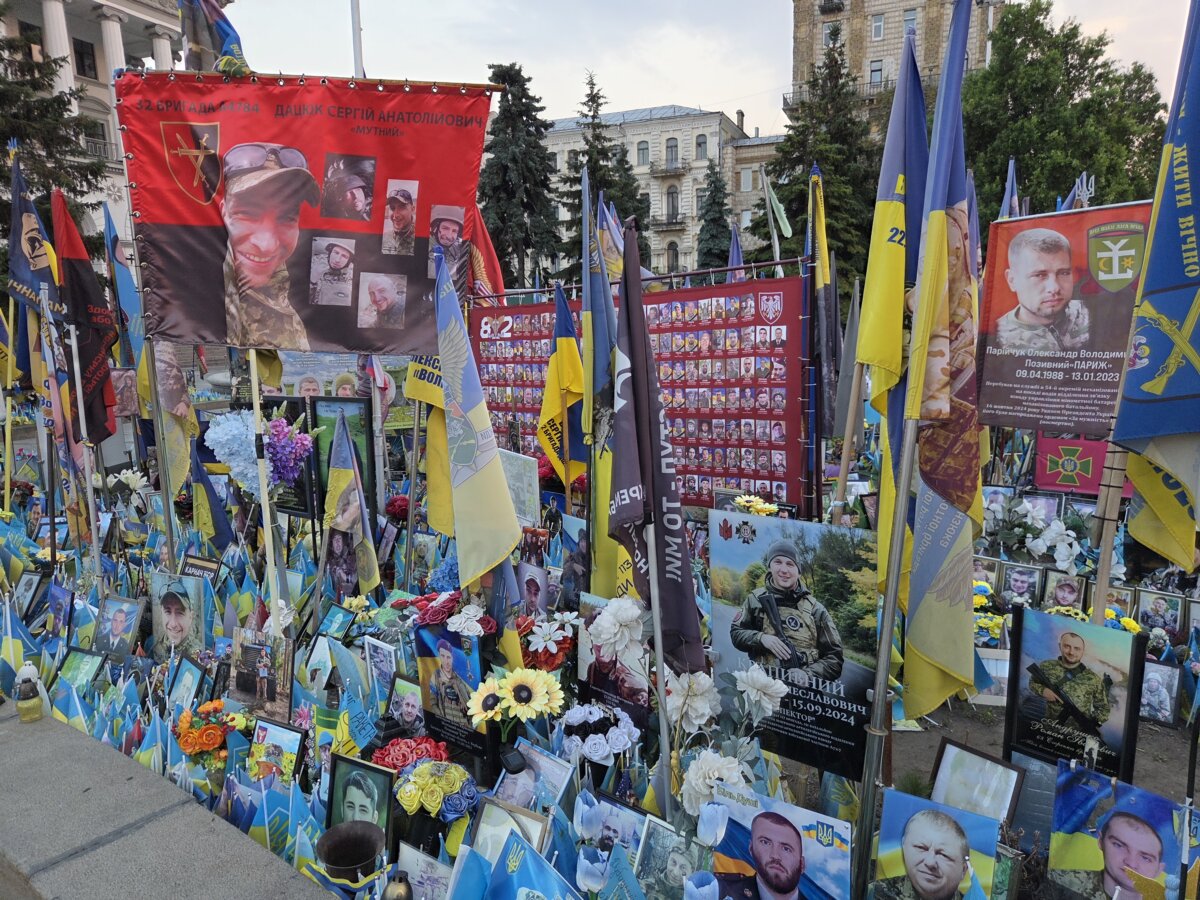
Crossing central Kyiv’s Independence Square (Maidan Nezalezhnosti) on the way to the grocery store, I noticed that the memorial commemorating the war dead has grown just during the month that I have been in the country.
The memorial began spontaneously after Russia’s full-scale invasion in February 2022, as families of fallen soldiers started placing small Ukrainian flags, photos, and personal mementos on the square to honor their dead. There was no official plan behind it. It developed organically from individual acts of grief into an ever-expanding field of flags and portraits that has continued to grow as the war grinds on and as casualties have mounted.
Memorials include photos of the dead, proud, positive, strong faces of men who sacrificed their lives in the service of their country. The dates of birth and death tell a horrific tale of boys barely old enough to be soldiers, whose lives ended at age 20, and at the other end of the spectrum, men in their late fifties who walked away from their careers and their homes to step back into uniform to ensure that the families they created will continue to live and grow in a country free of Russian oppression.
Now they are all dead, and the 20-year-olds will never be 57 or have the experience of raising children, and the 57-year-olds will never retire and play with their grandchildren.
I myself had been a Cold War soldier, conditioned to hate the Russians, trained in Russian threat weapons school, and learned Russian language, literature, history, and culture to better understand who we were fighting and why.
Sitting in a coffee shop in Kyiv on my first day in the country, I had the wonderfully therapeutic experience of meeting a man my own age who had been a Ukrainian in the Soviet Army, on the other side of that war. He said that he believed everything “they” told him and that America and the West were the enemy, just as I had felt about the Russians.
However, even before the Soviet Union collapsed, he realized how misguided the policies were and, like any natural human, he craved freedom for himself, his family, and his country.
More than 25 years since the end of the Cold War, we found ourselves on the same side, facing the Russians again.
We embraced and praised God for the opportunity to meet and recognize that we had a common adversary in Russia, which was attacking Ukraine and threatening Europe, and in China, which was providing components, materials, financing, and possibly weapons to Russia.
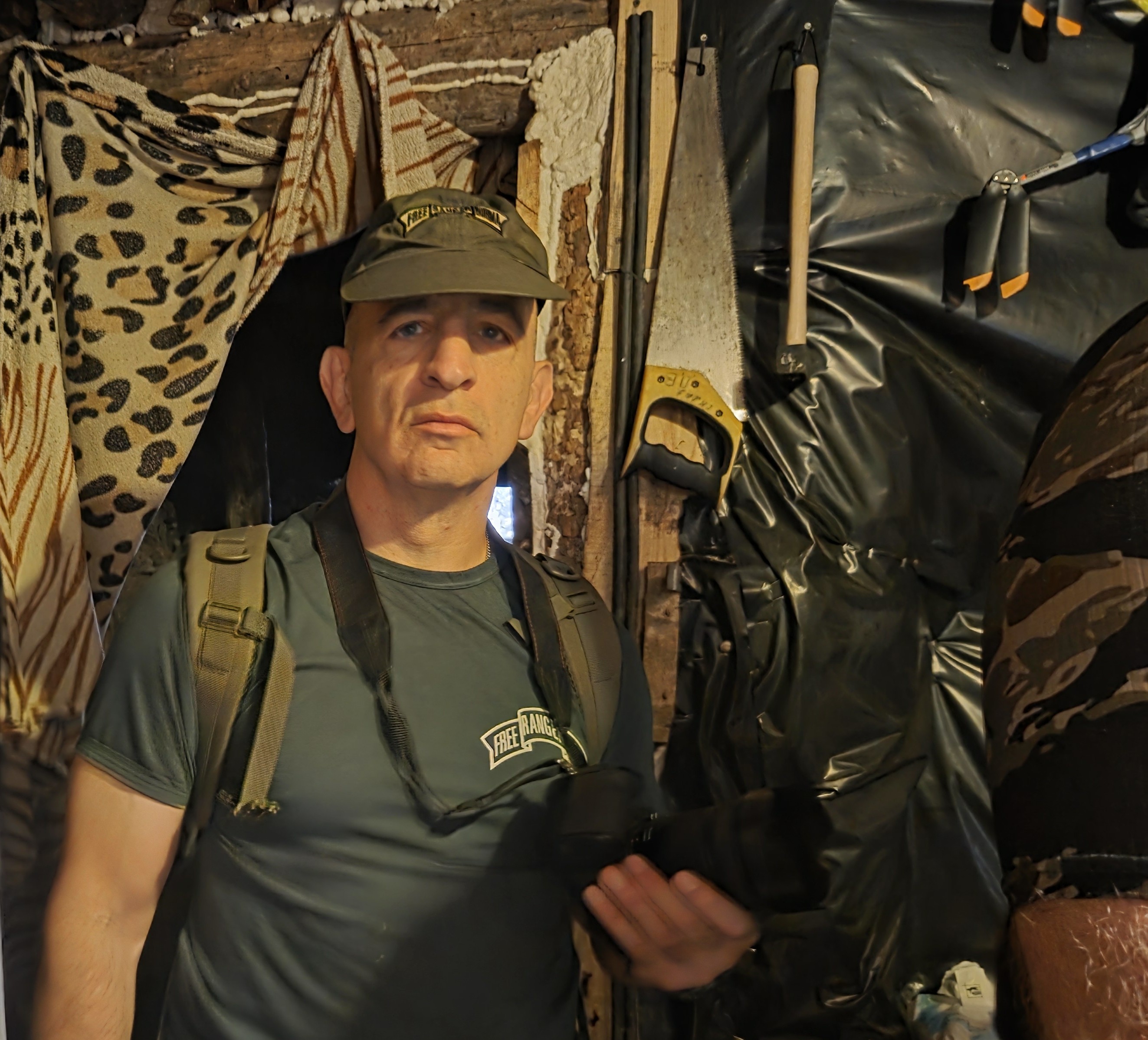 Antonio Graceffo reporting from Ukraine. (Courtesy of Antonio Graceffo)
At that moment, the air raid alarm went off across the city, bringing me back to the reality that I was standing in the central square, out in the open and exposed to a missile attack if one should come. Over the preceding few days, there had been an unusually large number of strikes on the capital.
On Aug. 20, a large-scale overnight barrage on Kyiv using scores of missiles and drones over several hours killed 17 people and injured over 40. The strikes caused widespread damage to residential buildings, a hospital, and a school.
Two days later, on Aug. 22, Russia struck Kyiv and its suburbs with ballistic missiles, one of which hit a railway facility.
Hours later, in daylight, six to eight ballistic missiles struck the Boryspil area, home to Ukraine’s main international airport. The strikes hit a truck depot, warehouses, a fuel station, and a private household. A man and a woman were killed, and eight people were wounded, including a child.
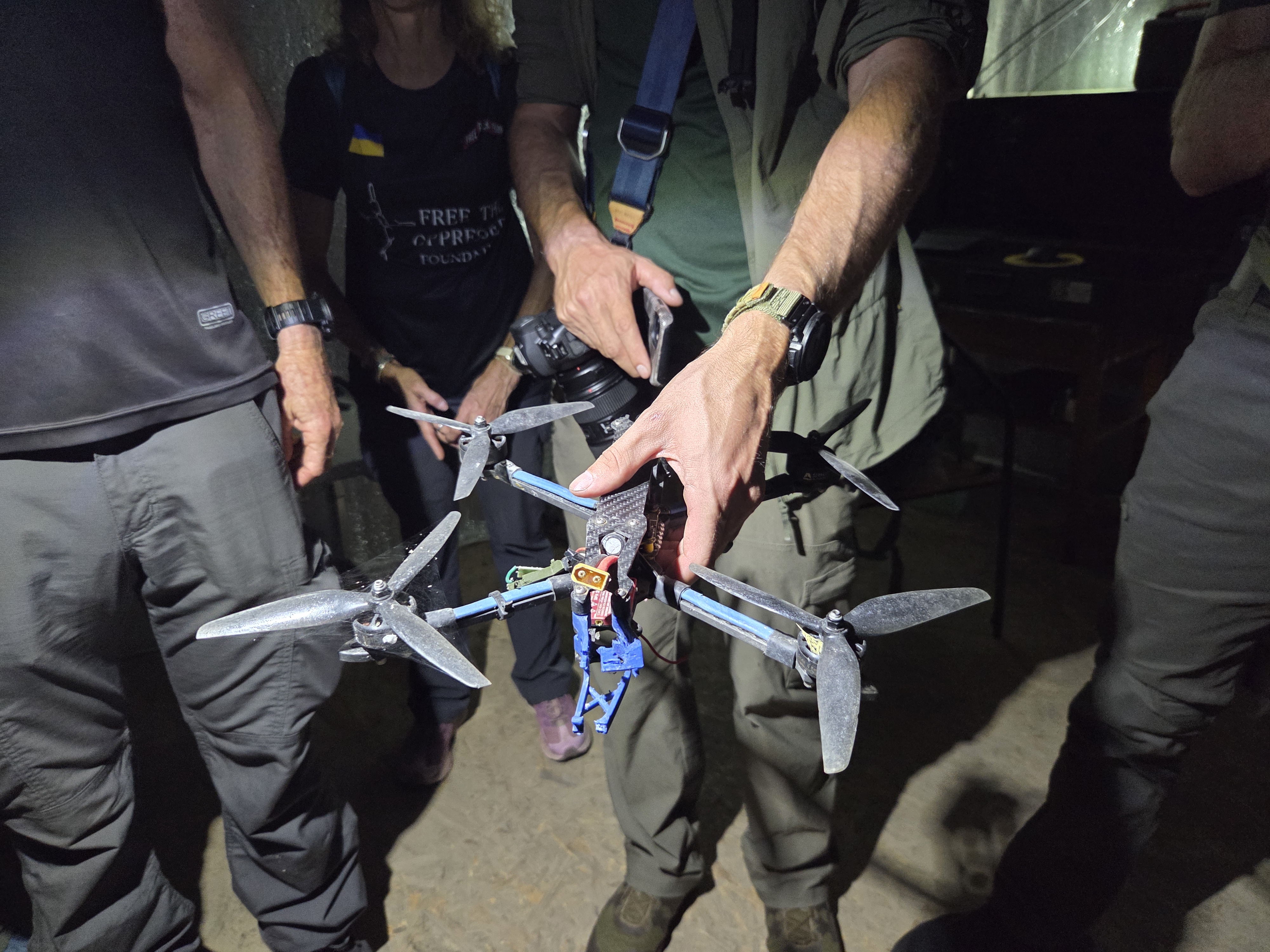 Modern warfare relies increasingly on drones, with much of the technology for Russian weapons coming from China. (Courtesy of Antonio Graceffo)
It was Aug. 24, Ukraine’s Independence Day, and Ukraine’s Security Service, the SBU, the country’s principal domestic security and counterintelligence agency, had repeatedly warned citizens that Russia might exploit mass gatherings and public attention for strikes, sabotage, provocations, or cyberattacks.
The missile attacks, which come daily, have caused Ukrainians to react in one of two ways. Some families now sleep every night inside bomb shelters rather than waiting for an attack, waking up the children, and running to shelter. This is the only way they can get a full night’s sleep. Much of the population, however, has gone in the opposite direction, ignoring the alarms completely because it is the only way to live a normal life.
When I heard the alarm, I thought about diving into a nearby shelter but realized that I needed milk, butter, and noodles, so I just proceeded to the grocery store. People in a nearby café continued to sip their coffee, and pedestrians seemed in no particular hurry as they went about their business.
Some chain stores are required to evacuate and lock their doors during an attack, but many, if not most, businesses remain open.
This acceptance of the risk, however, does not mean that the threat is not real.
When the reports came in the next morning, although Kyiv’s city center had not been struck directly that day, the nationwide attack Russia launched on Independence Day included two Oniks anti-ship missiles, six Kh-31P and Kh-59 guided air-launched missiles, and 143 drones, according to Ukraine’s Air Force.
In Chernihiv, a city in northern Ukraine about 85 miles north of Kyiv, a Russian drone, preliminarily identified as a Geran-5, struck a nine-story residential building in the city center. At least 20 people were injured, including two children, aged 12 and 17. A 17-year-old girl and an older woman were hospitalized, with the woman in serious condition.
Nationwide, the 24-hour barrage left eight people dead and 43 injured.
A day earlier, on Aug. 23, an attack on the outskirts of Kharkiv killed three people, while a drone hit a Mondelez International factory in Trostianets, Sumy Oblast, injuring five workers, with no fatalities.
On the night of Aug. 22–23, a drone strike on Kharkiv’s Osnovianskyi district wounded seven people, including a 15-year-old.
On Aug. 22, the Darnytsia and Boryspil strikes near Kyiv killed three people and injured eight.
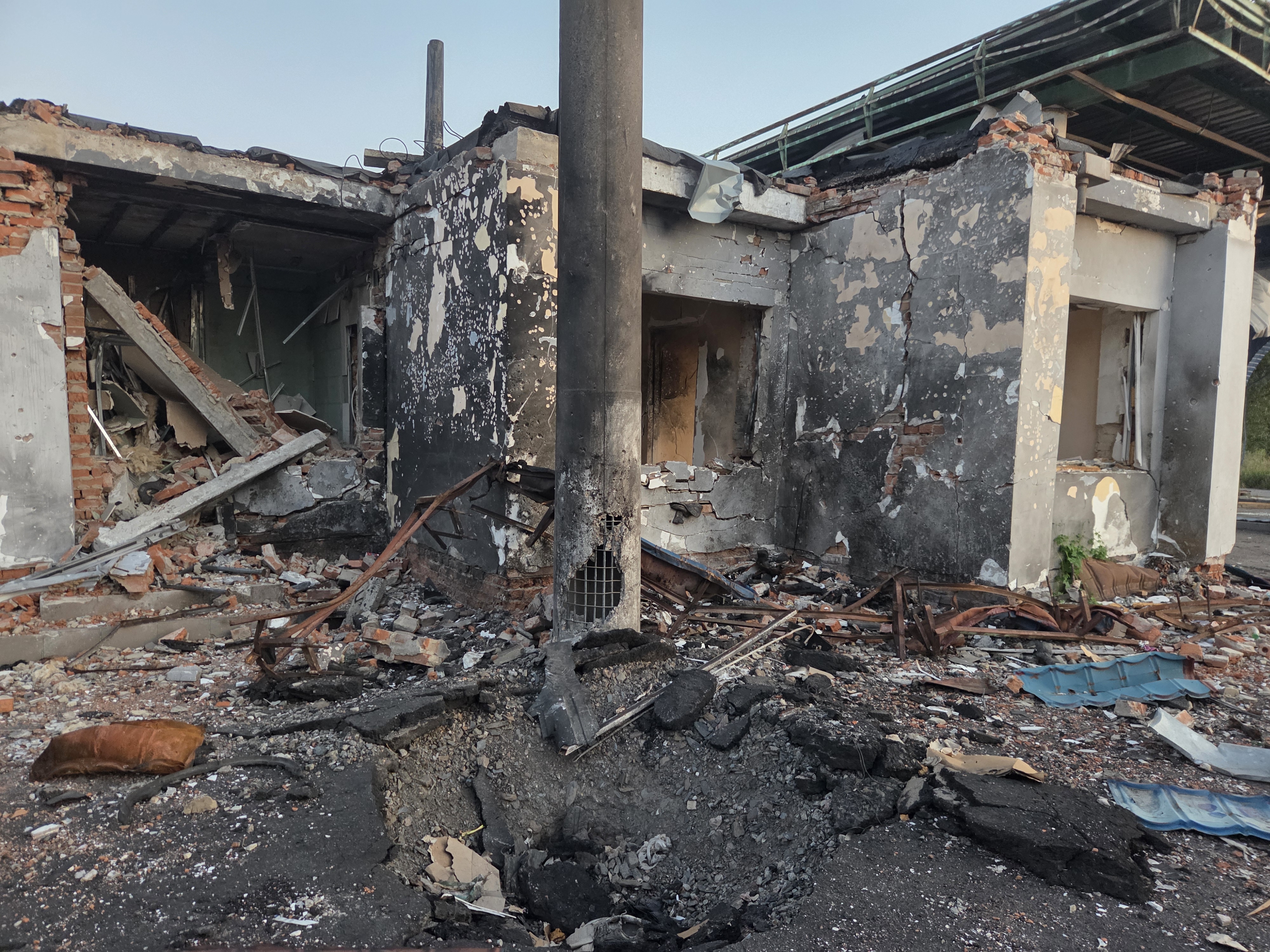 Homes are destroyed or boarded up, most businesses near the front have closed, and about 70 percent of the population has fled. (Courtesy of Antonio Graceffo)
The U.N. Human Rights Monitoring Mission said the attack appeared to constitute a breach of international humanitarian law, with the second wave of drones timed to hit rescuers responding to the first.
Countrywide, August has followed the trajectory the U.N. Human Rights Monitoring Mission in Ukraine (HRMMU) had already flagged for July, when it verified at least 437 civilians killed and 2,610 injured, the highest monthly toll since March 2022, a 30 percent increase over June and a 70 percent increase over July 2025.
Aerial bombardment casualties rose 143 percent month over month, and short-range drones near the front line accounted for 27 percent of casualties.
Since the war began, the United Nations has verified at least 16,874 civilians killed and 51,173 injured.
A week earlier, while visiting soldiers at the front in Sloviansk, I experienced constant missile and drone attacks. Nearly 70 percent of the city’s civilian population had fled, and by my quick estimate, about 90 percent of the shops and restaurants appeared to have been destroyed or boarded up. Many homes were destroyed, and municipal electricity frequently went out.
For about 50 miles, the road leading to the city was covered in netting designed to foil fiber-optic drones.
One of the most striking aspects of being at the front was the lack of small-arms fire. The conflict around us appeared to be fought almost entirely with drones and counter-drone systems.
This is where the Chinese Communist Party’s (CCP) influence is most directly evident.
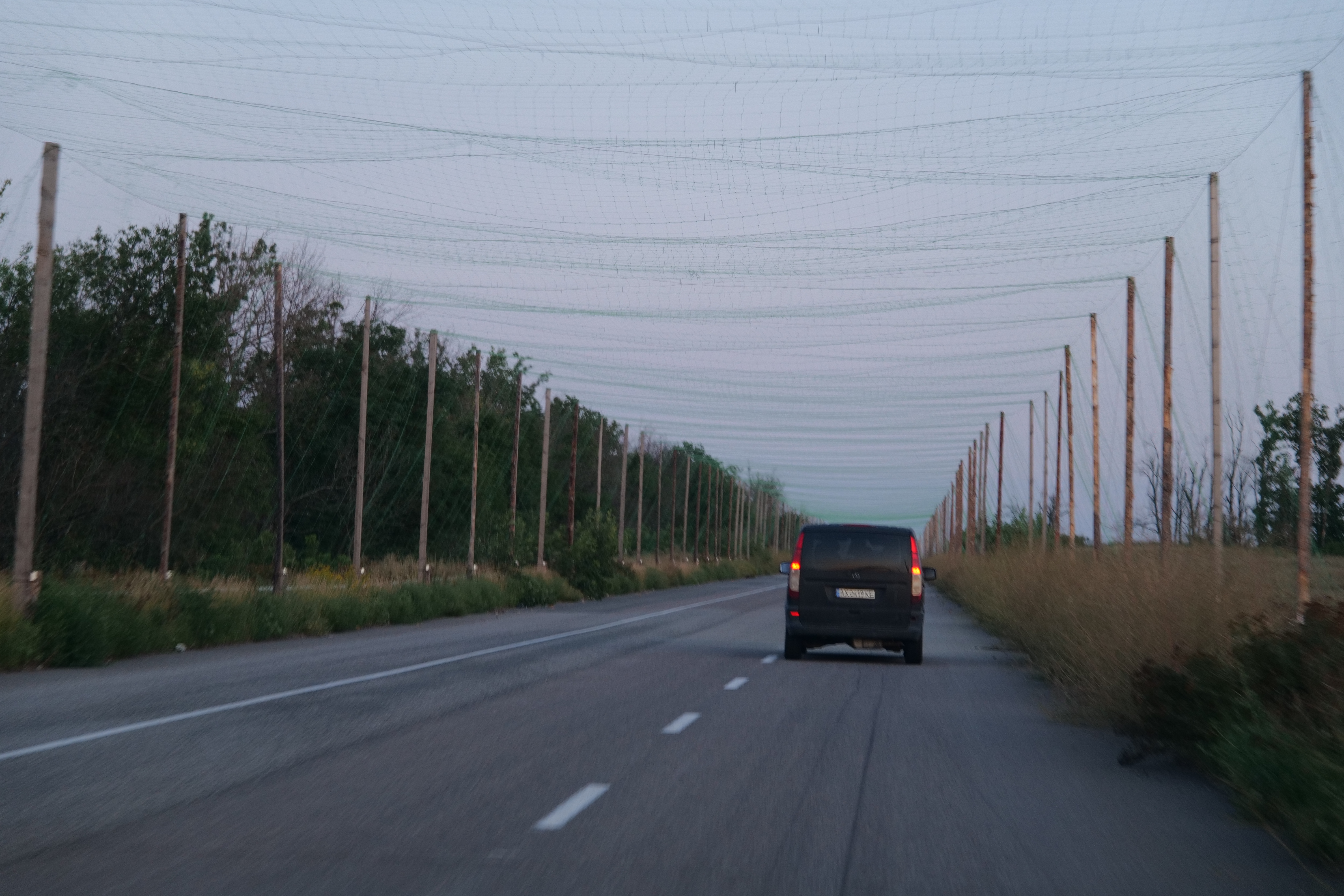 The road is covered by protective netting for 80 kilometers leading to the front to defend against first-person-view drones. (Courtesy of Antonio Graceffo)
In newly analyzed jamming antennas fitted to Shahed-type drones, only two of 15 components were American-made. The remainder, including transceivers, generators, and signal converters, were Chinese, with the main chip supplied by the Beijing Microelectronics Technology Institute.
U.S. intelligence assessments found that roughly 90 percent of Russia’s microelectronics used in missiles, tanks, and aircraft originated in China, while nearly 70 percent of its machine tool imports in late 2023 came from China.
Chinese and Russian entities have also worked to jointly produce drones inside Russia, while Chinese firms including Wuhan Global Sensor, Wuhan Tongsheng Technology, and Hikvision have supplied optical components used in Russian tanks and armored vehicles.
Chinese exports of fiber-optic cable and lithium-ion batteries to Russia surged over the summer of 2026. These components are essential to the fiber-optic-guided FPV drones that resist Ukrainian electronic jamming.
Ukrainian intelligence has also observed Chinese-manufactured chemicals, gunpowder, and other materials flowing into Russian production plants.
A CSIS analysis found that nearly every unmanned system on either side of the war depends on Chinese-sourced carbon fiber, rare-earth magnets, lithium-ion cells, and gallium-nitride chips. Even where Beijing has formally restricted exports, transshipment through Turkey, Kazakhstan, and the United Arab Emirates has kept supply lines open.
Beyond components, satellite navigation is another area of growing Russia-China integration. Russia’s GLONASS system has been used to guide Russian missile and drone strikes in Ukraine, while Russia and China agreed in 2018 to jointly apply GLONASS and China’s Beidou navigation system, later building monitoring stations on each other’s territory.
The Royal United Services Institute (RUSI) has assessed that deeper GLONASS-Beidou integration, combined with Chinese components already found in Russian military radios, could improve the precision of Russian satellite-guided operations, including drones and missiles used against Ukraine.
On the surface, Ukraine’s war is with Russia. However, this small, courageous Eastern European country is standing against the combined might of both the Kremlin and the CCP.
Views expressed in this article are the opinions of the author and do not necessarily reflect the views of The Epoch Times.
 Friends Read Free
Copy
Facebook
Tweet
Friends Read Free
Copy
Facebook
Tweet